Key takeaways
- Eight 1 km runs, each followed by one station, always in the same order: SkiErg, sled push, sled pull, burpee broad jumps, row, farmers carry, sandbag lunges, wall balls.
- The order is not random. The sleds land early, while you can still absorb them; the two most fatiguing stations land at the end, when you cannot.
- Running makes up roughly half of a pro or elite race clock, but the loaded stations shuffle the field far more than the runs do.
- The sled push and the wall balls end more races than anything else, and both failures are training problems rather than race-day ones.
- Loads differ by division. Distances and reps do not, which is what makes Hyrox times comparable worldwide.
Hyrox looks simple written down: run a kilometre, do a thing, repeat eight times. What that description hides is the interaction. Each station changes the run that follows it, and each run changes the state you arrive at the next station in. Understanding the eight stations individually is the easy half. Understanding what the previous seven have already done to you is where the race is.
The format, and why the fixed order matters
Every Hyrox is 8 km of running broken into eight 1 km legs, with one station after each. The sequence is identical at every event worldwide, in every division — open, pro, doubles and relay all run the same stations in the same order. Only the loads and the way the work is shared change. Because the order never varies, it can be trained against directly rather than guessed at, which is the premise of the Hyrox Prep program. That fixed structure is the whole point: it is what makes a Hyrox time a measurement rather than an anecdote, and it is what allowed researchers to build segment-by-segment normative benchmarks from more than 186,000 official results (Fernández-Navarrete et al., J Sports Med Phys Fitness 2026).
The order is itself a design decision, and a cruel one. Both sleds arrive in the first half, while you still have legs to spend. The two stations that most reliably wreck people — sandbag lunges and wall balls — arrive when there is nothing left to protect.
Interactive
The race, in order
Every Hyrox is the same eight stations in the same sequence, each one preceded by a kilometre of running. Tap a station to see the standard, what it actually demands, and the mistake that costs people the most time.
Swipe the strip sideways to reach stations 5–8.
Station 1 of 8
SkiErg
1,000 m
A whole-body pull driven by the lats, trunk and hips, not the arms. It arrives first, when you are fresh and your heart rate is still climbing, which is exactly why it is the easiest station in the race to ruin your day on.
Where people blow up: Going out hard because it feels easy. You bank thirty seconds here and give back two minutes over the next seven kilometres.
Loads shown are the open-division standards; the pro division is heavier, and doubles and relay divide the work differently. Check the current standards at hyrox.com before you race. The running share is from an analysis of pro and elite individual results and is a description of that population, not a target for yours.
Stations 1 and 2: SkiErg and sled push
The SkiErg is 1,000 m, and it is the most misleading station on the course because it comes first and it feels easy. It is a hinge, not an arm exercise: the power comes from the lats and the hips driving down through a stiff trunk. Athletes who pull with their arms find their grip compromised long before the farmers carry, which is a problem they will not connect to this station when it happens.
The sled push is 50 m, and in the open division the sled carries 152 kg for men and 102 kg for women. This is where the race stops being a run: close to maximal horizontal force production, repeated until the quads refuse. It is almost impossible to prepare for without pushing a real loaded sled. Heavy leg press, heavy walking lunges and long hill efforts are the least-bad substitutes, and they are meaningfully worse than the real thing.
The mistake almost everyone makes here: starting the sled push too fast. Short, aggressive, continuous drives with a low body angle beat surging and stopping. Every full stop means overcoming static friction again from zero, and on a sled that heavy, restarting is far more expensive than never stopping.
Stations 3 and 4: sled pull and burpee broad jumps
The sled pull is also 50 m, hand over hand from a fixed position, at 103 kg for men and 78 kg for women in the open division. Technique is worth more here than anywhere else on the course. Standing upright and pulling with the arms turns it into a grip test you will lose; sitting back into the hips and letting your bodyweight do the work turns it into something survivable. This is also the station that quietly determines your farmers carry, because it is the first serious tax on your grip.
The burpee broad jumps cover 80 m and are the most metabolically expensive thing on the course relative to how ordinary they look. Coming immediately after both sleds, they arrive at exactly the wrong time. The common error is jumping too far: longer jumps reduce the rep count but raise the cost of every rep dramatically, and most people are faster overall with a short, rhythmic, repeatable jump they never have to stop and recover from.
Stations 5 and 6: the row and the farmers carry
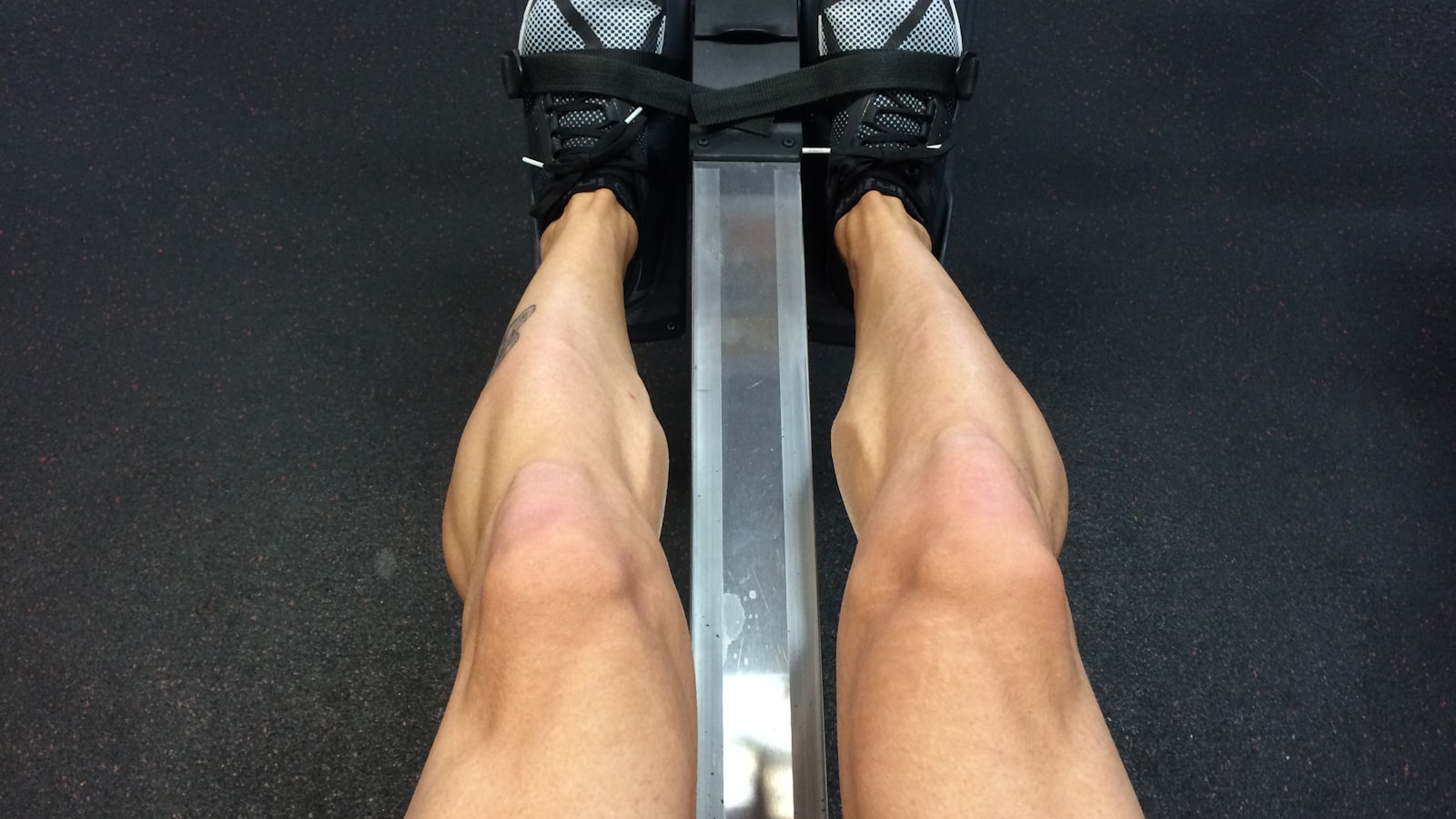
The row is 1,000 m and it is the one genuine opportunity in the race to be deliberately boring. It is the last chance to bring your heart rate down before three stations that punish a cooked nervous system. Athletes who treat it as a time trial buy themselves a bad carry, a worse lunge and a wall-ball set that falls apart. A controlled, slightly conservative row is one of the highest-return pacing decisions available on the course.
The farmers carry is 200 m, at 2 × 24 kg for men and 2 × 16 kg for women in the open division — much further than it sounds with forearms that have already done a sled pull and a row. The biggest time leak is putting the handles down: every drop costs the reset plus the reacceleration, and grip that has been briefly rested rarely comes back stronger. Train it for time rather than distance, and train it after pulling work.
Stations 7 and 8: sandbag lunges and wall balls
The sandbag lunges cover 100 m with the bag across the shoulders — 20 kg for men and 10 kg for women in the open division. This is the station that most often ends in cramp, and it is almost always a training-volume problem rather than a hydration one. Balance fails before strength does, which is why loaded walking lunges, done tired, are worth more preparation time than most people give them.
The wall balls are 100 reps to a target, finishing the race at the highest heart rate of the day. There is nothing left to save anything for, which is exactly why so many people mismanage them. A big unbroken set early feels heroic and usually costs a minute or more: the failure is abrupt and the recovery slow. Planned small sets with short breaks — decided before you get there, not negotiated in the moment — almost always win.
Why the run after a station feels like a different sport
The runs in Hyrox are not eight copies of the same kilometre. Each one starts in whatever state the previous station left you in, and that state changes what your legs can do. After a sled push, your quads are locally fatigued in a way that has very little to do with your cardiovascular fitness, and your stride shortens whether you agree to it or not. After the lunges, the same thing happens with less warning.
This is why running fitness built entirely on fresh legs transfers imperfectly. The answer is simple and unpleasant: run immediately after loaded work, often, so the sensation is familiar rather than alarming. It is also an argument for keeping real strength work in the plan — strength training improves running economy in already well-trained runners (Balsalobre-Fernández et al., J Strength Cond Res 2016), and the broader endurance evidence agrees (Beattie et al., Sports Med 2014). A stronger athlete holds a better position when fatigued, and position is most of what a Hyrox run costs you.
The trade-off runs both ways: concurrent endurance and resistance training do interfere, most sharply when running volume and frequency are high (Wilson et al., J Strength Cond Res 2012). That is a programming problem rather than a reason to drop either — but it does mean the lifting turns heavy and brief once the mileage climbs.
Where the race is actually won
Across pro and elite results from the first seven competitive seasons, running accounted for roughly half of total race time, and the improvements that moved athletes up the field were largely improvements in running (Rappelt et al., Front Physiol 2026). At the same time, the strength-determined stations produced far greater reshuffling of the rankings than the runs did — the running order broadly tracked the overall order, while the loaded stations moved people around, especially further down the field.
Both being true at once is the most useful fact about Hyrox. The runs are where the time is; the stations are where it is lost. If you are new, the loaded stations decide your race, because that is where the gap between prepared and unprepared athletes is widest. If you are already competitive, the remaining minutes live in the runs.
What to train first
- The sled, if you have never pushed one. Nothing else on the course has this much downside for the unprepared, and no substitute fully replaces it.
- Aerobic base. Half the clock, and what makes every station recoverable. Easy aerobic volume is not glamorous and not optional.
- Grip and trunk endurance. Sled pull and farmers carry are back to back in effect if not in order. Heavy carries fix both.
- Loaded lunging, done tired. The cheapest insurance against the station that produces the most cramping.
- Wall-ball capacity. Not strength — capacity. Practise the exact set-and-rest plan you intend to use on race day.
Sequenced rather than assembled: Hyrox Prep covers a first race, with three lift days built around station-specific muscular endurance and three cardio days building the engine. Hyrox Strength Build is for lifters who refuse to get weaker. Hyrox Race Pace is for the athlete who has finished one and wants the clock to move. All three are in the OPTML Method library.
Bottom line
Eight runs, eight stations, one fixed order, everywhere in the world. The SkiErg and the row are the two places you can control your heart rate; the sleds are the two places you can lose the race in the first half; the lunges and wall balls are where a race that has gone well can still come apart. Train the sled first if you have never touched one, run more than you think you should, and decide your wall-ball sets before you are standing in front of them.
Educational content, not medical advice. Individual results vary.