Key takeaways
- Eight 1 km runs, each followed by one station, in a fixed order that never changes at any event worldwide.
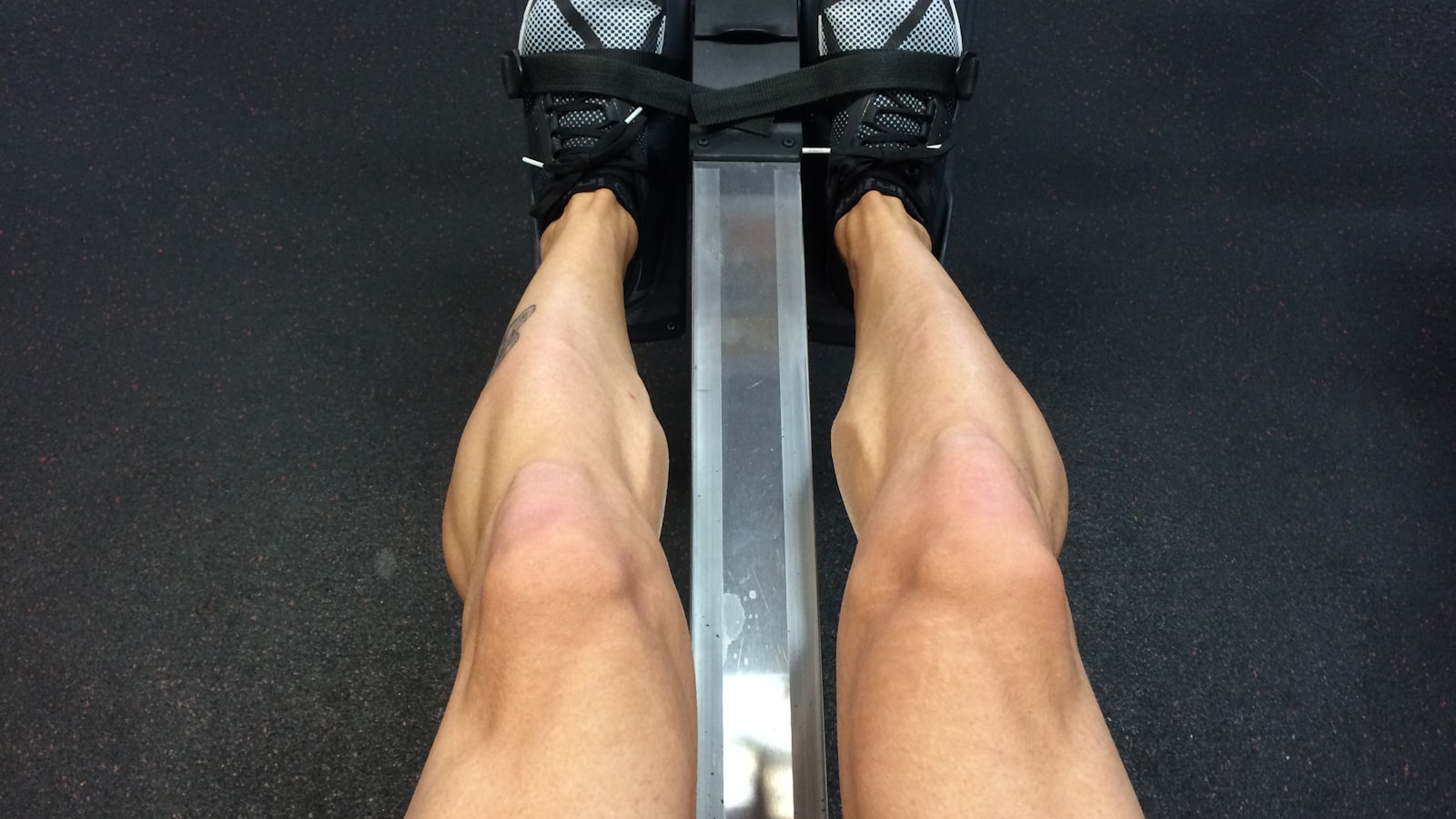
- The order is SkiErg, sled push, sled pull, burpee broad jumps, rowing, farmers carry, sandbag lunges, wall balls.
- Open, Pro, Doubles and Relay share the same movements; only the loads and how the work is divided change.
- The runs are the hard part, because every one of them starts on legs the previous station has just emptied.
- It rewards a hybrid athlete: an aerobic base, real lower-body and grip strength, and the tolerance to use both while tired.
Hyrox has grown fast enough that most people have heard the name without ever seeing the format written down. It is not CrossFit, it is not an obstacle race, and it is not a marathon with weights bolted on. It is a fixed, standardised indoor fitness race — the same eight runs and the same eight stations, in the same order, whether you enter in Hamburg, Dallas or Singapore. That standardisation is the entire product. It is also why the race is harder than the parts suggest: nothing in it is technically difficult, and every single piece is done on legs the previous piece has just emptied.
The format, in one line
Eight one-kilometre runs. After each run, one functional station. Then straight back out for the next kilometre. That is the whole race. If you already know you want to do one, Hyrox Prep is the twelve-week version of everything below.
Add it up and you get 8 km of running, plus roughly another kilometre and a half of movement inside the stations themselves — the ergometer distances, the sled lanes, the carries and the lunges. The clock starts on the first run and does not stop until the last wall ball. There is no rest built into the format anywhere.
There are no heats to choose between and no scaled movements. Everyone in a division does the same work in the same order. That is what makes a Hyrox time mean something: your finish in one city is directly comparable to someone else's on another continent, in a way a local gym competition never is.
The eight stations, in order
The order never changes, and it is worth learning by heart — knowing what is coming is most of race strategy.
| # | Station | The work | Open men | Open women |
|---|---|---|---|---|
| 1 | SkiErg | 1,000 m | No load | No load |
| 2 | Sled push | 50 m (4 × 12.5 m) | 152 kg | 102 kg |
| 3 | Sled pull | 50 m, rope-hauled | 103 kg | 78 kg |
| 4 | Burpee broad jumps | 80 m | Bodyweight | Bodyweight |
| 5 | Rowing | 1,000 m | No load | No load |
| 6 | Farmers carry | 200 m, a kettlebell per hand | 2 × 24 kg | 2 × 16 kg |
| 7 | Sandbag lunges | 100 m, bag on the back | 20 kg | 10 kg |
| 8 | Wall balls | Reps to an overhead target | 100 reps, 6 kg | 75 reps, 4 kg |
Two things about that table catch people out. The sled figures are the total weight including the sled itself, not the plates loaded onto it — which is why comparing a sled number to your squat number tells you nothing useful. And those are Open loads; the Pro division is heavier at every loaded station. Open women's wall balls were reduced to 75 reps for the 2025/26 season while the other divisions stayed at 100, so check the current standard for your division rather than trusting an older article.
Only two of the eight are genuinely technical. The sled pull rewards a hand-over-hand rhythm and punishes anyone who tries to muscle it. The wall ball punishes a small depth or catch error a hundred times over. The rest is honest work — though heavy resisted sled work is a distinct training quality in its own right, and the loads used here sit far above the light sleds most of the training literature has examined (Petrakos et al., Sports Med 2016).
Open, Pro, Doubles and Relay
Four ways in, one set of stations.
- Open — the standard individual entry, and where essentially every first-timer belongs.
- Pro — the same race and the same order, with heavier loads at every loaded station.
- Doubles — two athletes race as a pair. Both of you run all eight kilometres together; you divide the station work between you however suits your strengths.
- Relay — four athletes, each taking two of the eight run-and-station blocks, so the team covers the full race between them.
Doubles is the underrated entry point. You still run the full 8 km, but splitting the wall balls and the lunges takes the sting out of the two stations that break first-timers.
Why the runs get harder, not easier
The most misunderstood thing about Hyrox is what the running feels like. Eight kilometres is not far, and most entrants can run 8 km comfortably in training. Almost none of them run the eighth kilometre of a race anywhere near that pace.
Every run starts on legs that have just done something specific to them. You leave the sled push with your quads full and your heart rate near its ceiling. You leave the farmers carry with a grip that has stopped cooperating and a torso that has been braced for 200 m. You leave the sandbag lunges — the station most people underestimate — barely able to find a running stride at all. The sport calls this compromised running, and it is a separate quality from ordinary aerobic fitness.
Endurance physiology has a name for the underlying trait: durability. The measurements that describe an athlete fresh — threshold, economy, efficiency — all drift as work accumulates, and the size of that drift varies enormously between athletes with near-identical fresh numbers (Maunder et al., Sports Med 2021). Hyrox is close to a purpose-built test of exactly that drift. Your fresh 5 km time predicts your finish far less well than how little your pace decays after something hard.
The thing to understand first: Hyrox is not eight runs and eight workouts. It is one continuous effort that happens to alternate between two kinds of work, and the second kind is deliberately arranged to ruin the first. Train the transition between them or the race will find you out.
Where the clock actually goes
Runners assume the stations are the problem. Strength athletes assume the running is. The arithmetic settles it: fix any two of finish time, station time and run time, and the third is decided for you.
Interactive · arithmetic, not race data
Where does a finish time actually go?
Set a target finish, then an honest estimate of how long the eight stations and the roxzone will take you. Whatever is left is the time you have for 8 km of running — which fixes the pace you have to hold, whether you like the number or not.
This is arithmetic, not a benchmark. It uses your own two numbers and divides — it does not tell you what a typical finisher does, because that varies by division, venue and season.
What that exposes is how expensive station time is. Every minute given away standing over a sled, resetting a sandbag, or resting between wall ball sets has to be repaid at running pace across 8 km — and by that point you have no pace left to repay it with.
The roxzone, and why nobody trains it
Between every run and every station is a transition area, the roxzone. You run into it, find your lane, set up, work, and run back out. The clock runs the whole time, and across sixteen transitions it adds up to a meaningful share of the finish.
Almost nobody rehearses it. The habit people bring from the gym is to arrive at a station, take a breath, adjust something, and then start. Repeated sixteen times, that habit is minutes. The fix is not fitness. It is knowing in advance where you are going, what your first grip is, and what your breathing does in the ten seconds before work starts — the substance of race-day pacing and strategy.
What the race actually demands
Hyrox sits on the seam between two training goals that partly conflict. Doing a large volume of endurance work alongside heavy strength work blunts some of the adaptation you would otherwise get — the interference effect, which is real, dose-dependent, and hits power and hypertrophy harder than it hits maximal strength (Wilson et al., J Strength Cond Res 2012). You cannot prepare for this race the way a powerlifter trains, and you cannot prepare the way a marathon runner does.
The conflict is asymmetric, though, and that asymmetry is the good news. Strength work does not damage endurance performance; it improves it. Adding heavy resistance training to a running programme improves running economy and time to exhaustion without adding unwanted mass (Blagrove et al., Sports Med 2018). For a Hyrox athlete that is close to a free lunch — the same squat and hinge strength that moves the sled also makes every kilometre cheaper.
So the honest description is: a fairly ordinary aerobic base, a genuinely respectable level of lower-body and grip strength, and a specific tolerance for doing both in the same session while tired. Nearly everyone arrives short on one of the three, and which one tells you what to train — how strong you actually need to be sets the bar.
Where to start, depending on where you are short
Three programmes in the OPTML Method map onto the three ways people arrive at this race.
- Hyrox Prep — if you have never raced one, or the aerobic base is the weak link. It builds the engine and introduces the stations before it worries about pace.
- Hyrox Strength Build — if you already lift and do not want to stop. It keeps the barbell in the week and builds the engine around it, which is the right entry for most gym-trained lifters.
- Hyrox Race Pace — if you already have a finish time and want a faster one. It targets the thing that decides finishes: holding pace on compromised legs.
If you want the hybrid quality without the race, Hybrid — 6 Day builds strength and engine side by side. All of them, and everything else, sit in the OPTML Method library. For the full session-by-session build, read how to actually train for Hyrox; if you have already picked a date, start with preparing for your first race.
Bottom line
Hyrox is eight kilometres of running with eight functional stations threaded through it, in an order that never changes, at every event in the world. That fixed format is the point: it turns a workout into a measurable performance you can repeat and compare. The difficulty is not any one station — none of them would trouble you fresh. It is that the race never lets you be fresh, and the quality it actually measures is how little you fall apart between the run and the work. Train that seam, learn the order, rehearse the transitions, and the race becomes a test of preparation rather than a surprise.
Educational content, not medical advice. Individual results vary.