Key takeaways
- They are different molecules. Semaglutide acts on one receptor, tirzepatide on two.
- In the only head-to-head trial, tirzepatide produced more weight reduction over 72 weeks.
- Semaglutide carries cardiovascular and kidney outcome evidence that tirzepatide does not, and tirzepatide carries a sleep apnea indication that semaglutide does not.
- Early routine-care data suggests the larger total loss on tirzepatide comes with a larger share of lean tissue. That work is a preprint.
- The larger average number is one input. It is rarely the one that decides it.
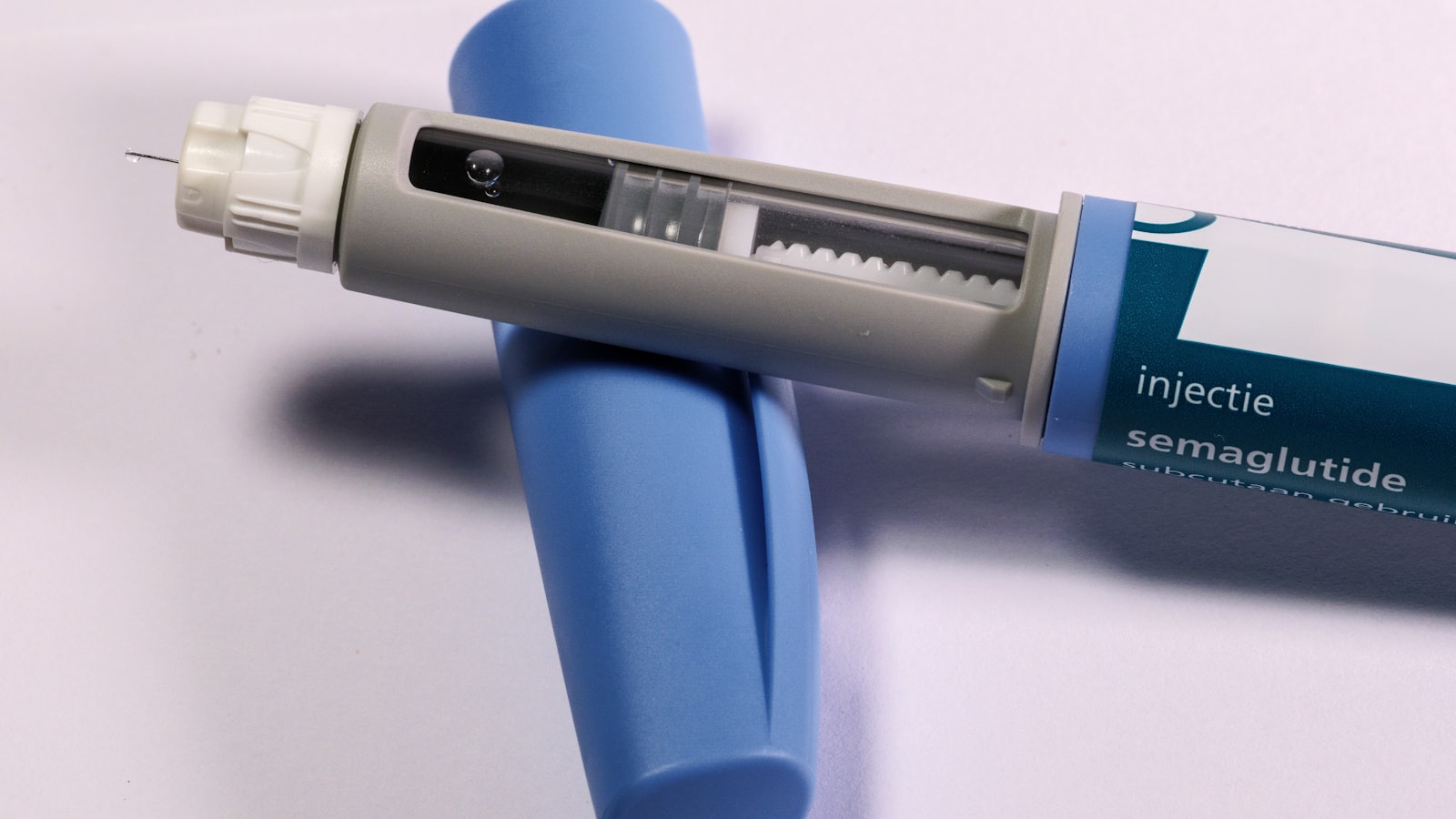
Semaglutide activates one receptor, GLP-1. Tirzepatide activates two, GLP-1 and GIP. In the only trial that compared them directly in adults with obesity and without type 2 diabetes, weight fell 20.2 percent on tirzepatide against 13.7 percent on semaglutide over 72 weeks. That result is real and it is also incomplete. Semaglutide has cardiovascular and kidney outcome evidence tirzepatide does not have, tirzepatide is approved for obstructive sleep apnea and semaglutide is not, and early routine-care data suggests tirzepatide's larger total loss carries more lean tissue with it. Which one suits you is a clinical decision that depends on what you are treating, not on which number is bigger.
What they actually are
Most of the confusion here comes from treating the two as versions of the same drug. They are not.
Semaglutide
Single agonist · GLP-1- Mimics GLP-1, a hormone the gut releases after eating.
- Reduces appetite and slows how quickly the stomach empties.
- The more established of the two, with a longer record and a larger body of outcome evidence in people who do not have diabetes.
- Exists in an oral form as well as an injection.
Tirzepatide
Dual agonist · GIP + GLP-1- Acts on GLP-1 and additionally on GIP, a second gut hormone involved in how the body handles food.
- The second receptor is the leading explanation for the larger weight effect, though the mechanism is still being worked out.
- Newer, with outcome evidence that is growing quickly.
- Injection only.
The one trial that compared them directly
Almost every comparison you will read online sets one trial's results beside another trial's results. That is not a fair test, because the two trials enrolled different people under different conditions. Only one study put the two molecules against each other in the same population.
SURMOUNT-5 · 72 weeks · obesity without type 2 diabetes
- 20.2%weight reduction, tirzepatide
- 13.7%weight reduction, semaglutide
- −18.4 cmwaist, tirzepatide
- −13.0 cmwaist, semaglutide
An open-label trial in which each participant received the highest dose of their assigned medication that they could tolerate. Tirzepatide was superior on both body weight and waist circumference at week 72.1
The gap is meaningful and it held on more than one measure. Two things are worth holding onto alongside it. First, this trial was open-label, meaning participants knew which medication they were receiving. Second, it reports averages, and individual response inside both groups varied widely. Plenty of people on semaglutide lost more than the tirzepatide average.
What routine care adds
Trials tell you what happens under trial conditions. A separate analysis of more than 18,000 matched patients in ordinary US clinical practice pointed the same direction, finding people on tirzepatide significantly more likely to reach larger weight reductions than those on semaglutide.2 A later six-month cohort study in US practice reached a consistent conclusion.8
The same analysis surfaced something that does not usually make the headline: stopping treatment was common in both groups. Whichever molecule is involved, the medication only works while it is being taken, which is why what happens after matters as much as what happens during. The shape of a full year is here.
Where each has evidence the other does not
This is the part the weight-loss comparison usually skips, and for anyone with a medical history it is often the part that decides it.
Semaglutide
Outcome evidence- A cardiovascular outcome trial in 17,604 people with overweight or obesity and established cardiovascular disease but without diabetes reported a 20 percent reduction in major adverse cardiovascular events.3
- A prespecified analysis of that trial found the cardiovascular benefit was largely independent of how much weight was lost, which points to a mechanism beyond weight itself.4
- Carries a kidney-disease indication, following trial work in people with type 2 diabetes and chronic kidney disease.
Tirzepatide
Outcome evidence- Approved for obstructive sleep apnea in adults with obesity, an indication semaglutide does not hold.
- Its cardiovascular outcome trial enrolled more than 13,000 people with type 2 diabetes and cardiovascular disease over more than four and a half years, and met its objective against an active comparator rather than a placebo.5
- A post hoc analysis of that trial reported a lower rate of the combined cardiorenal endpoint than the comparator.6
Read that table by population, not by winner. The semaglutide cardiovascular trial studied people without diabetes. The tirzepatide one studied people with it, against another active drug rather than placebo. They are not the same test, so neither result transfers cleanly onto the other molecule. What matters is which population you resemble.
The tradeoff that rarely makes the headline
Weight is not the same as fat. Every substantial weight reduction includes some lean tissue, and the size of that share is not fixed.
A routine-care analysis of 7,965 people who had body-composition measurements both before and after starting treatment reported greater lean-mass decline on tirzepatide than on semaglutide at three, six, nine and twelve months. It also reported a pattern it called depletive, meaning more than 20 percent total weight loss with more than 5 percent lean-mass loss, in 10.3 percent of tirzepatide users against 6.7 percent of semaglutide users in the first year.7
That study is a preprint and has not been peer reviewed, so treat it as a signal rather than a settled finding. It is worth taking seriously anyway, because it is consistent with something nobody disputes: the more total weight you lose, the more lean tissue comes with it unless protein intake and resistance training are handled deliberately. In other words, the advantage in total weight is not free, and what you do alongside the medication decides what it costs you. That part is worth reading before you start, not after.
Side effects and staying on it
Nausea, constipation and other gastrointestinal effects are common to the class, tend to be worst early, and are one of the main reasons a physician may prefer one molecule for a given person.
In the head-to-head trial, gastrointestinal side effects led to stopping treatment in 5.6 percent of people on semaglutide and 2.7 percent on tirzepatide.1 Over a far longer period, the tirzepatide cardiovascular trial recorded discontinuation for adverse events in 13.3 percent of participants against 10.2 percent on the comparator.5 Different trials, different populations, different comparators. The honest summary is that both are tolerated by most people who take them and neither is uniformly gentler.
What actually decides it
For most people the choice is not settled by the trial averages. It is settled by six things a physician weighs together:
- What you are treatingWeight alone, weight with type 2 diabetes, sleep apnea, established cardiovascular disease, kidney disease. The indications differ, and so does the outcome evidence behind them.
- What else you are being treated forYour other conditions and medications narrow the field before any comparison of averages begins.
- How you tolerate itThe medication that works is the one you can keep taking. A drug you stop after eight weeks has no advantage over one you stay on.
- How you actually respondIndividual response varies widely inside both groups. Averages describe populations, not people, and your own response is only visible after you start.
- Cost and availabilityPractical, and it decides more cases than anyone likes to admit.
- What you are protecting on the way downIf holding onto lean tissue matters to you, that belongs in the conversation at the start rather than at the end.
One thing to be precise about. Every trial cited on this page studied an FDA-approved product under trial conditions. Compounded formulations are not FDA-approved and have not been through these trials. This research is how you understand the way these molecules behave. It is not a promise about any particular preparation, and it is not a substitute for a physician who has seen your history.
Common questions
Is tirzepatide better than semaglutide?
For total weight reduction, the one trial that compared them directly found tirzepatide produced more. In SURMOUNT-5, a 72-week trial in adults with obesity and without type 2 diabetes, weight fell 20.2 percent on tirzepatide against 13.7 percent on semaglutide. "Better" is a different question, because the two molecules carry different outcome evidence and are approved for different conditions, and because the right choice depends on what you are treating rather than on which number is larger.
What is the actual difference between semaglutide and tirzepatide?
Semaglutide activates one receptor, GLP-1. Tirzepatide activates two, GLP-1 and GIP, which is why it is described as a dual agonist rather than a GLP-1 agonist. Both reduce appetite and slow how quickly the stomach empties. The second receptor is the leading explanation for the difference in weight results, though the mechanism is still being worked out.
Does semaglutide have any advantage over tirzepatide?
Yes, in outcome evidence for specific populations. Semaglutide has a large cardiovascular outcome trial in people with obesity and established cardiovascular disease but without diabetes, and it carries a kidney-disease indication. Tirzepatide has an obstructive sleep apnea indication that semaglutide does not, and its cardiovascular trial was run against an active comparator in people who did have type 2 diabetes. They are not interchangeable, and which evidence base matters depends on your history.
Which one causes more side effects?
In SURMOUNT-5, gastrointestinal side effects led to stopping treatment in 5.6 percent of people on semaglutide and 2.7 percent on tirzepatide. Over a much longer period, the SURPASS-CVOT trial recorded discontinuation for adverse events in 13.3 percent on tirzepatide against 10.2 percent on the comparator drug. Side effects are common to the class, tend to be worst early, and are one of the main reasons a physician may choose one over the other for a given person.
Do you lose more muscle on tirzepatide?
A large routine-care analysis suggests you may. Looking at people with body-composition measurements before and after starting, it reported greater lean-mass decline on tirzepatide than semaglutide at every point measured across the first year. That work is a preprint and has not yet been peer reviewed, so it should be read as a signal rather than a settled finding. It is also consistent with something uncontroversial: larger total weight loss tends to bring more lean tissue with it unless protein intake and resistance training are deliberately handled.
Can you switch from one to the other?
People do switch, usually because of side effects, response or availability. It is a clinical decision rather than a swap you make on your own, because the two are not dosed on the same scale and the starting point after a switch depends on what you were already taking and how you tolerated it.
Do these trial results apply to compounded versions?
Not automatically, and this is worth being precise about. Every trial cited on this page studied an FDA-approved product under trial conditions. Compounded formulations are not FDA-approved and have not been through these trials. The research is useful for understanding how the molecules behave. It is not a promise about any particular preparation.
Which one should I take?
That is a question for a licensed physician who can see your history, your labs, what you have already tried and what else you are being treated for. The larger average number in a trial is one input among several, and it is not the one that decides it for most people.
Sources
- Tirzepatide as Compared with Semaglutide for the Treatment of Obesity (SURMOUNT-5). New England Journal of Medicine, May 2025. Link
- Semaglutide vs Tirzepatide for Weight Loss in Adults With Overweight or Obesity. JAMA Internal Medicine, July 2024. Link
- Semaglutide and Cardiovascular Outcomes in Obesity without Diabetes (SELECT). New England Journal of Medicine, 2023. Link
- Semaglutide and cardiovascular outcomes by baseline and changes in adiposity measurements: a prespecified analysis of SELECT. The Lancet, 2025. Link
- SURPASS-CVOT: tirzepatide and cardiovascular outcomes in type 2 diabetes, against an active comparator. New England Journal of Medicine, December 2025. Link
- Cardiorenal outcomes with tirzepatide against an active comparator: a post hoc analysis of the SURPASS-CVOT randomized clinical trial. Post hoc analysis, 2026. Link
- Greater lean-body-mass decline with tirzepatide than semaglutide in routine care (PREPRINT, not yet peer reviewed). medRxiv, 2026. Link
- Comparative effectiveness of tirzepatide and semaglutide for obesity management in US clinical practice: a 6-month retrospective cohort study. Retrospective cohort, 2026. Link
- Tirzepatide compared with semaglutide and 10-year cardiovascular disease risk reduction in obesity: post-hoc analysis of SURMOUNT-5. Post hoc analysis, 2025. Link