Key takeaways
- Full-body splits hit each muscle group 2-3 times per week, research-supported as the optimal frequency for hypertrophy in most adults (Schoenfeld et al., Sports Med 2016).
- The ideal beginner-to-intermediate template runs 4-6 compound exercises per session, 3 sets each, with progressive overload tracked weekly.
- If you can train 4+ days per week, body-part splits and PPL programs make sense, you can spread volume across more sessions and accumulate more weekly work per muscle.
- The Schoenfeld 2016 meta-analysis settled the long-running frequency debate: at equal weekly volume, training each muscle 2x per week produces meaningfully more hypertrophy than 1x per week.
- Two or three days of full-body work, executed with progressive overload over 12+ months, produces real, visible body composition change for the great majority of adults.
Why full-body wins on low frequency
If you can train 4+ days per week, body-part splits and PPL programs make sense, you can spread volume across more sessions and accumulate more weekly work per muscle. But if you're training 2 or 3 days a week, the math reverses. To hit the 10-15 weekly hard sets per major muscle that drives hypertrophy, each session has to cover the whole body.
The body-part split for 2-3 days a week (e.g., "chest day" + "back day" + "leg day") trains each muscle just once weekly. Research consistently shows this is suboptimal for hypertrophy versus 2x weekly frequency at the same volume (Schoenfeld et al., Sports Med 2016).
Frequency vs volume
The Schoenfeld 2016 meta-analysis settled the long-running frequency debate: at equal weekly volume, training each muscle 2x per week produces meaningfully more hypertrophy than 1x per week. The 3x per week question is more equivocal, modest additional benefit, but increasingly limited by recovery.
For a 2-day week, every muscle gets hit twice. For a 3-day week, every muscle gets hit three times. Both are above the 1x threshold; both are well-supported by data.
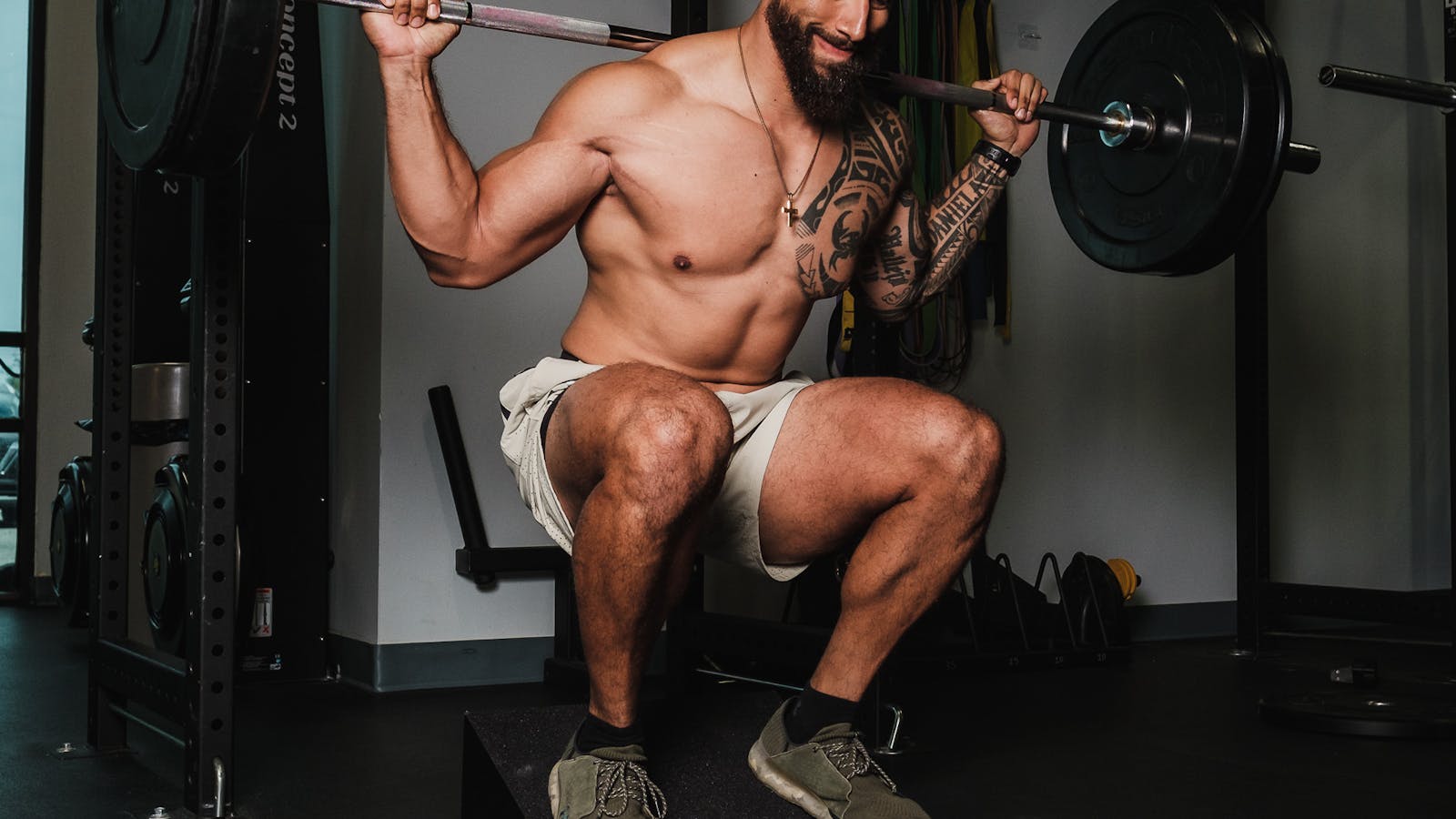
The volume per session has to be moderate, you can't do 6 hard sets of squats AND deadlifts AND bench AND row AND overhead press in a single session and recover. The standard approach is 3 sets of each exercise, with movement selection chosen so the whole body gets stimulus.
2-day program
Two non-consecutive days per week. Tuesday/Saturday or Monday/Thursday work well. Each session is ~60-75 minutes.
Day A (Tuesday)
Day B (Saturday)
Hits squat-pattern, hinge-pattern, push (horizontal + vertical), pull (horizontal + vertical), single-leg, and trunk, twice each per week. Total time per session: ~60 minutes. Total weekly work: ~6 hard sets per major muscle group. Below the 10-set threshold but well into "real growth" territory for beginners and effective maintenance for intermediates.
3-day program
Three non-consecutive days. Monday/Wednesday/Friday is the classic. Each session is ~60-75 minutes.
Day A (Monday), Squat-focused
Day B (Wednesday), Hinge-focused
Day C (Friday), Volume / accessory
Each muscle group hit ~3x per week; total weekly volume: 9-12 hard sets per major muscle. Squat and hinge alternate as the primary lower-body movement. Push and pull both get horizontal and vertical exposure. Day C adds isolation work for arms and provides a slight volume bump.
How to progress
Use double progression for every lift:
- Pick a rep range (e.g., 6-10).
- Start with a weight you can hit at the bottom of the range with RIR 1-3.
- Each session, try to add reps. When all sets hit the top of the range, add weight (5 lbs upper / 10 lbs lower) and drop reps back to the bottom.
- Track everything in writing.
For untrained adults, expect 5-10 lbs added to upper body lifts per month and 10-20 lbs on lower body lifts in the first 6 months. After that, progress slows but continues for years.
Smart substitutions
If you don't have access to a barbell, or if certain movements don't suit you, the principle (movement pattern matters more than specific lift) lets you swap freely:
| Pattern | Primary option | Alternatives |
|---|---|---|
| Squat | Back squat | Front squat, goblet squat, leg press, hack squat |
| Hinge | Romanian deadlift | Conventional deadlift, hip thrust, kettlebell swing |
| Horizontal push | Bench press | DB bench, push-up, machine press |
| Vertical push | Overhead press | DB shoulder press, machine OHP, landmine press |
| Horizontal pull | Bent-over row | Cable row, chest-supported row, DB row |
| Vertical pull | Pull-up | Lat pulldown, assisted pull-up, banded pull-up |
Common mistakes
- Adding 12 exercises per session. Don't. Stay with the core compound + 1-2 accessories. More fragments your effort.
- Going to failure on every set of every exercise. RIR 1-3 on most working sets; the last set of each exercise can go to RIR 0.
- Skipping legs because you "did them last time." Full-body means full-body every session. Consistency builds the legs.
- Adding weight before earning reps. Hit the top of your rep range cleanly before progressing the load. Otherwise the form degrades.
- No rest between sets. 2-3 minutes for compound lifts. The internet's "30-second rest" advice is for conditioning, not hypertrophy.
Bottom line
Two or three days of full-body work, executed with progressive overload over 12+ months, produces real, visible body composition change for the great majority of adults. It's not flashy. It doesn't have a marketing engine behind it. But it's the highest-ROI training format for most working schedules, and it pairs perfectly with the rest of life. If you've been spinning on a 4-5 day bro-split that you can't sustain, simplify. Three days of full body trains better than five days of inconsistent.