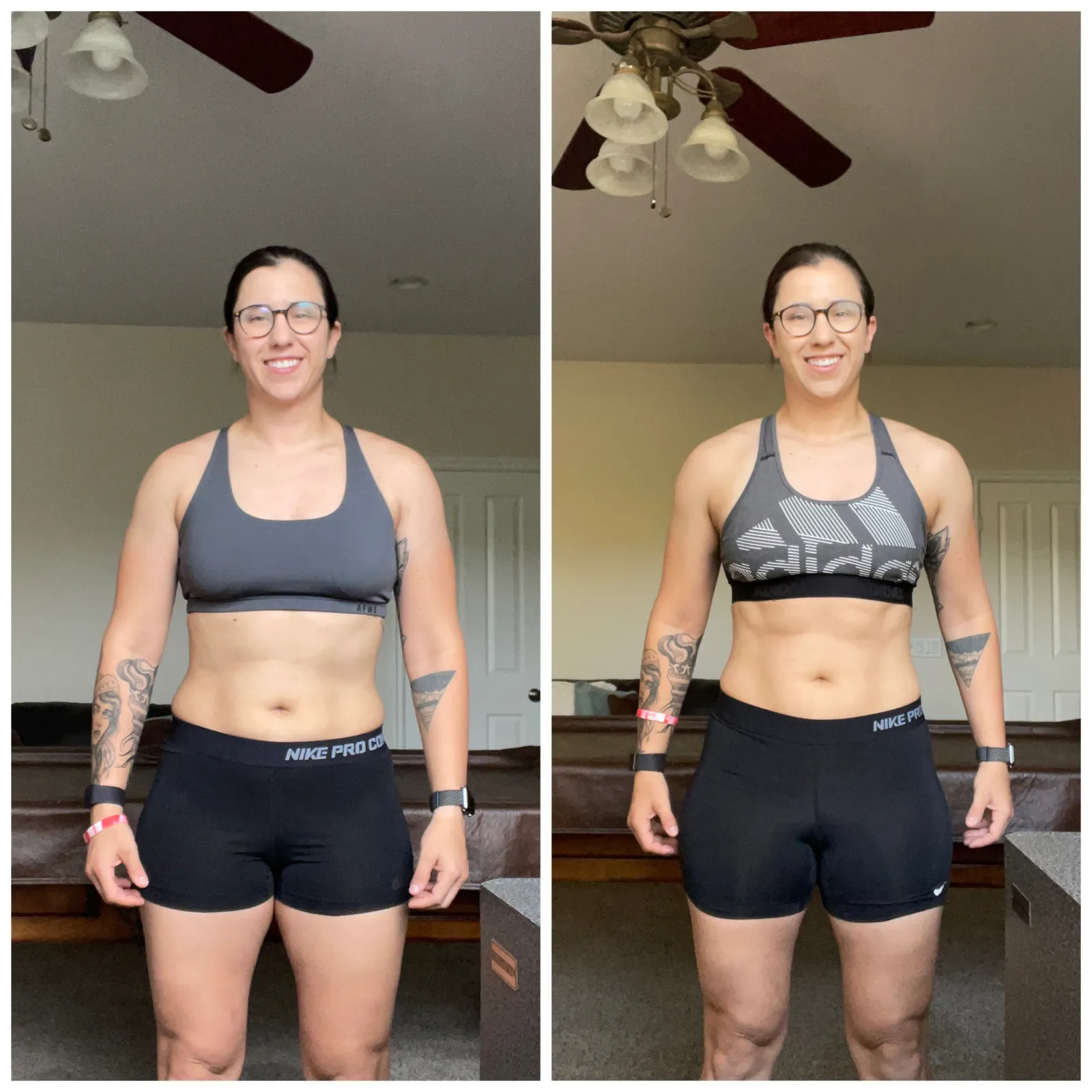
“My lifts improved a ton with the full body program, and the nutrition system made everything easy. I truly feel the fittest I’ve ever been in my whole life.”
— Juliet M.
Every OPTML membership includes access to training and nutrition systems designed to support longevity, preserve lean muscle, and help you get more from your protocol.
Founder · OPTML
Every training program, every nutrition protocol in this library — built on a decade of data from real clients, not industry assumptions.
Twenty five training programs and eleven recipe packs. Bought once, yours to keep, downloaded the moment you pay.
 Training
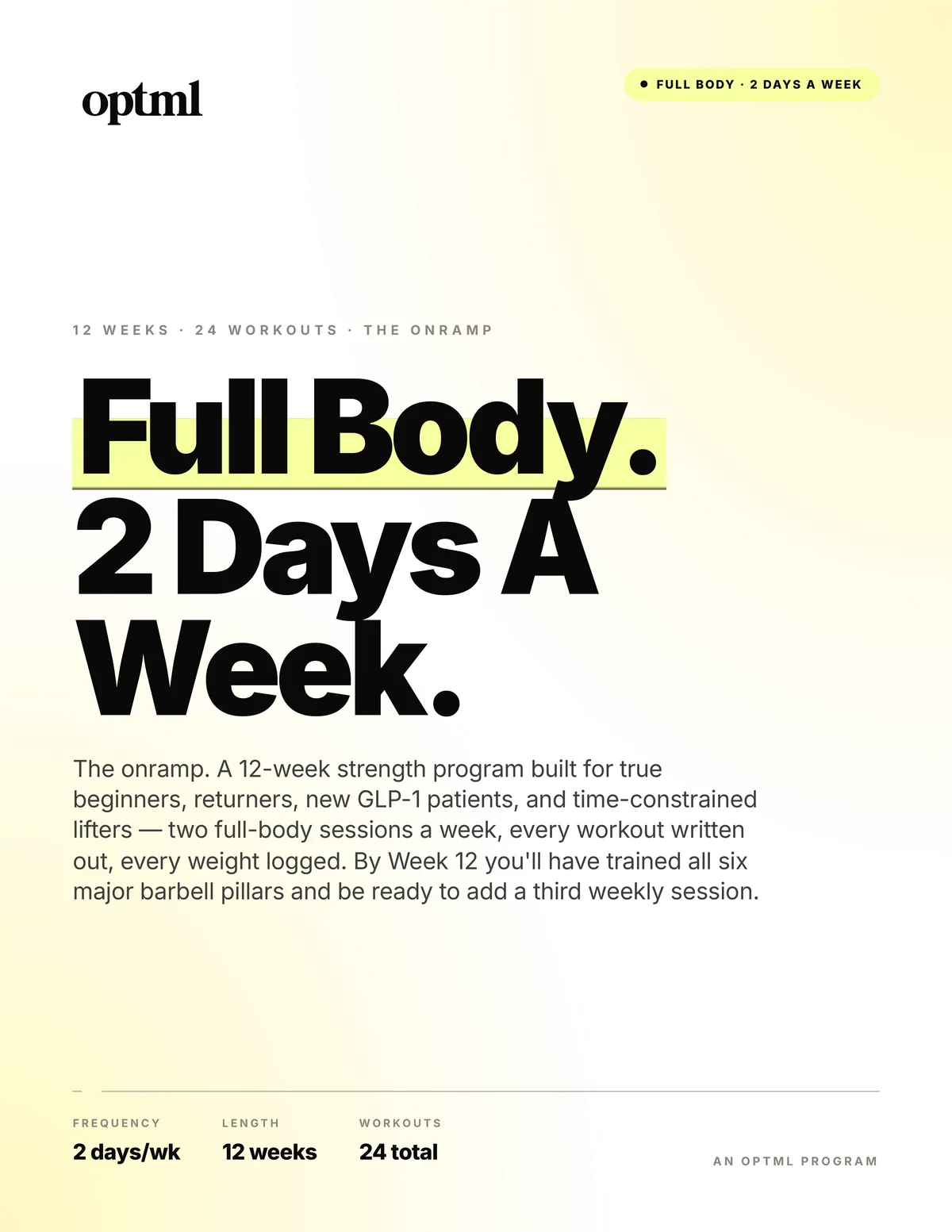
Full Body — 2 Day
$39See inside →
Training
Full Body — 2 Day
$39See inside →
 Training
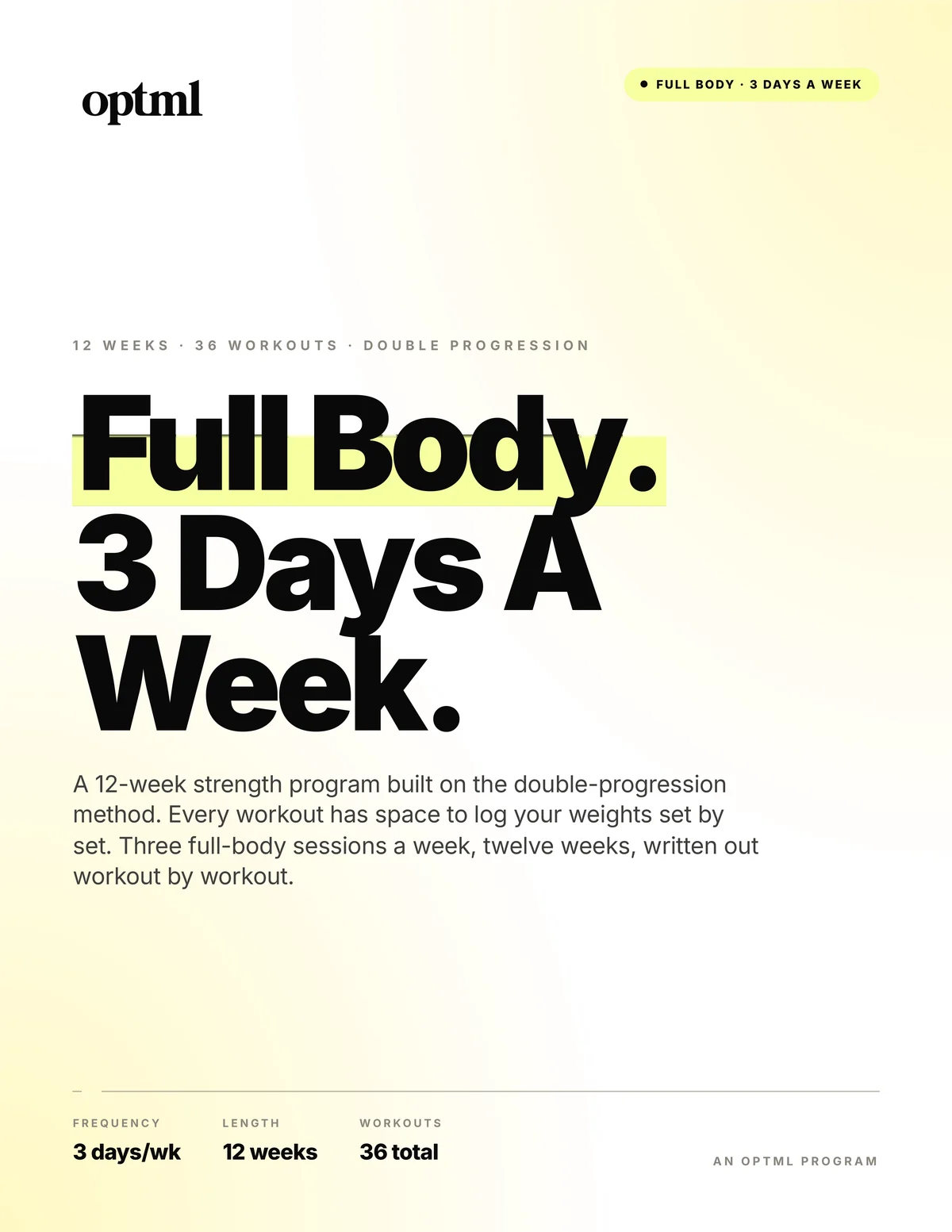
Full Body — 3 Day
$39See inside →
Training
Full Body — 3 Day
$39See inside →
 Training
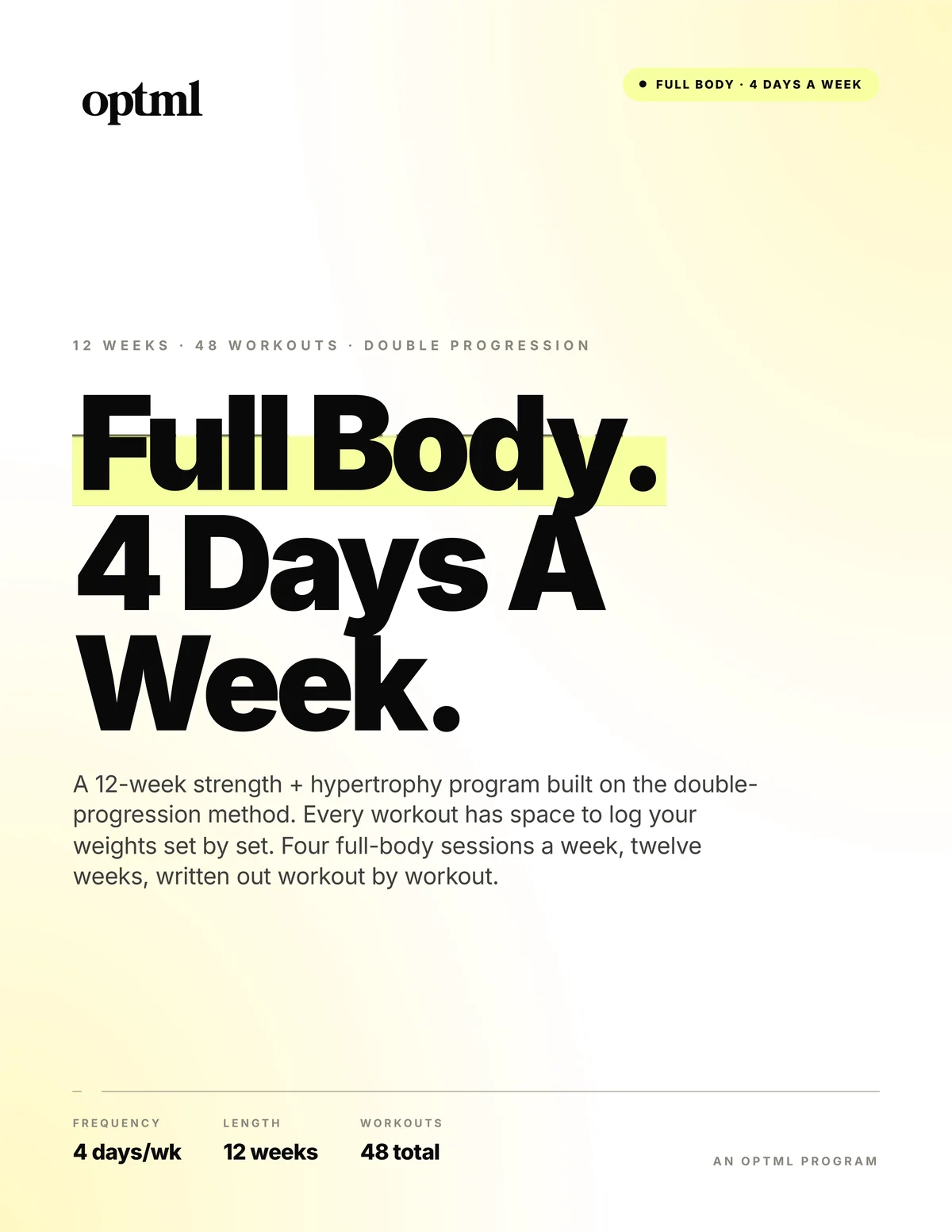
Full Body — 4 Day
$39See inside →
Training
Full Body — 4 Day
$39See inside →
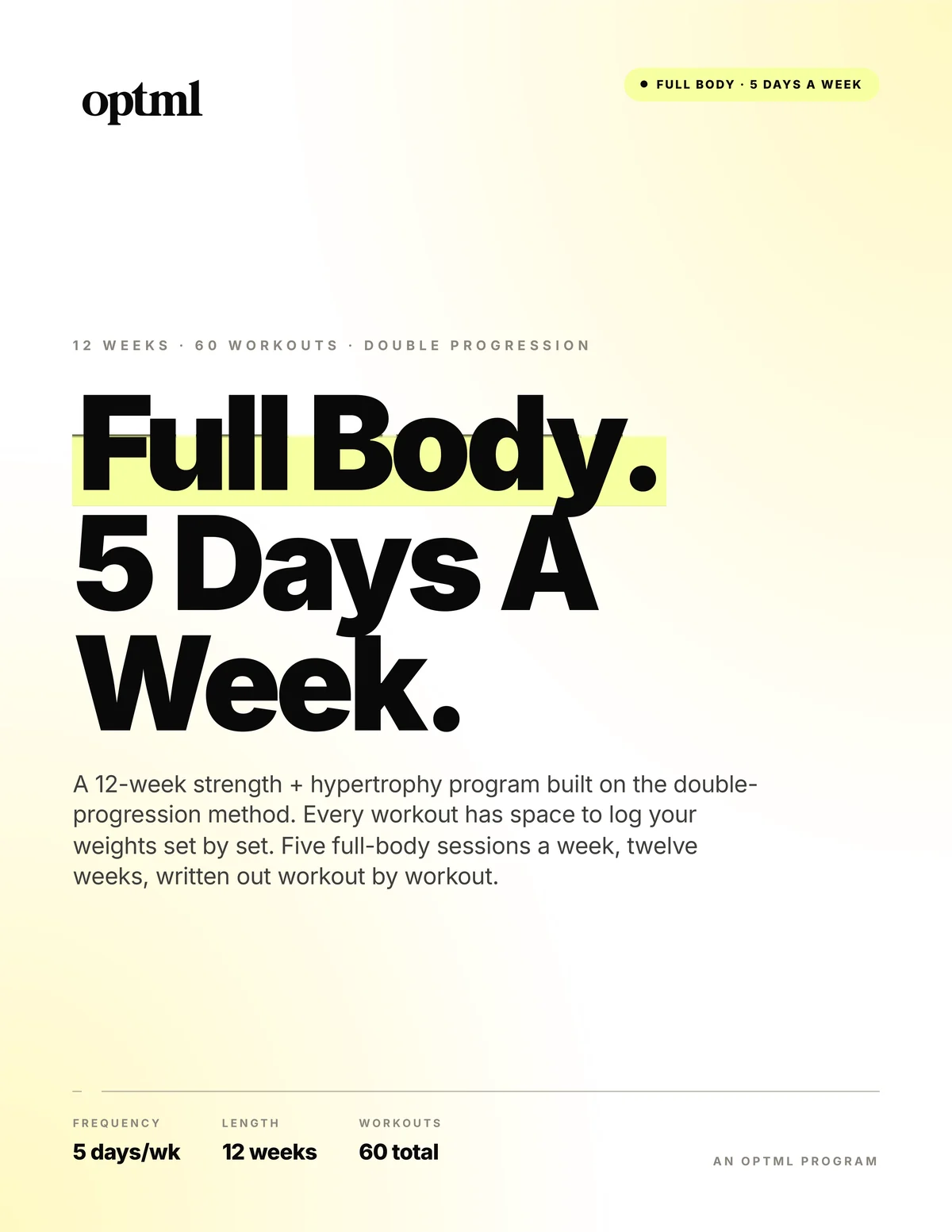 Training
Full Body — 5 Day
$39See inside →
Training
Full Body — 5 Day
$39See inside →
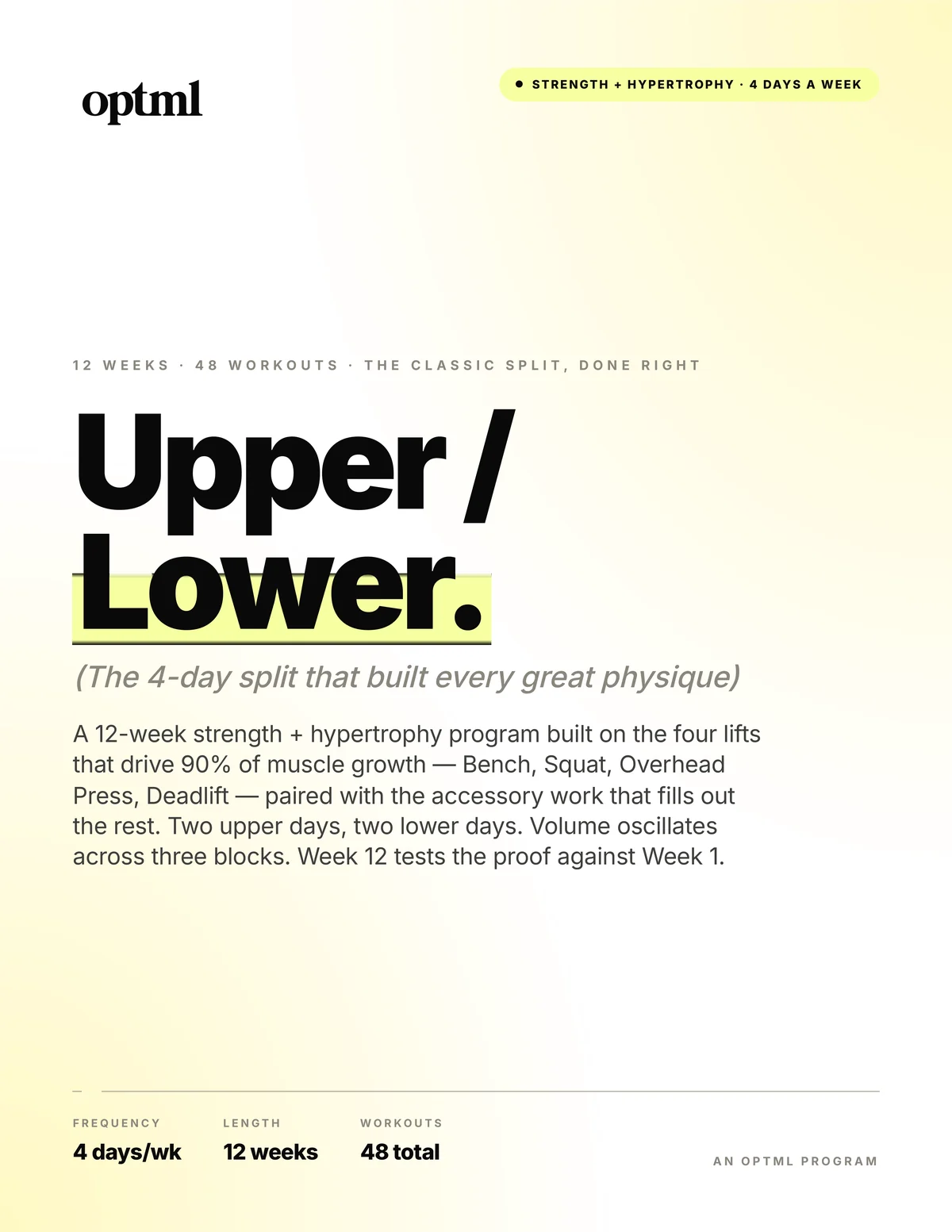 Training
Upper / Lower — 4 Day
$39See inside →
Training
Upper / Lower — 4 Day
$39See inside →
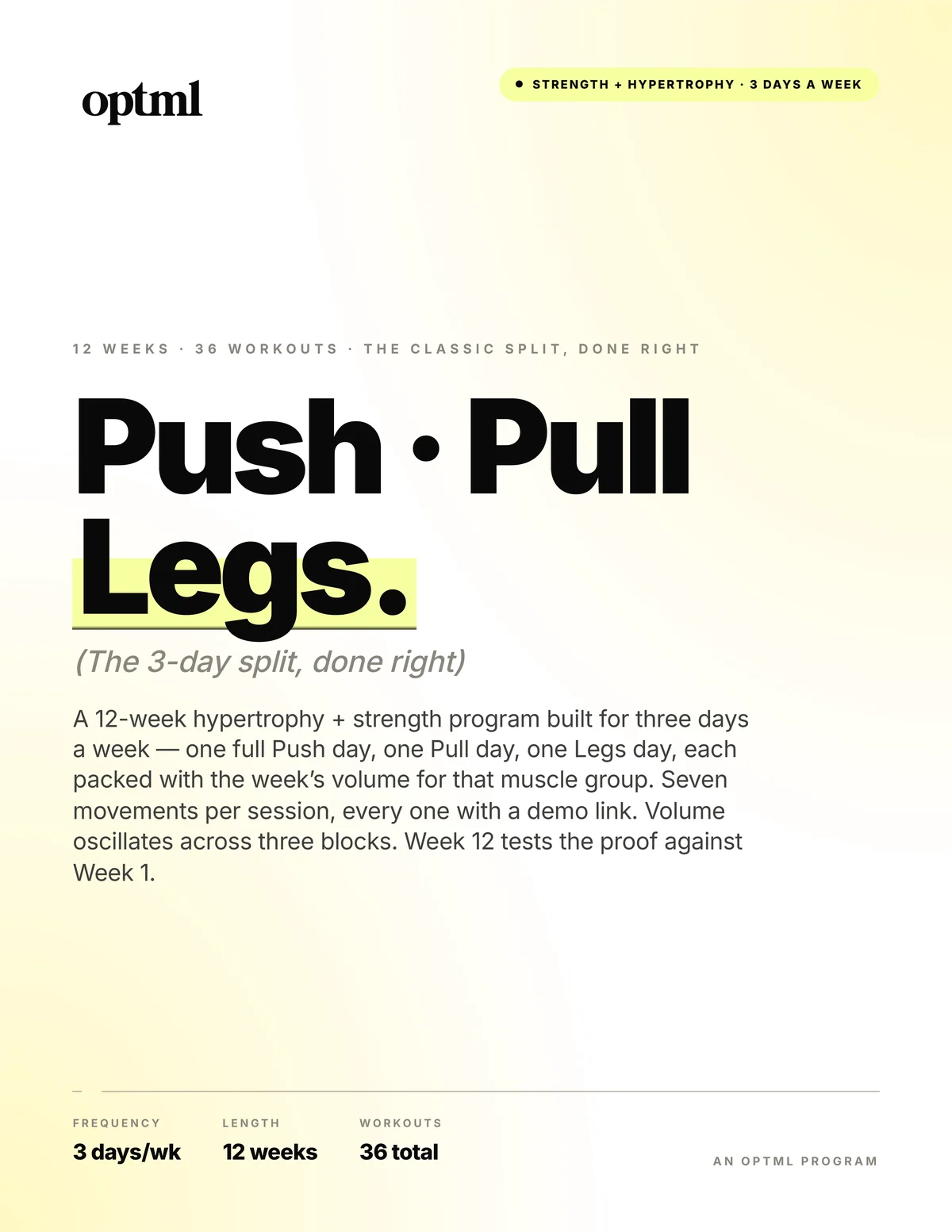 Training
Push / Pull / Legs — 3 Day
$39See inside →
Training
Push / Pull / Legs — 3 Day
$39See inside →
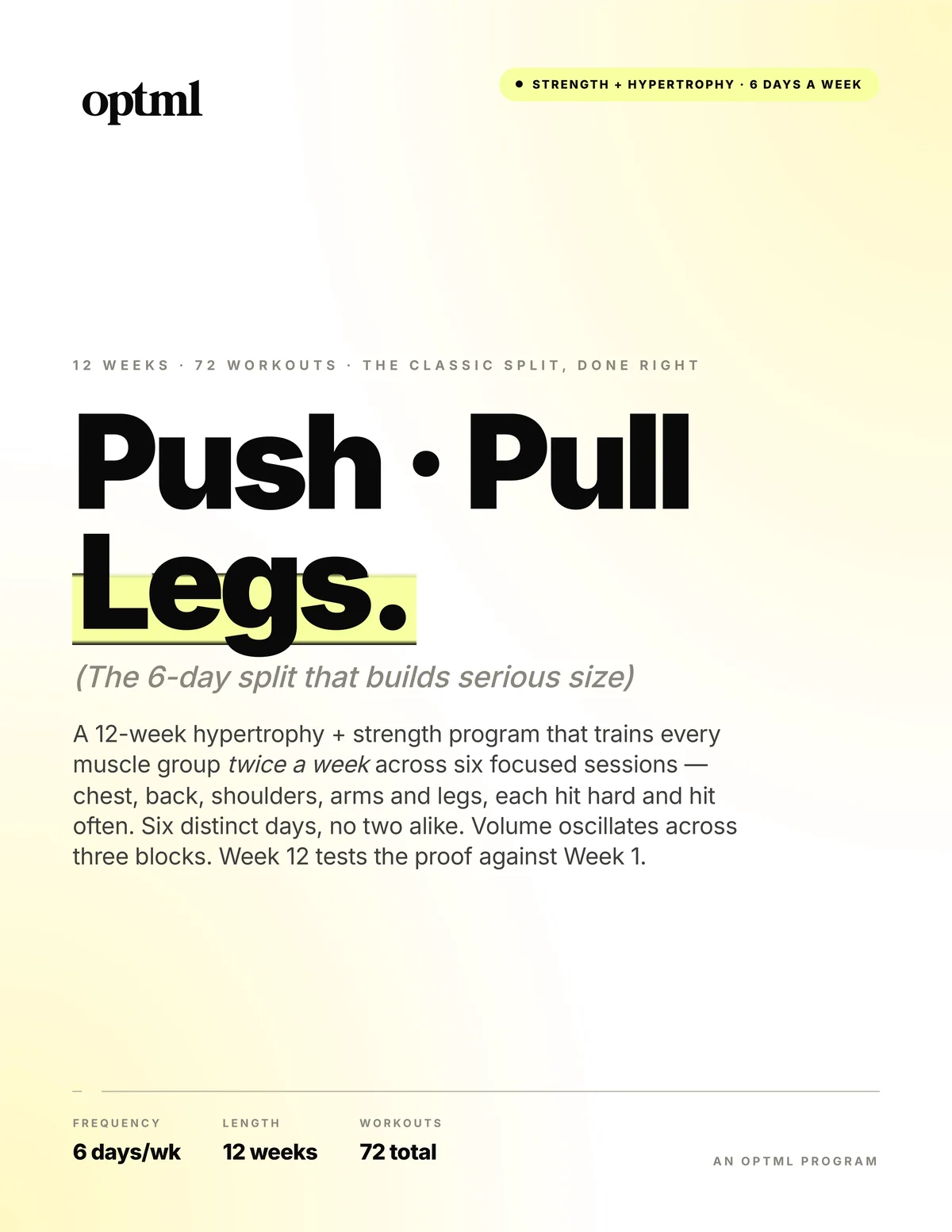 Training
Push / Pull / Legs — 6 Day
$39See inside →
Training
Push / Pull / Legs — 6 Day
$39See inside →
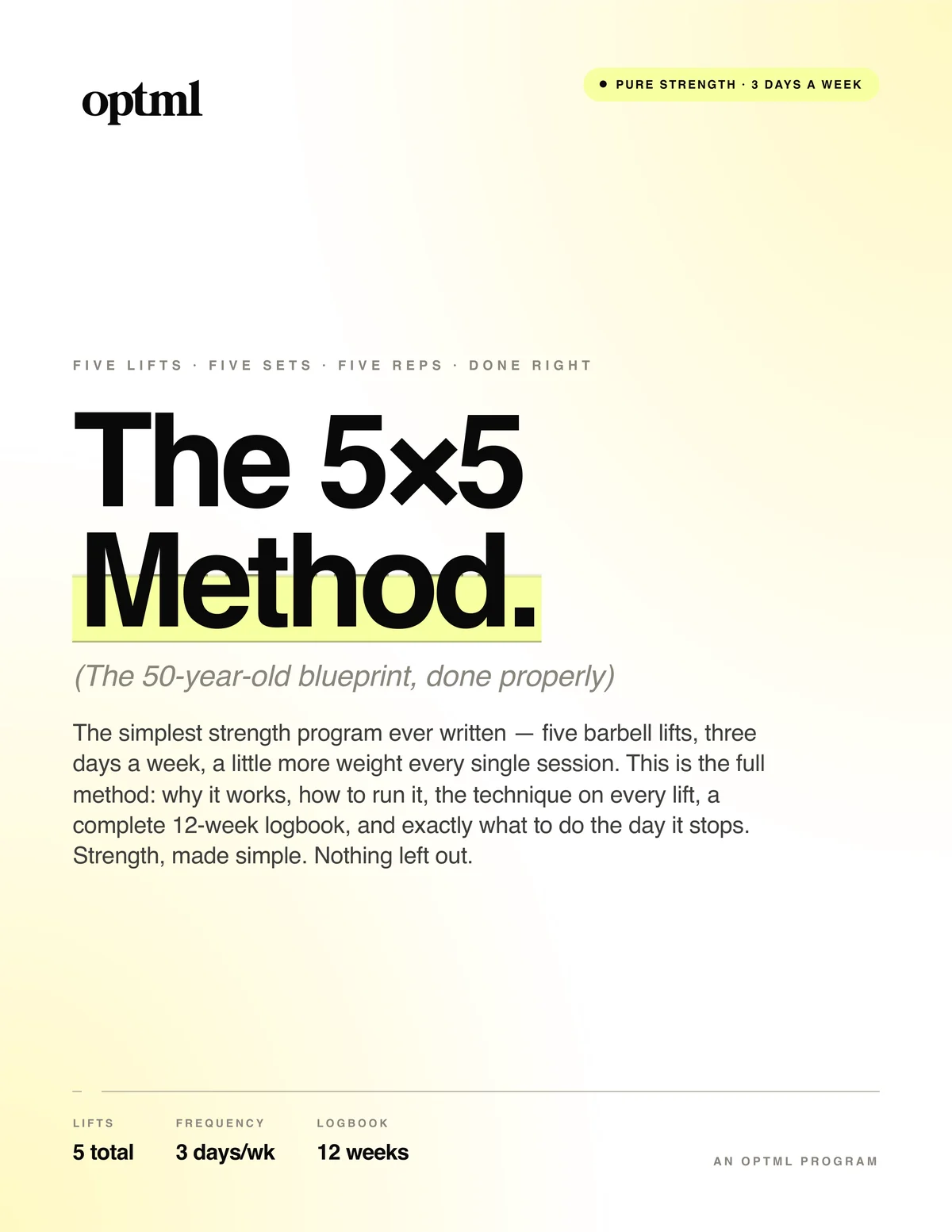 Training
The 5×5 Method
$39See inside →
Training
The 5×5 Method
$39See inside →
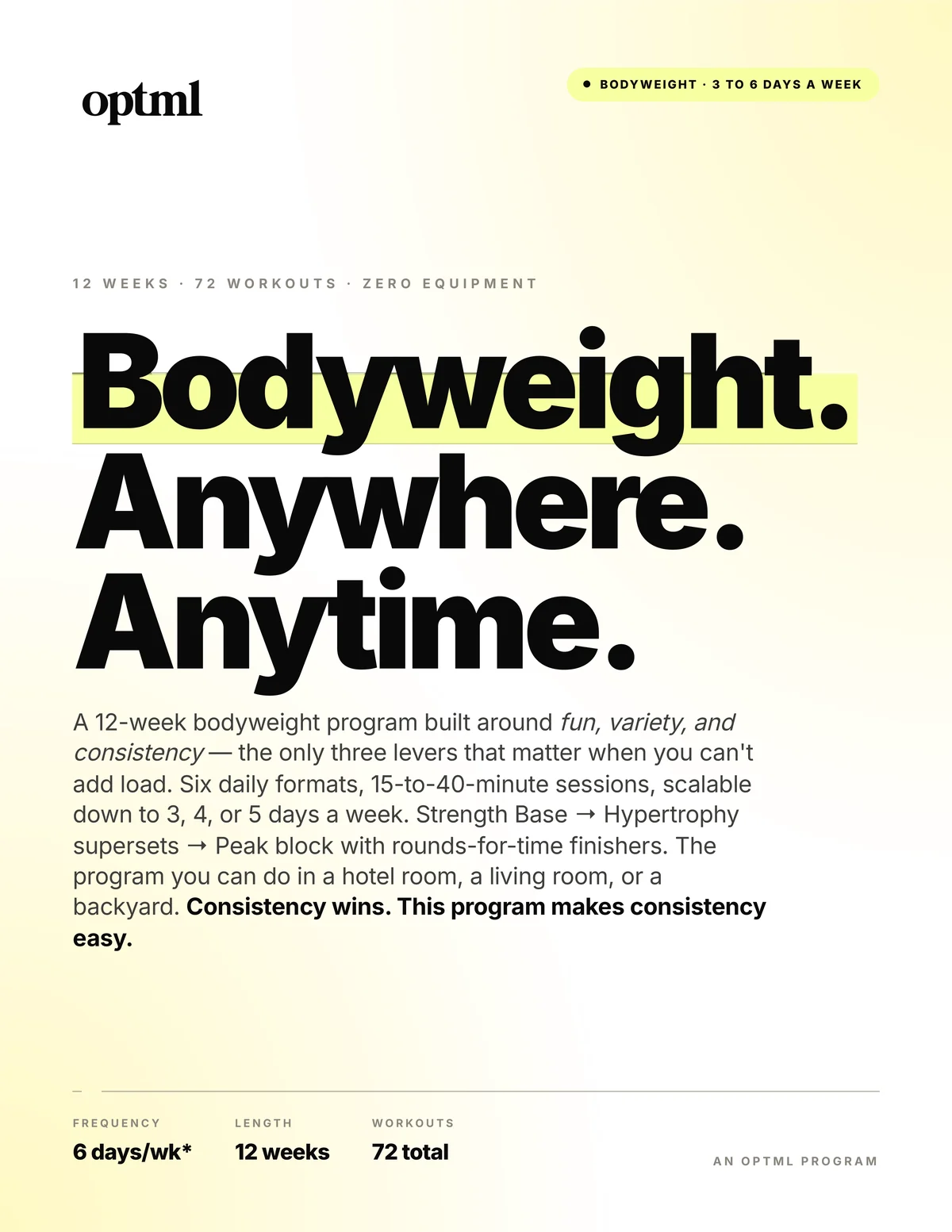 Training
Bodyweight Training
$39See inside →
Training
Bodyweight Training
$39See inside →
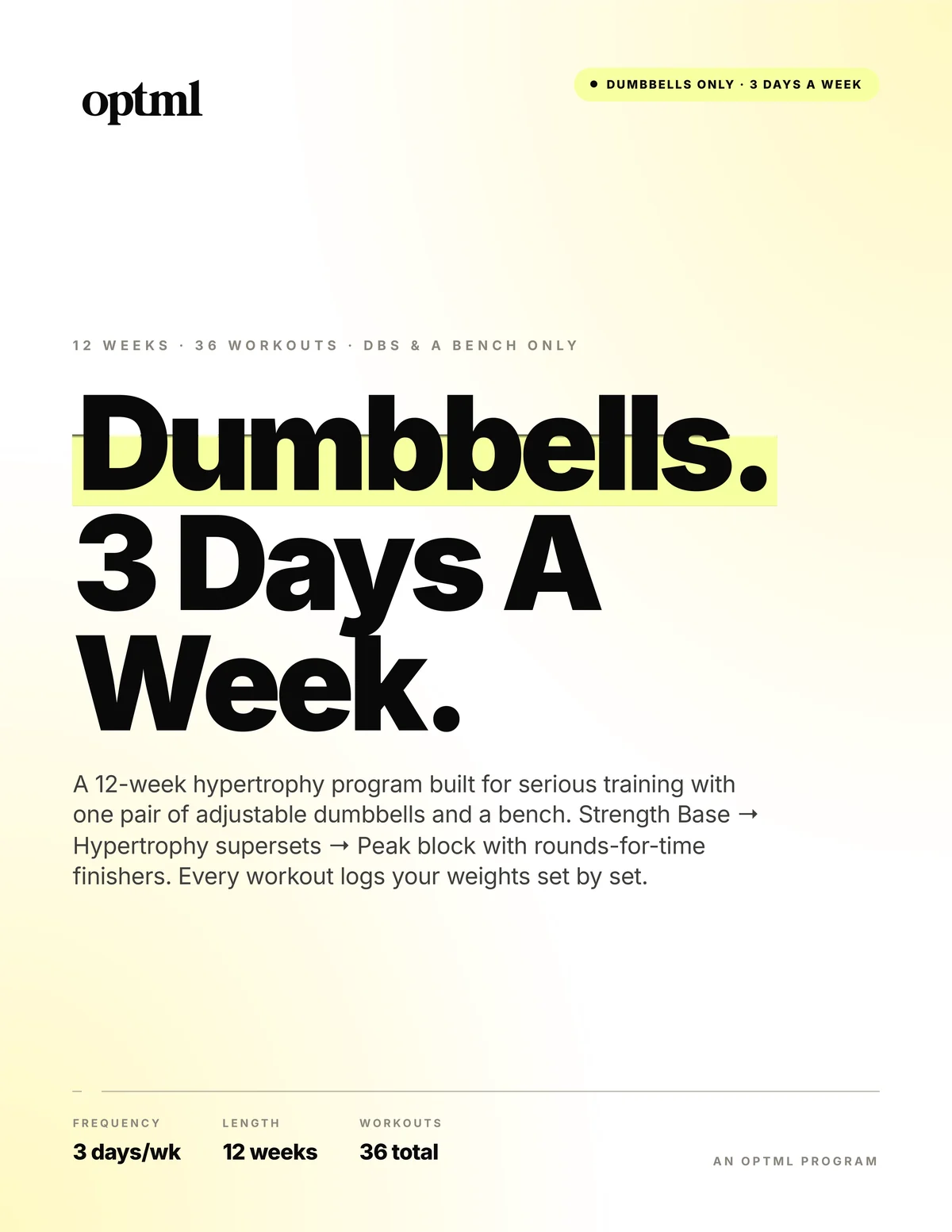 Training
Dumbbell Only — 3 Day
$39See inside →
Training
Dumbbell Only — 3 Day
$39See inside →
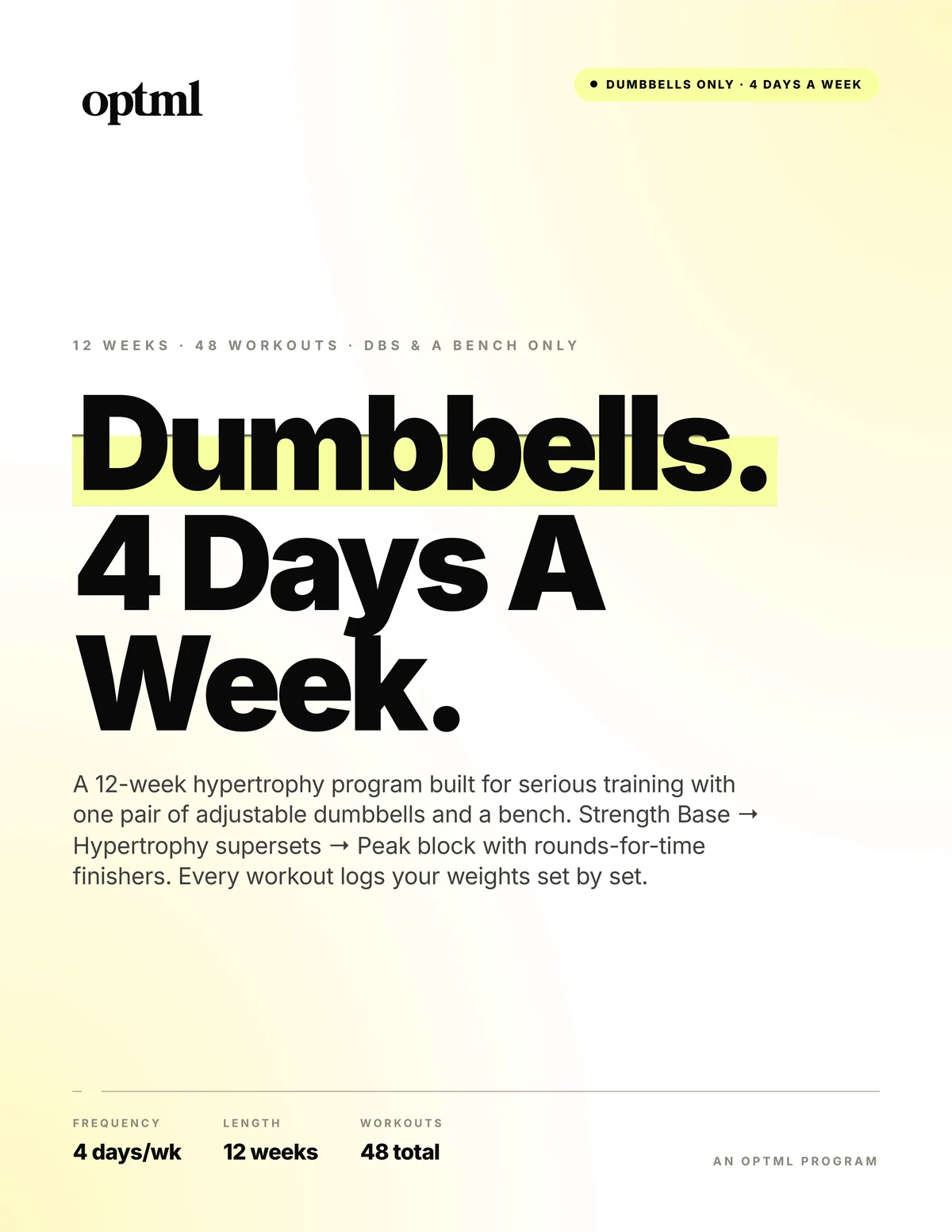 Training
Dumbbell Only — 4 Day
$39See inside →
Training
Dumbbell Only — 4 Day
$39See inside →
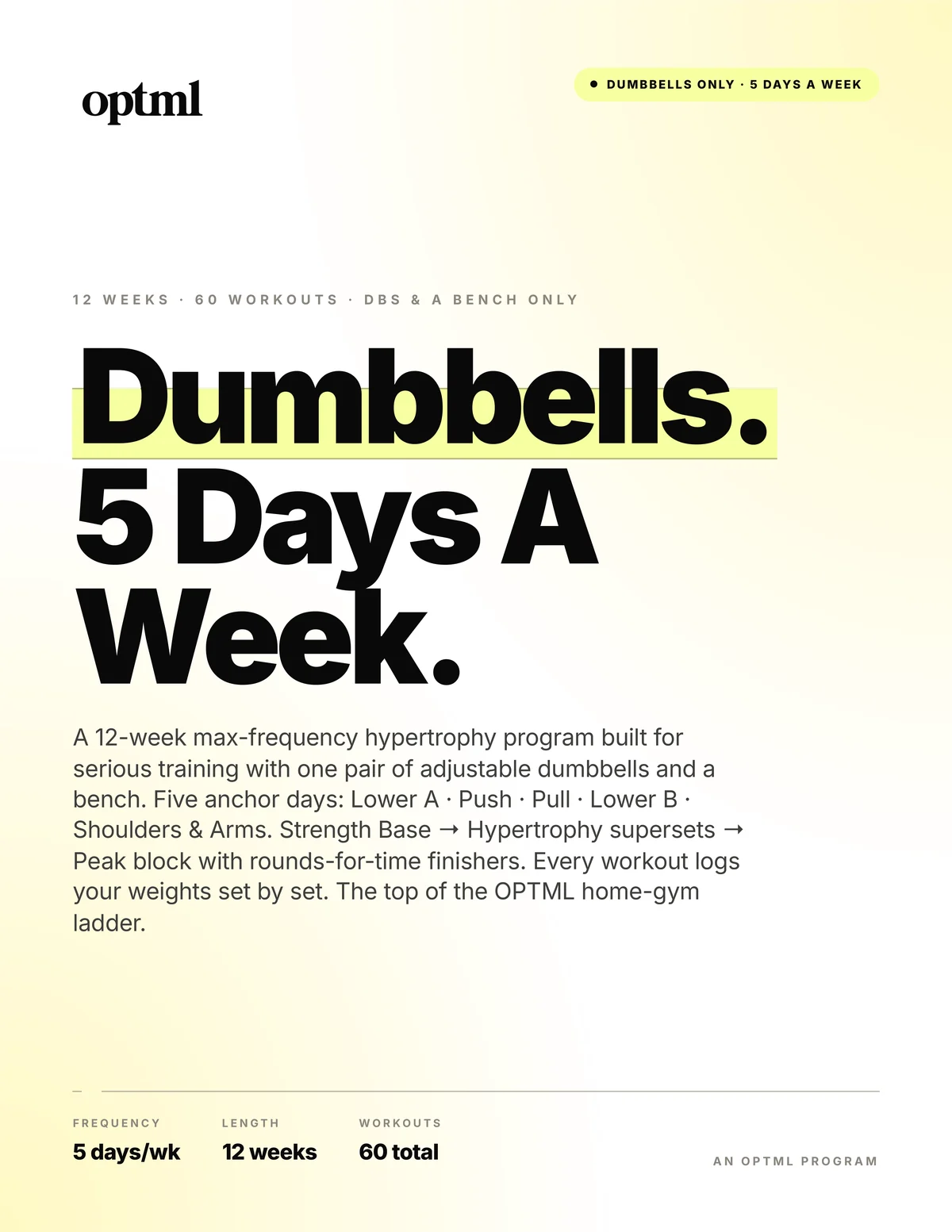 Training
Dumbbell Only — 5 Day
$39See inside →
Training
Dumbbell Only — 5 Day
$39See inside →
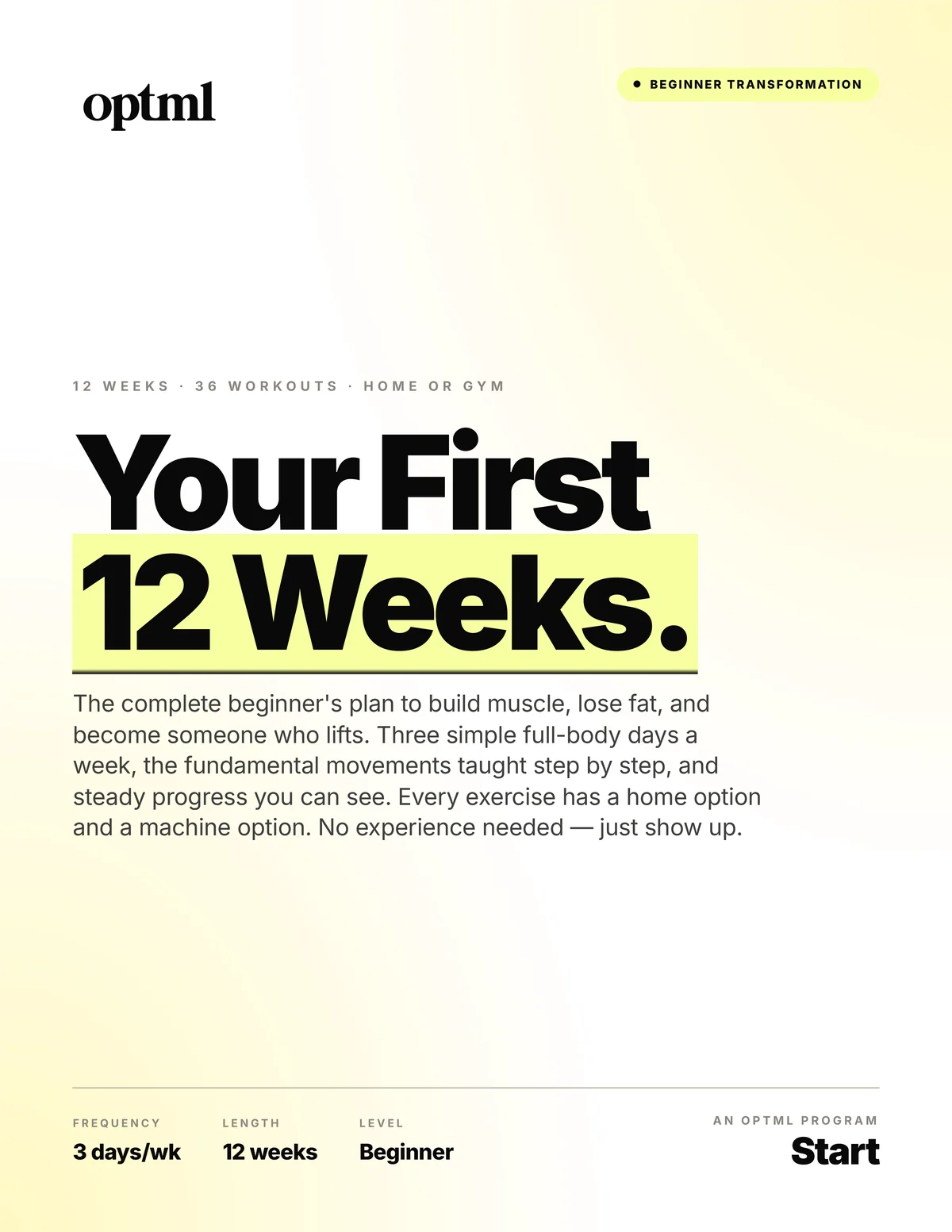 Training
Your First 12 Weeks
$39See inside →
Training
Your First 12 Weeks
$39See inside →
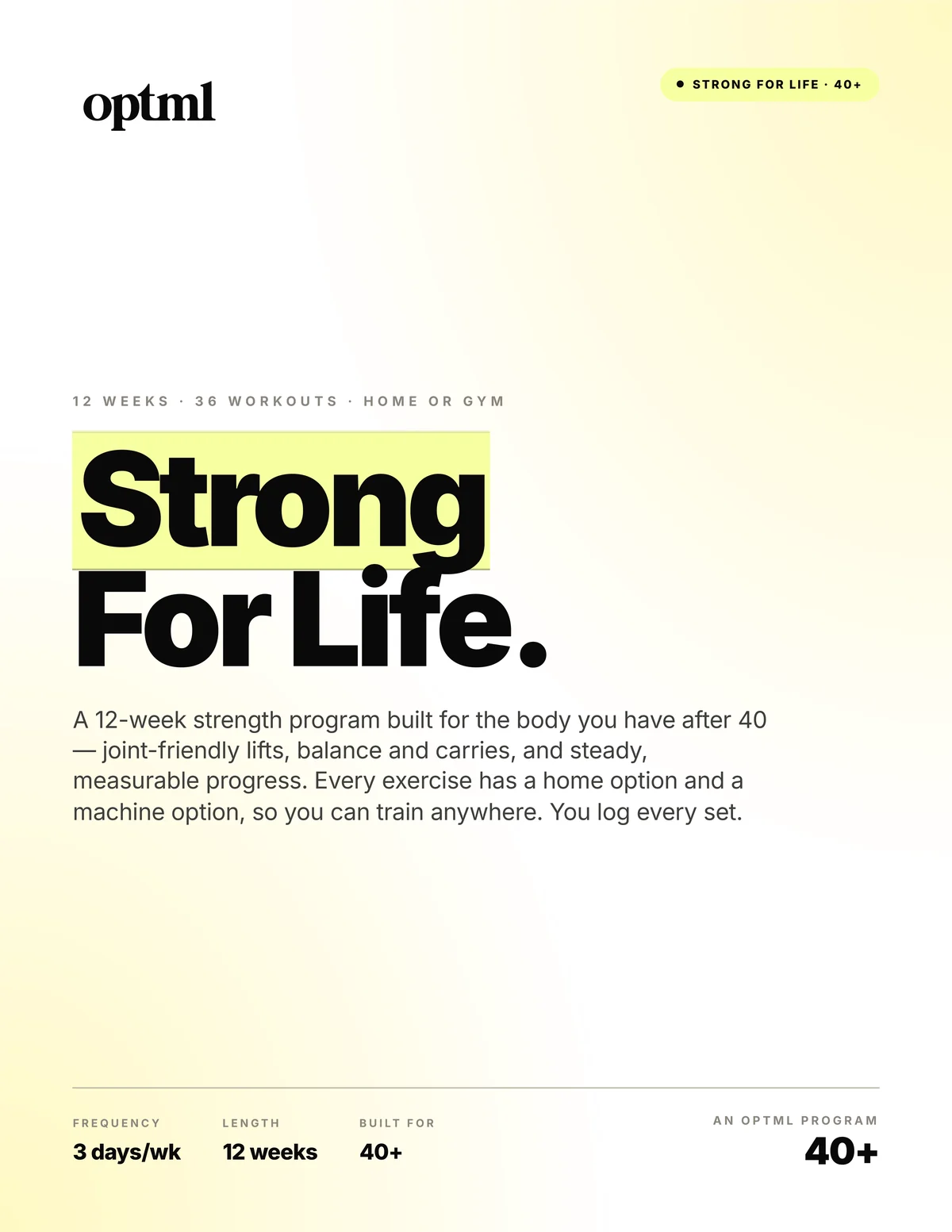 Training
Strong For Life (40+)
$39See inside →
Training
Strong For Life (40+)
$39See inside →
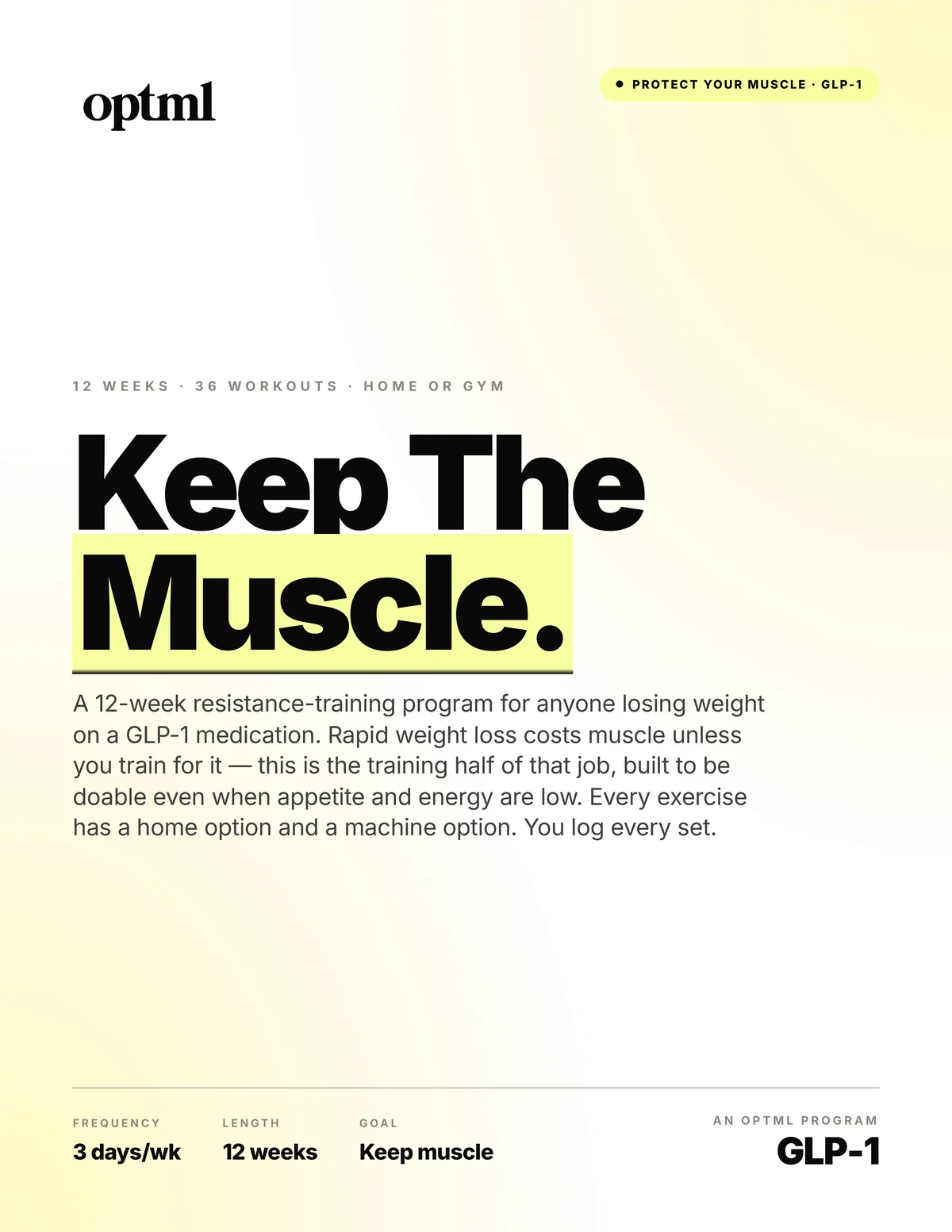 Training
Protect Your Muscle (GLP-1)
$39See inside →
Training
Protect Your Muscle (GLP-1)
$39See inside →
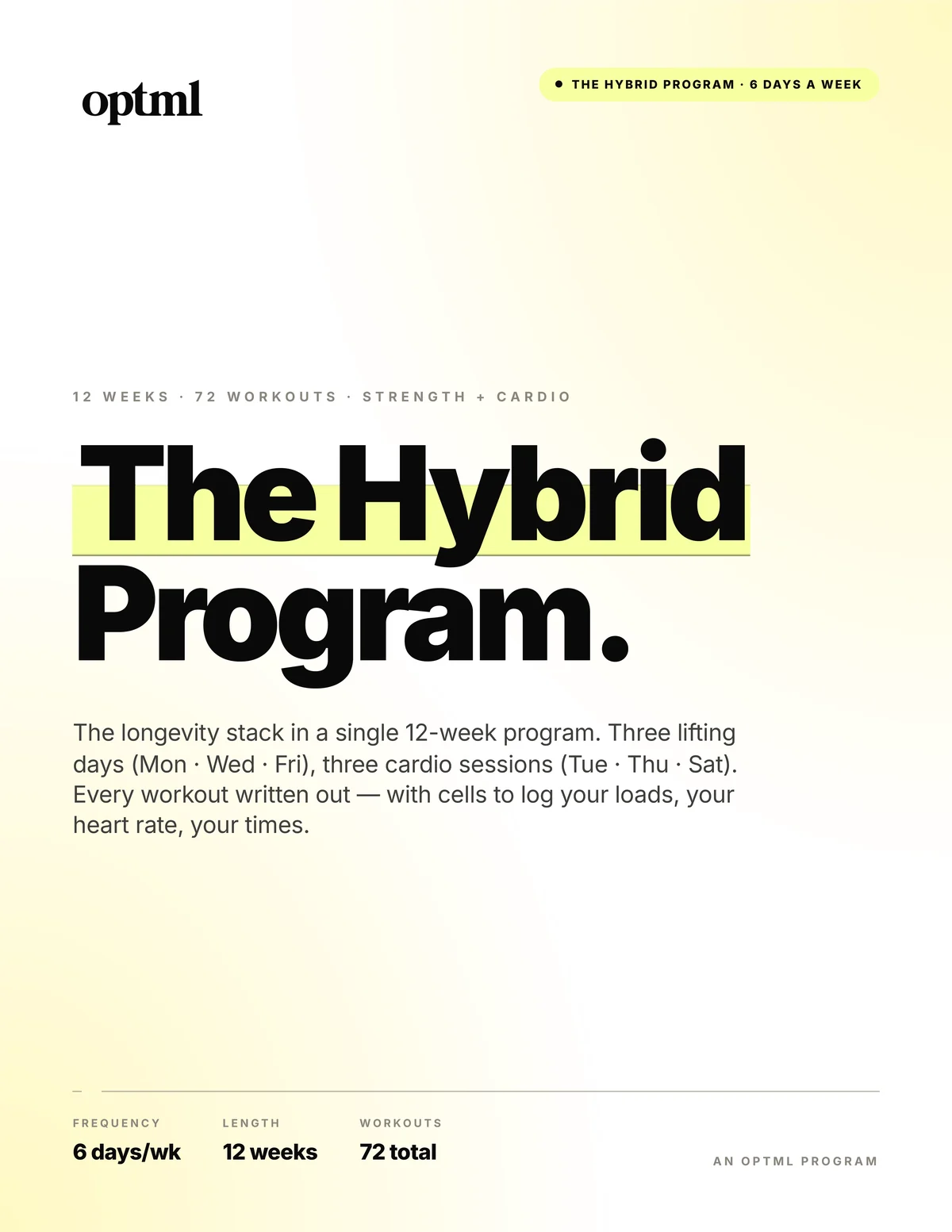 Training
Hybrid — 6 Day
$39See inside →
Training
Hybrid — 6 Day
$39See inside →
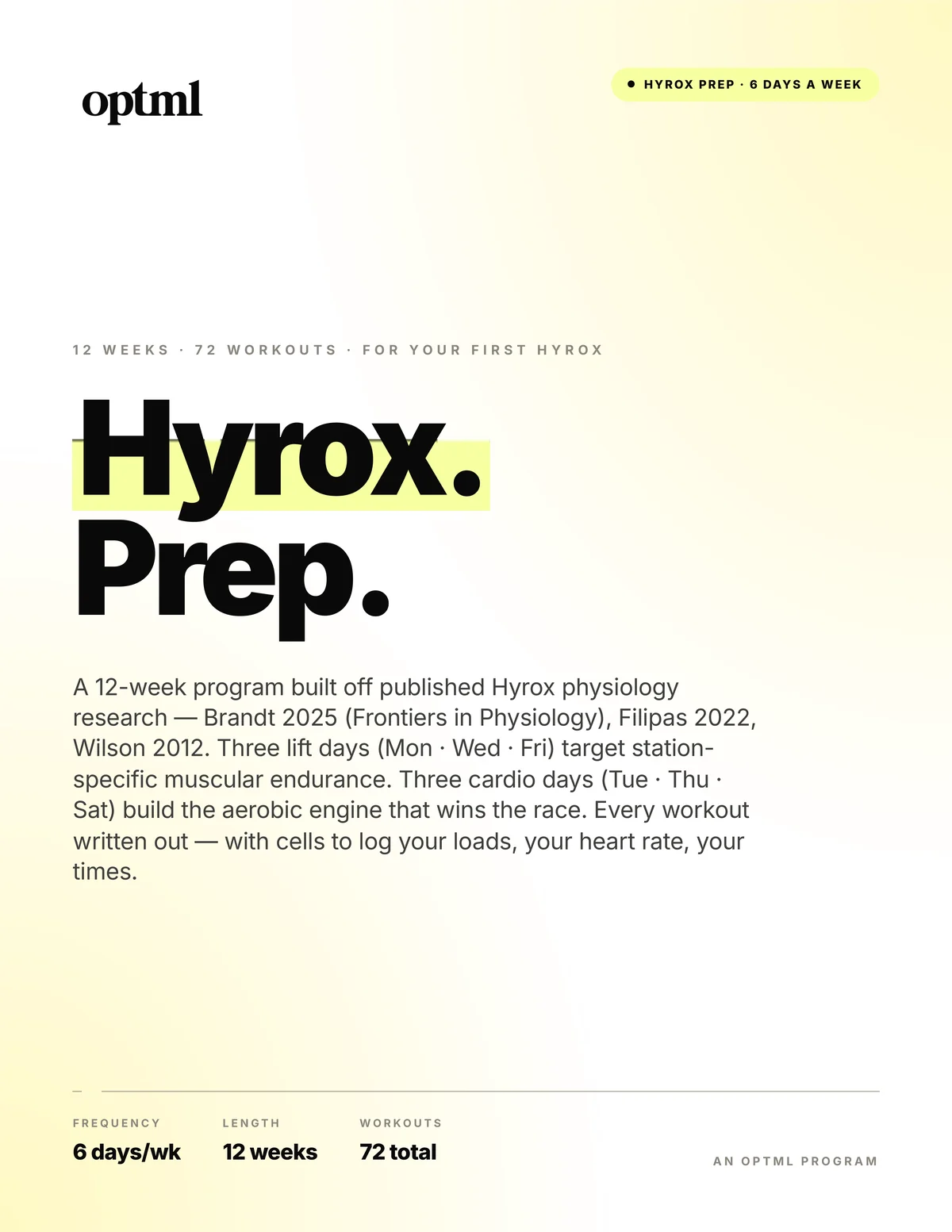 Training
Hyrox Prep
$39See inside →
Training
Hyrox Prep
$39See inside →
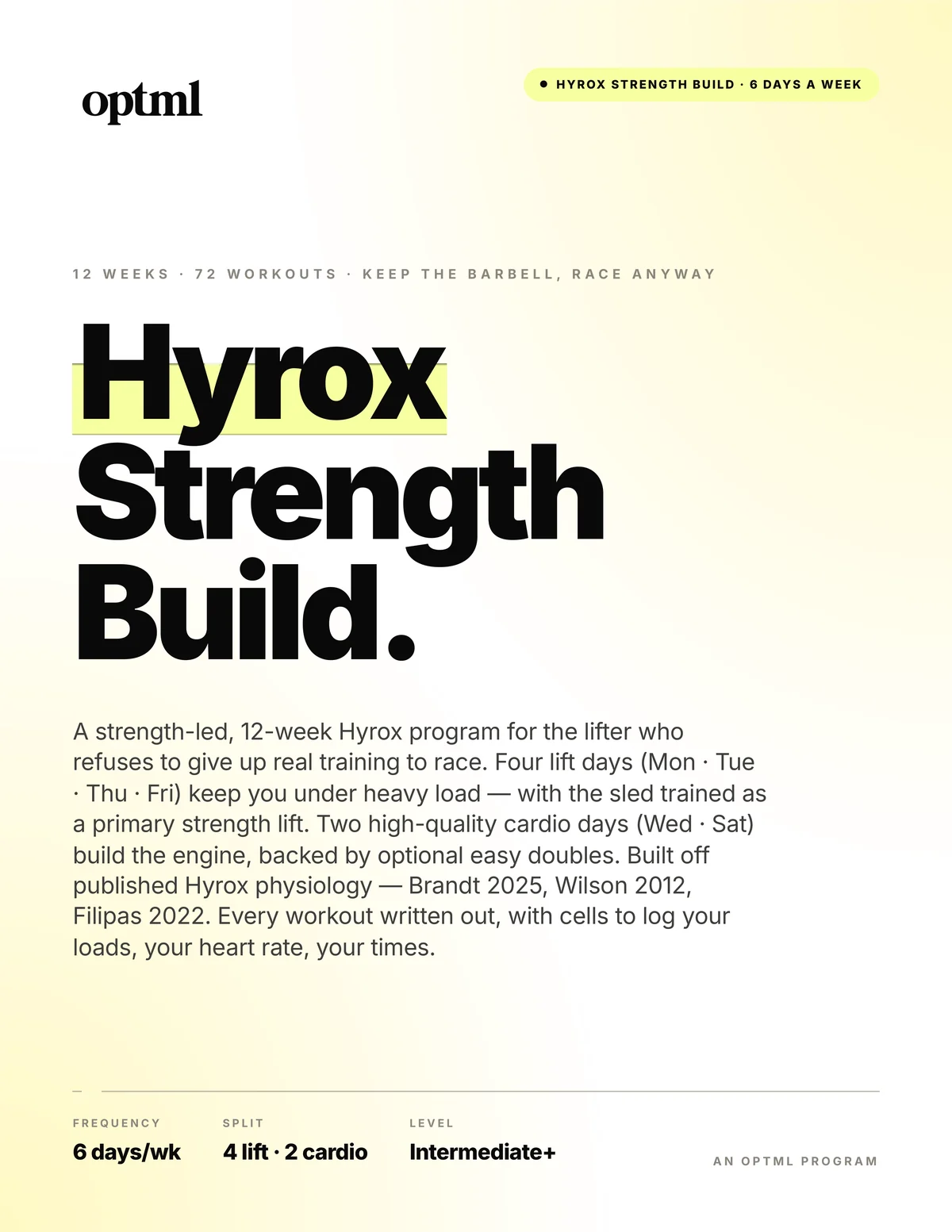 Training
Hyrox Strength Build
$39See inside →
Training
Hyrox Strength Build
$39See inside →
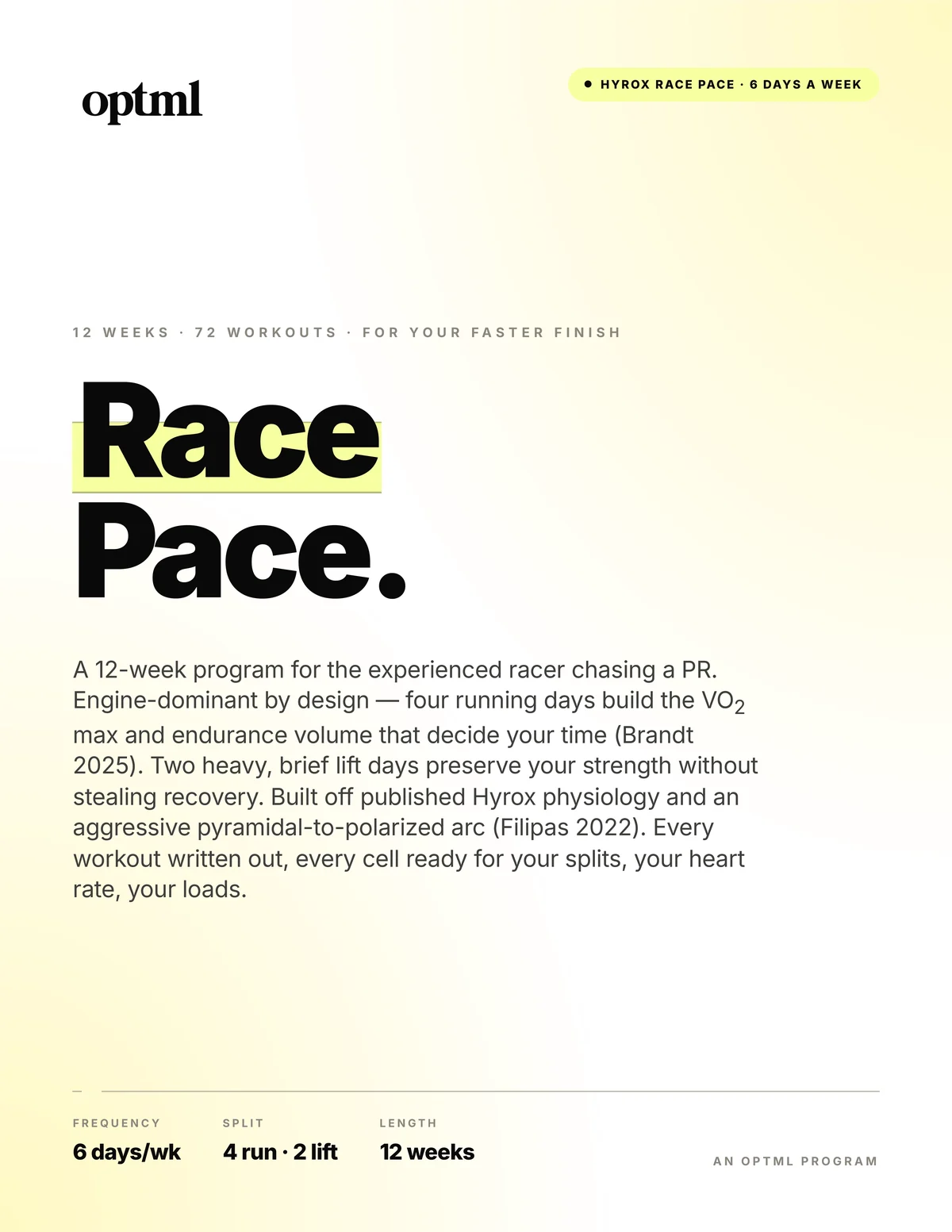 Training
Hyrox Race Pace
$39See inside →
Training
Hyrox Race Pace
$39See inside →
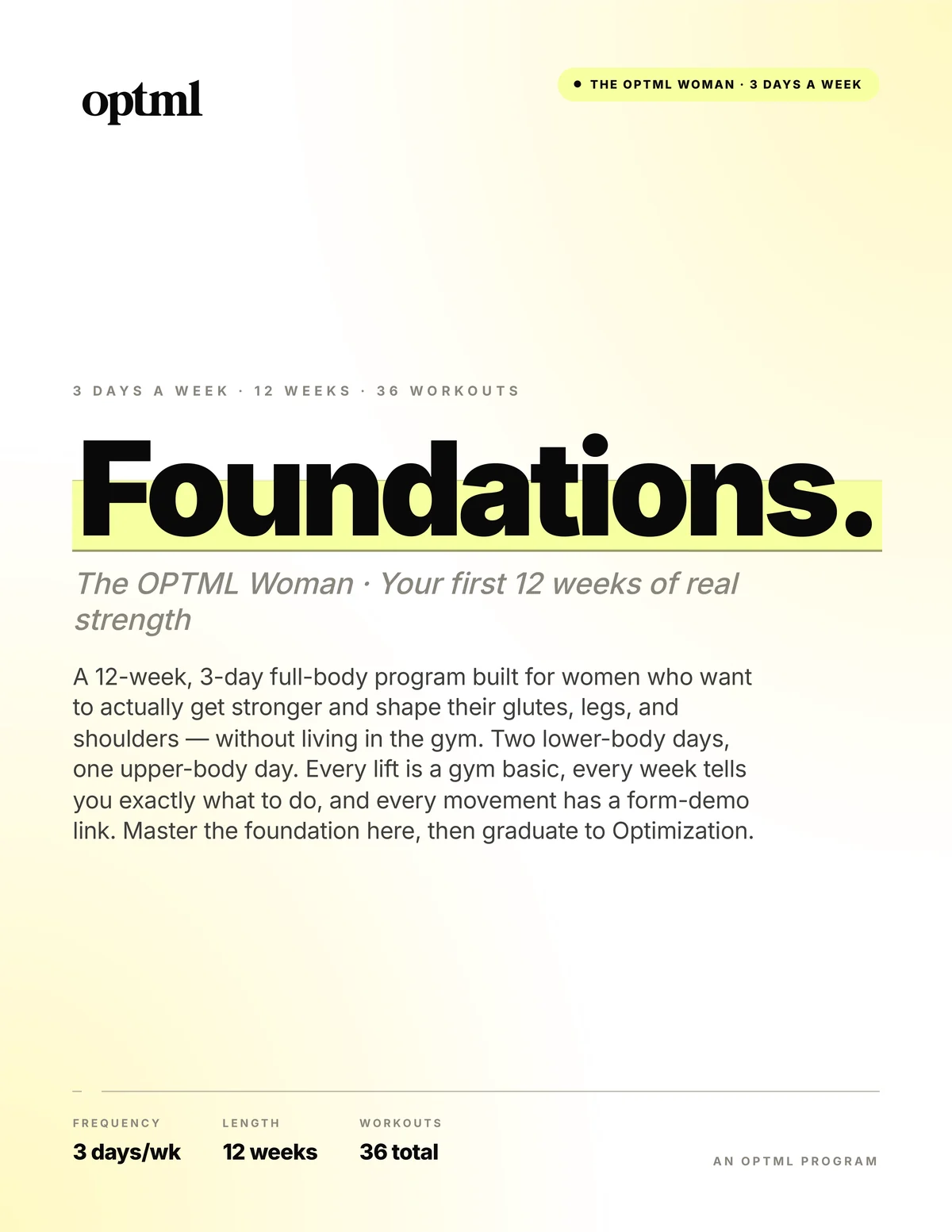 Training
The OPTML Woman — Foundations
$39See inside →
Training
The OPTML Woman — Foundations
$39See inside →
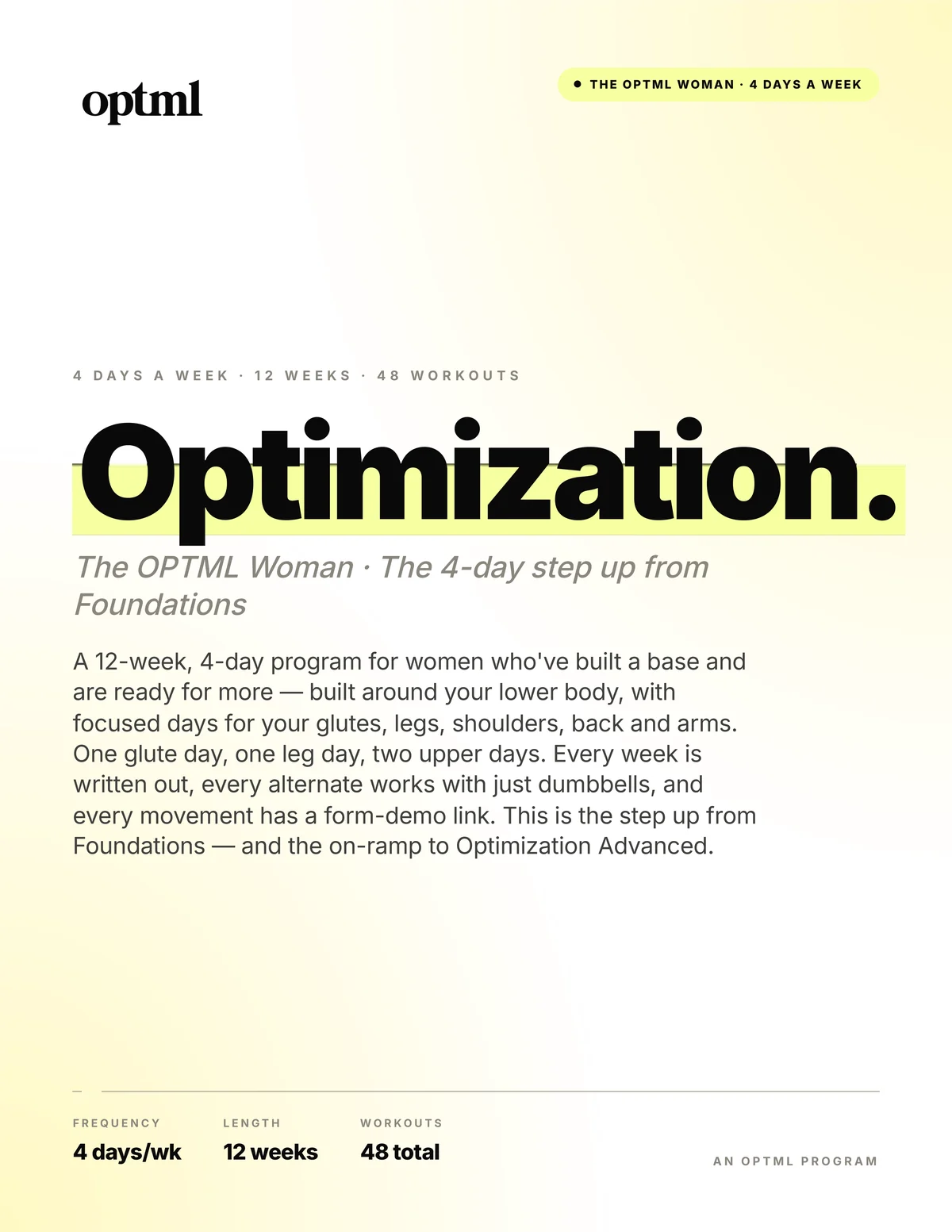 Training
The OPTML Woman — Optimization
$39See inside →
Training
The OPTML Woman — Optimization
$39See inside →
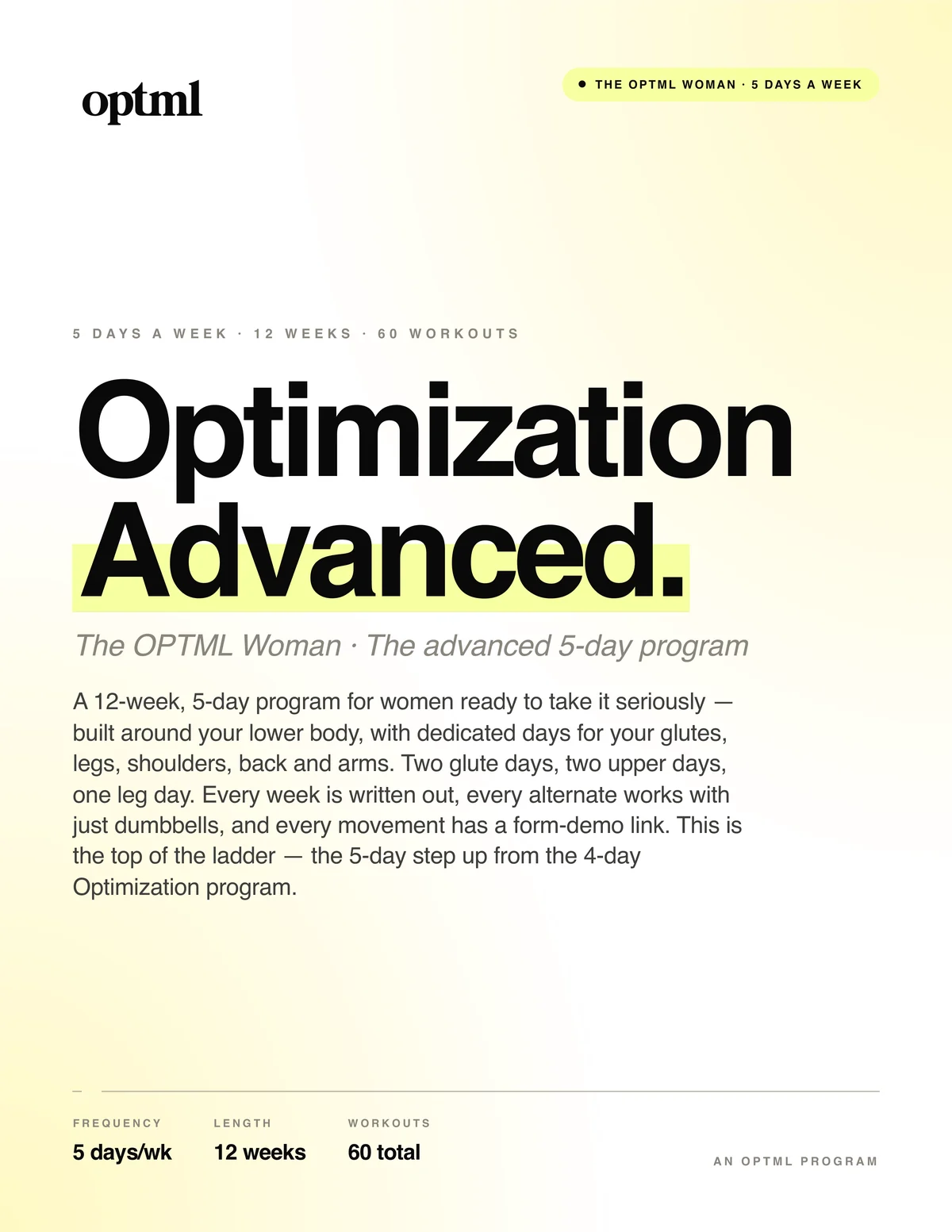 Training
The OPTML Woman — Advanced
$39See inside →
Training
The OPTML Woman — Advanced
$39See inside →
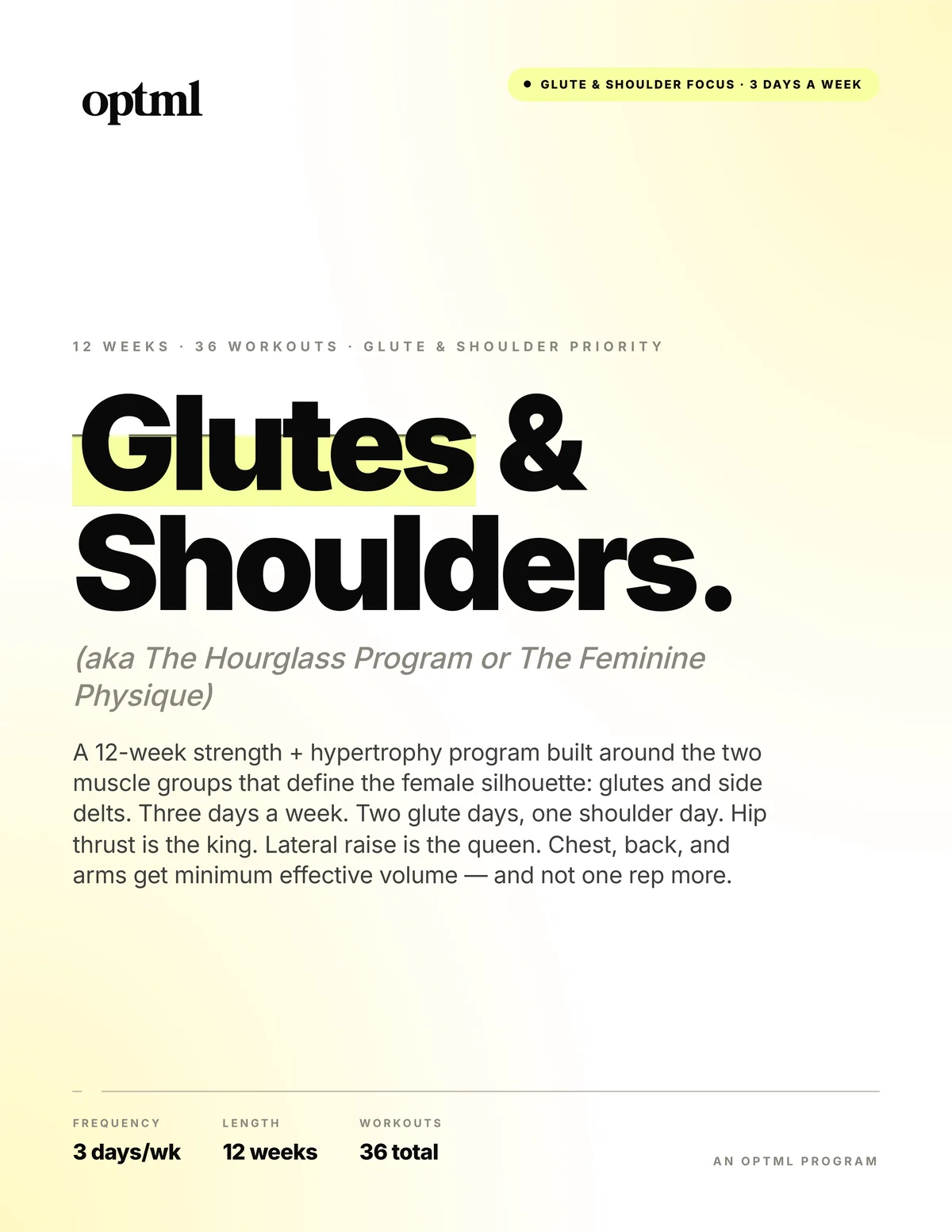 Training
Hourglass — 3 Day
$39See inside →
Training
Hourglass — 3 Day
$39See inside →
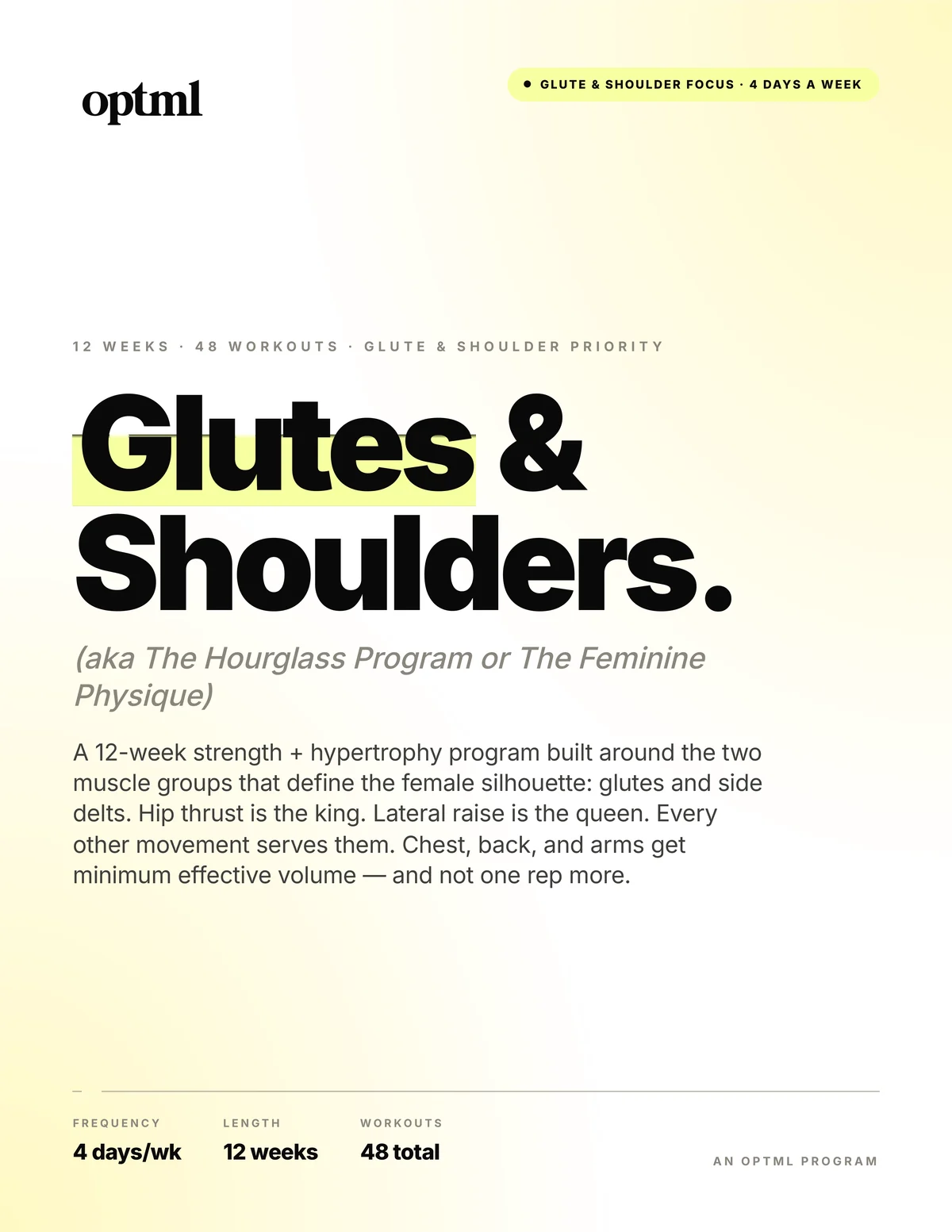 Training
Hourglass — Barbell (4 Day)
$39See inside →
Training
Hourglass — Barbell (4 Day)
$39See inside →
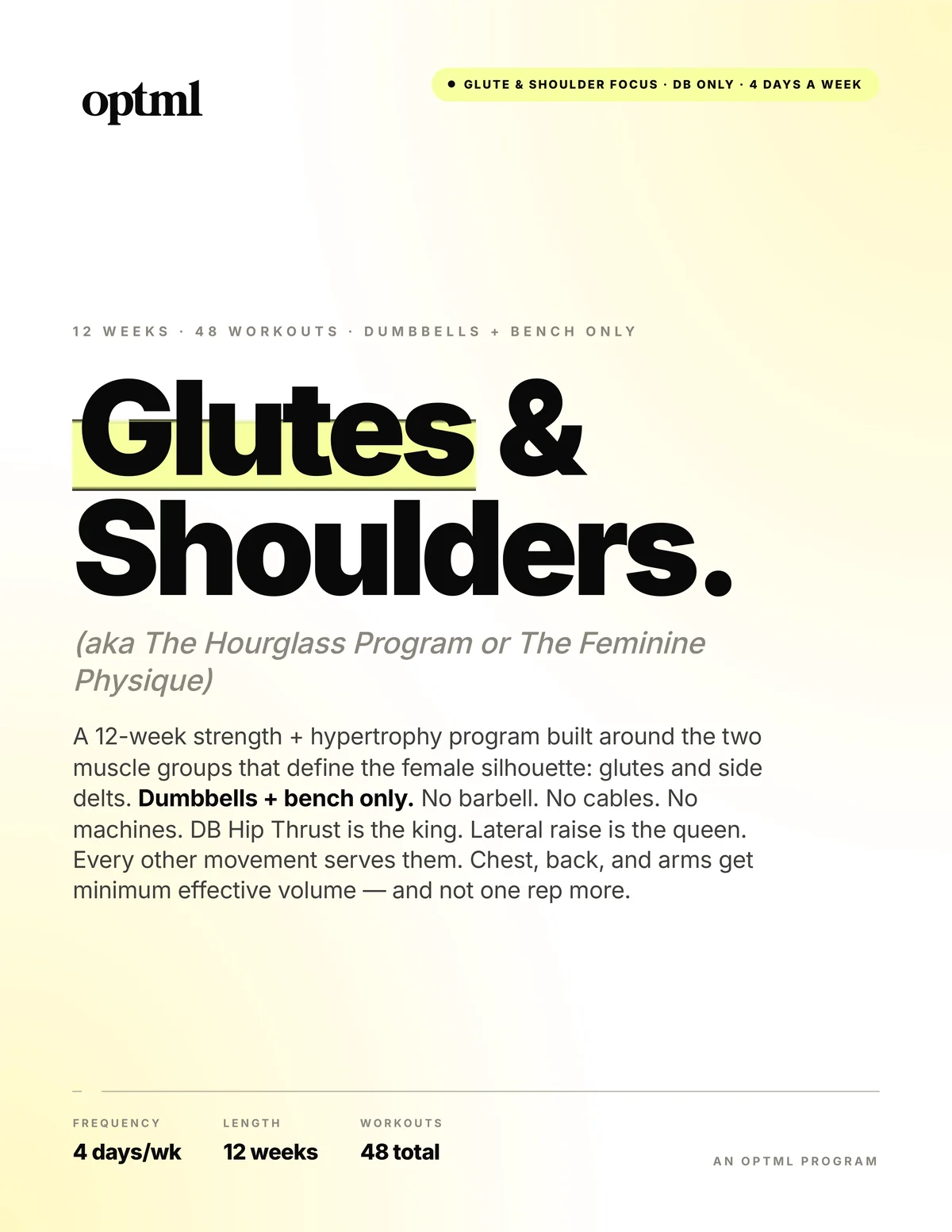 Training
Hourglass — Dumbbell (4 Day)
$39See inside →
Training
Hourglass — Dumbbell (4 Day)
$39See inside →
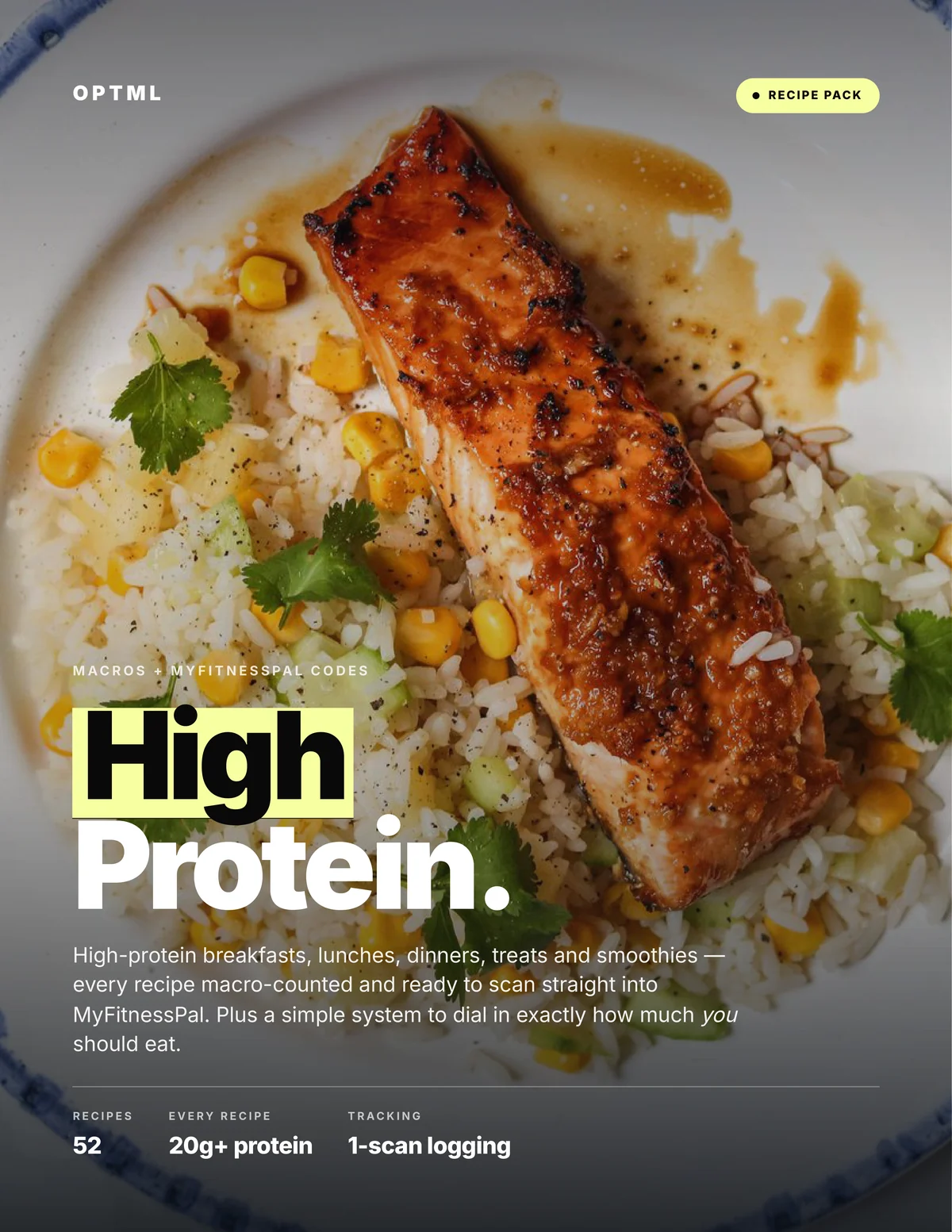 Nutrition
High-Protein Recipes
$39See inside →
Nutrition
High-Protein Recipes
$39See inside →
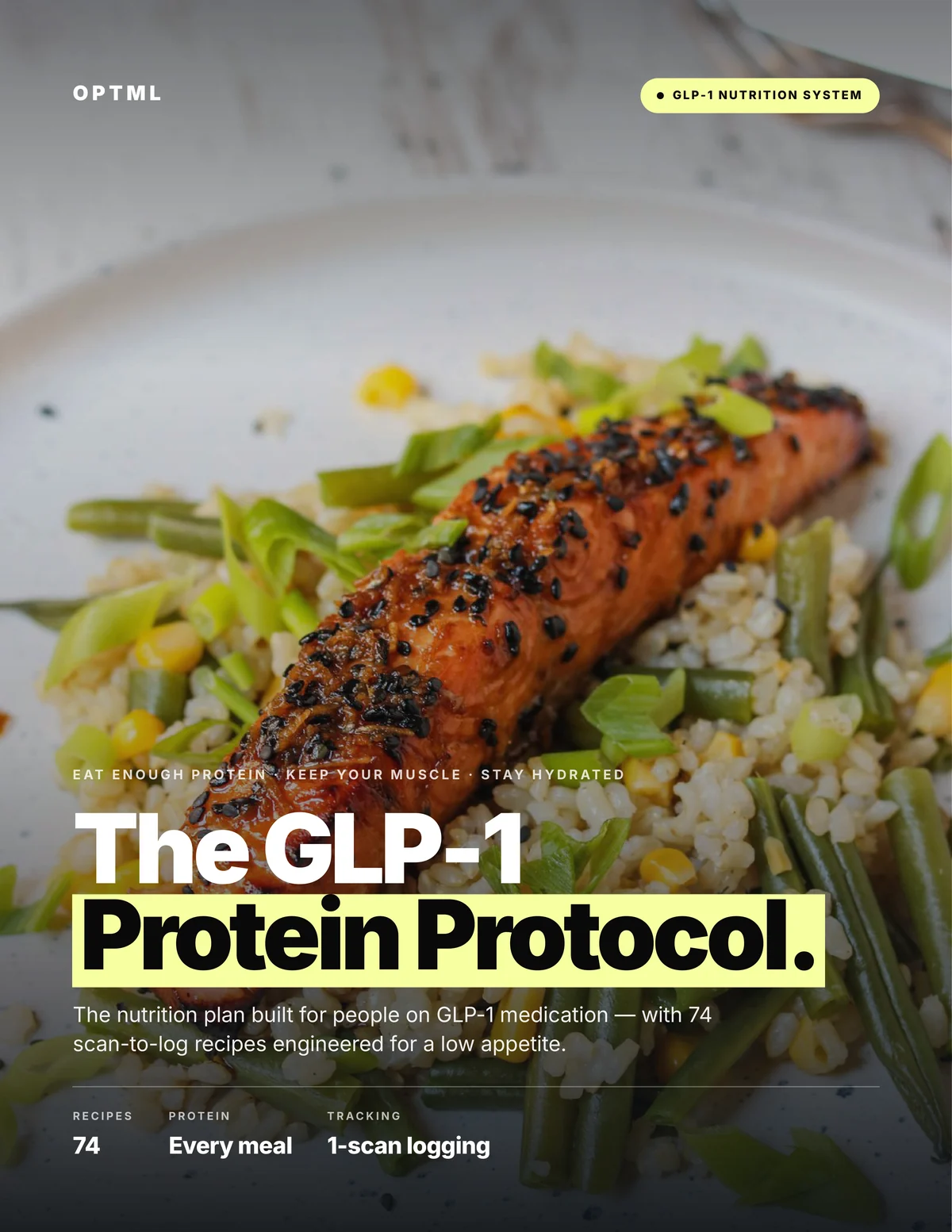 Nutrition
The GLP-1 Protein Protocol
$39See inside →
Nutrition
The GLP-1 Protein Protocol
$39See inside →
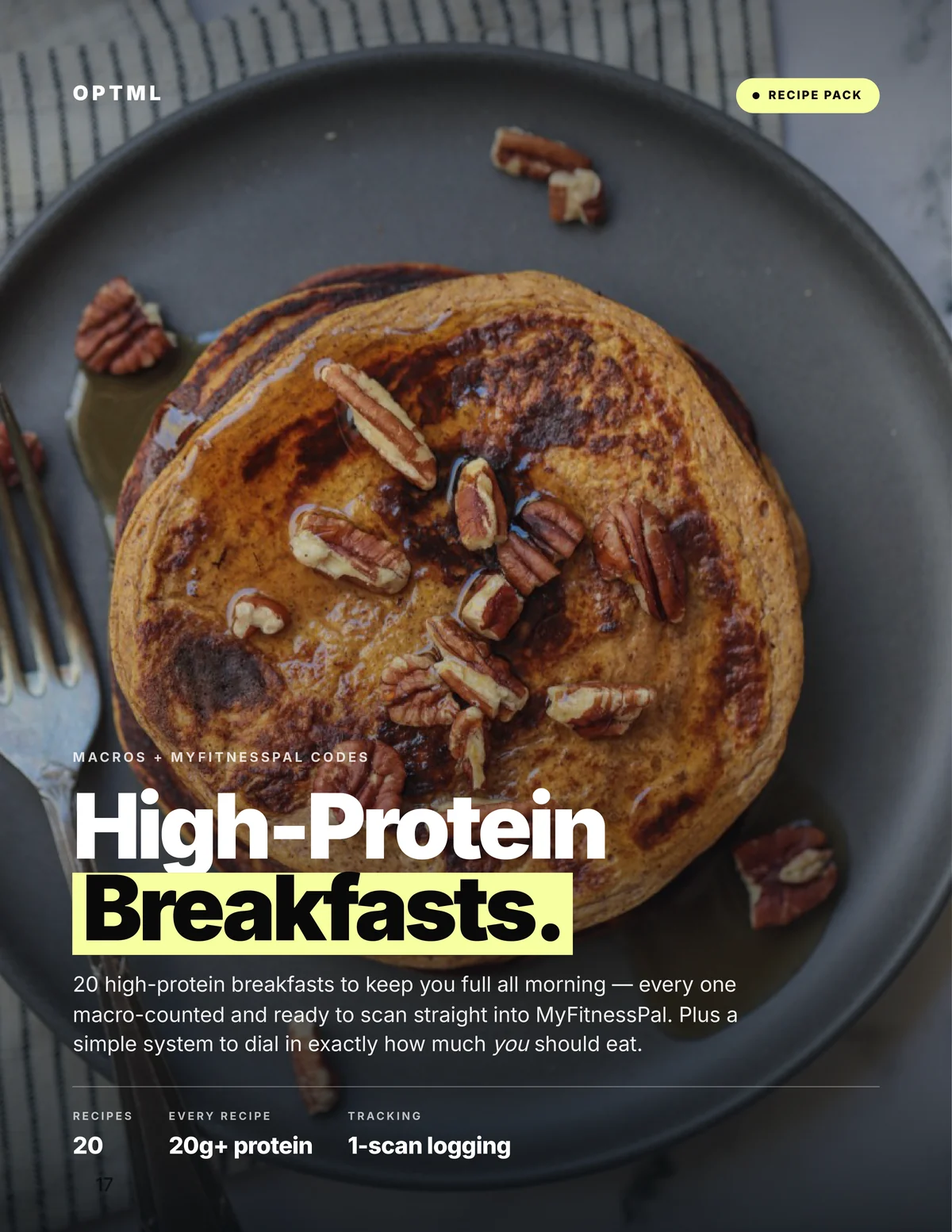 Nutrition
High-Protein Breakfasts
$29See inside →
Nutrition
High-Protein Breakfasts
$29See inside →
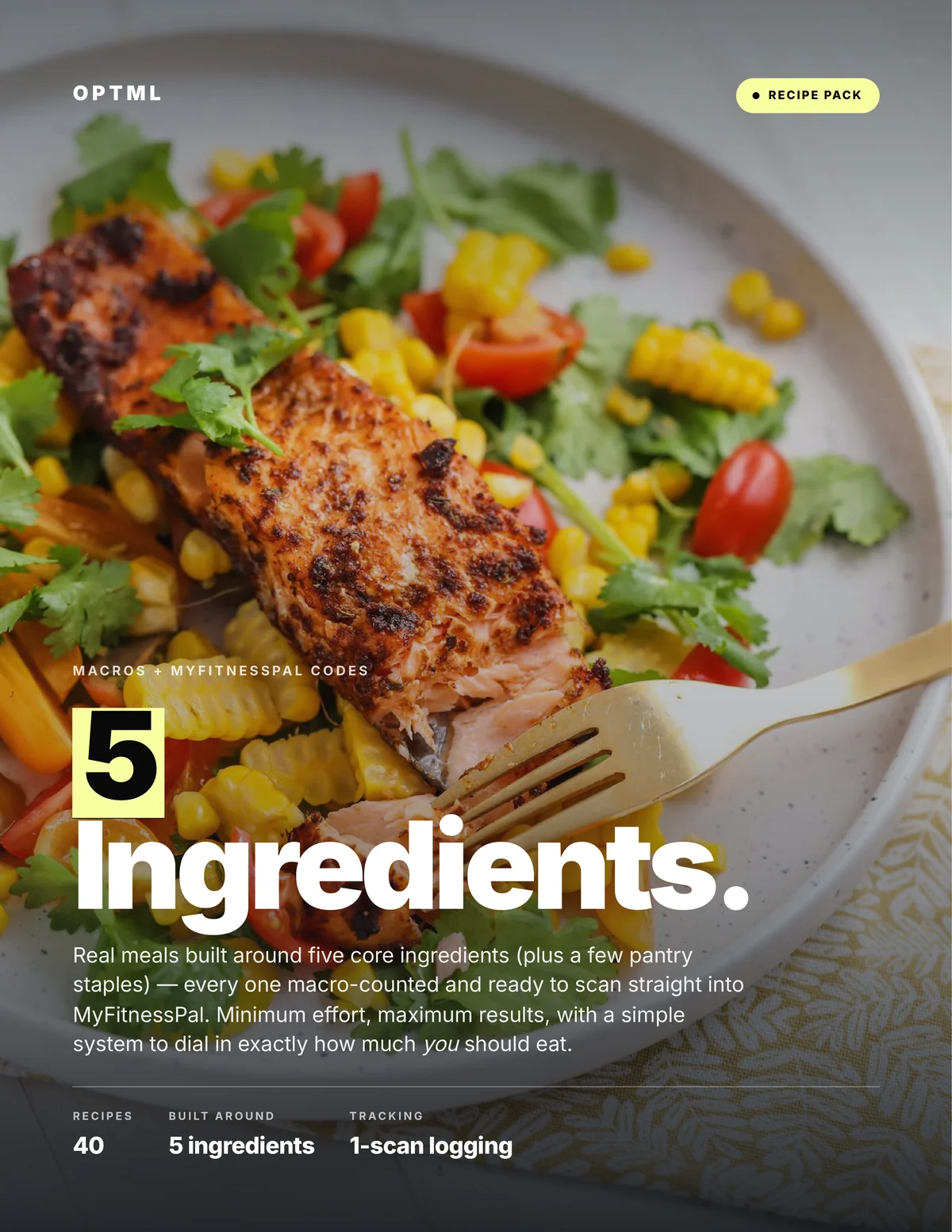 Nutrition
5-Ingredient Recipes
$39See inside →
Nutrition
5-Ingredient Recipes
$39See inside →
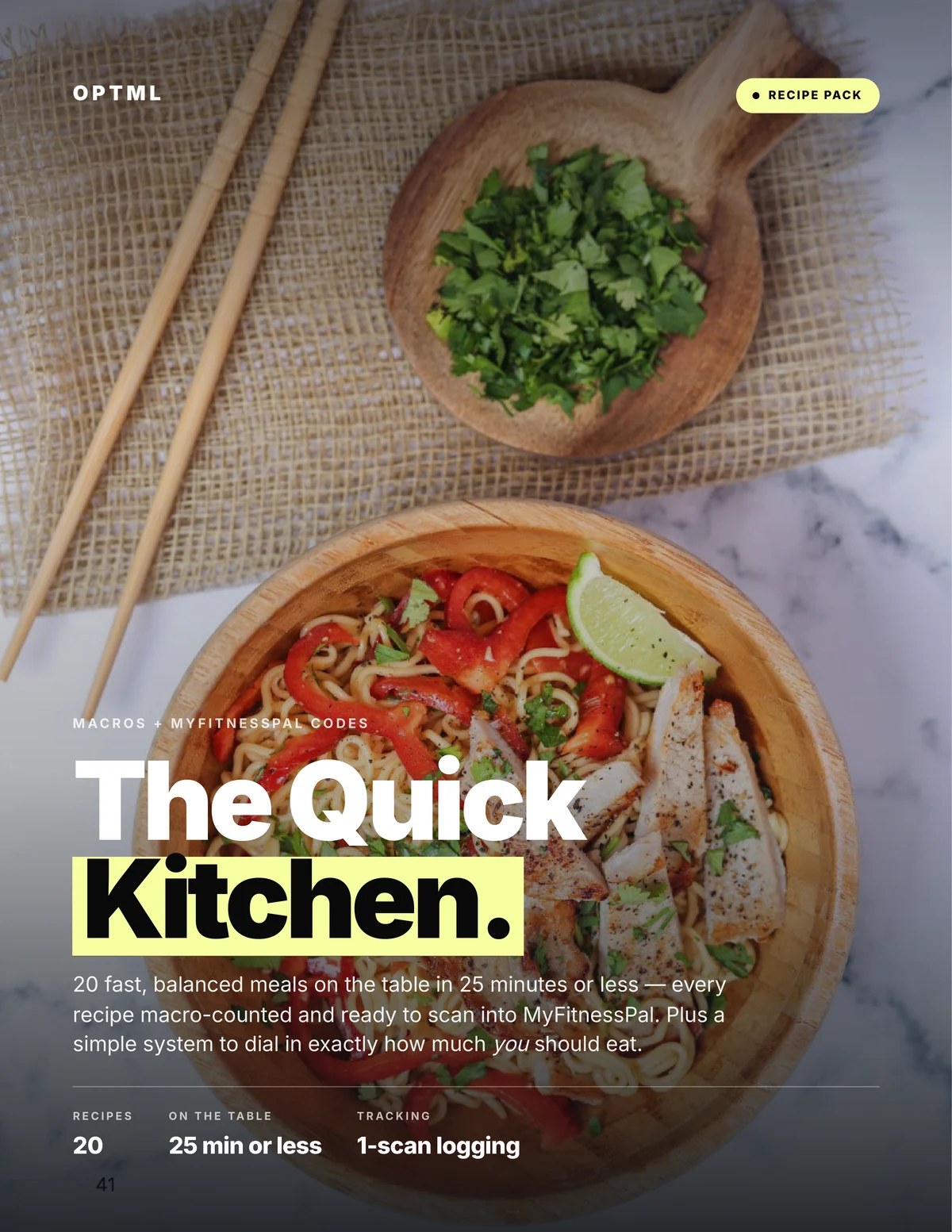 Nutrition
Quick Kitchen Recipes
$19See inside →
Nutrition
Quick Kitchen Recipes
$19See inside →
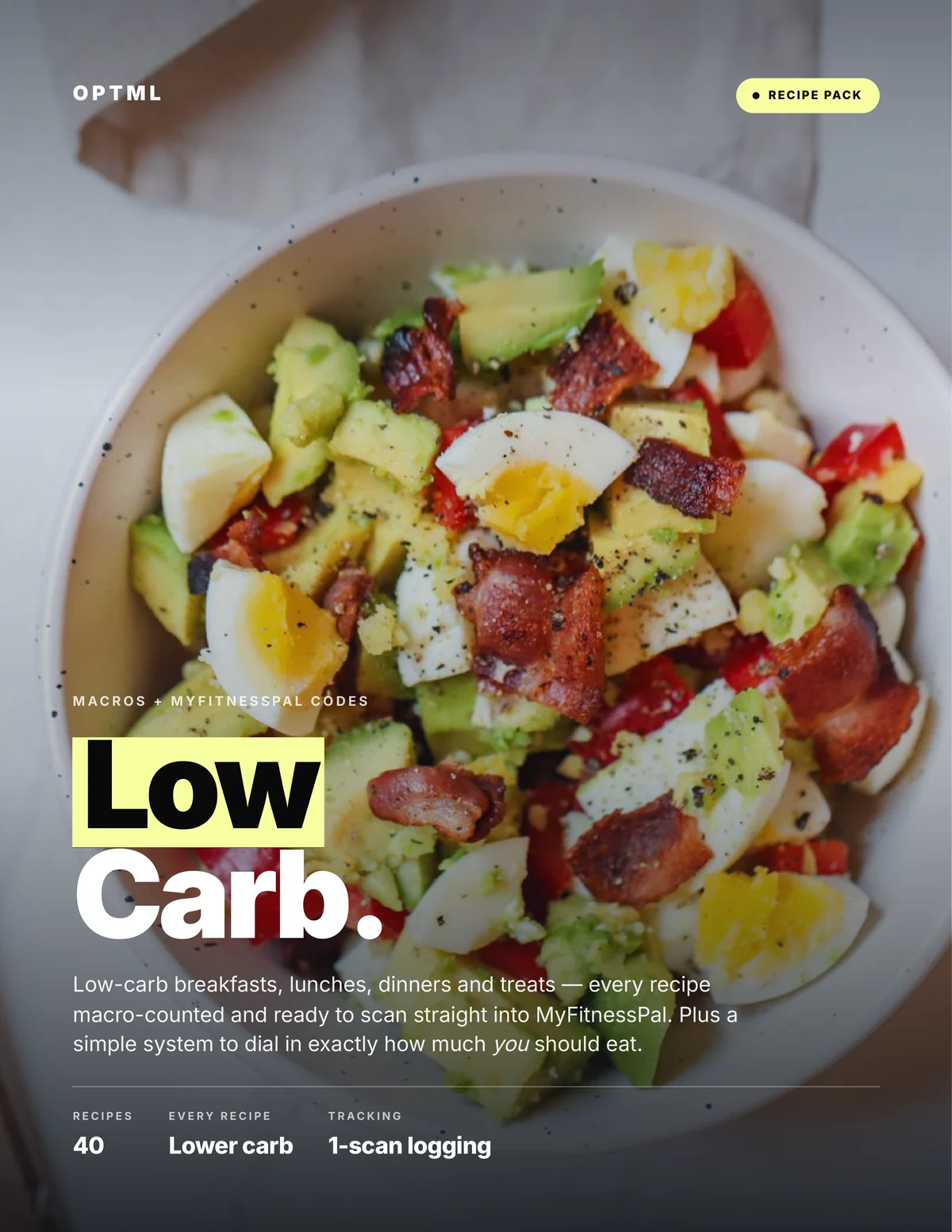 Nutrition
Low-Carb Recipes
$39See inside →
Nutrition
Low-Carb Recipes
$39See inside →
 Nutrition
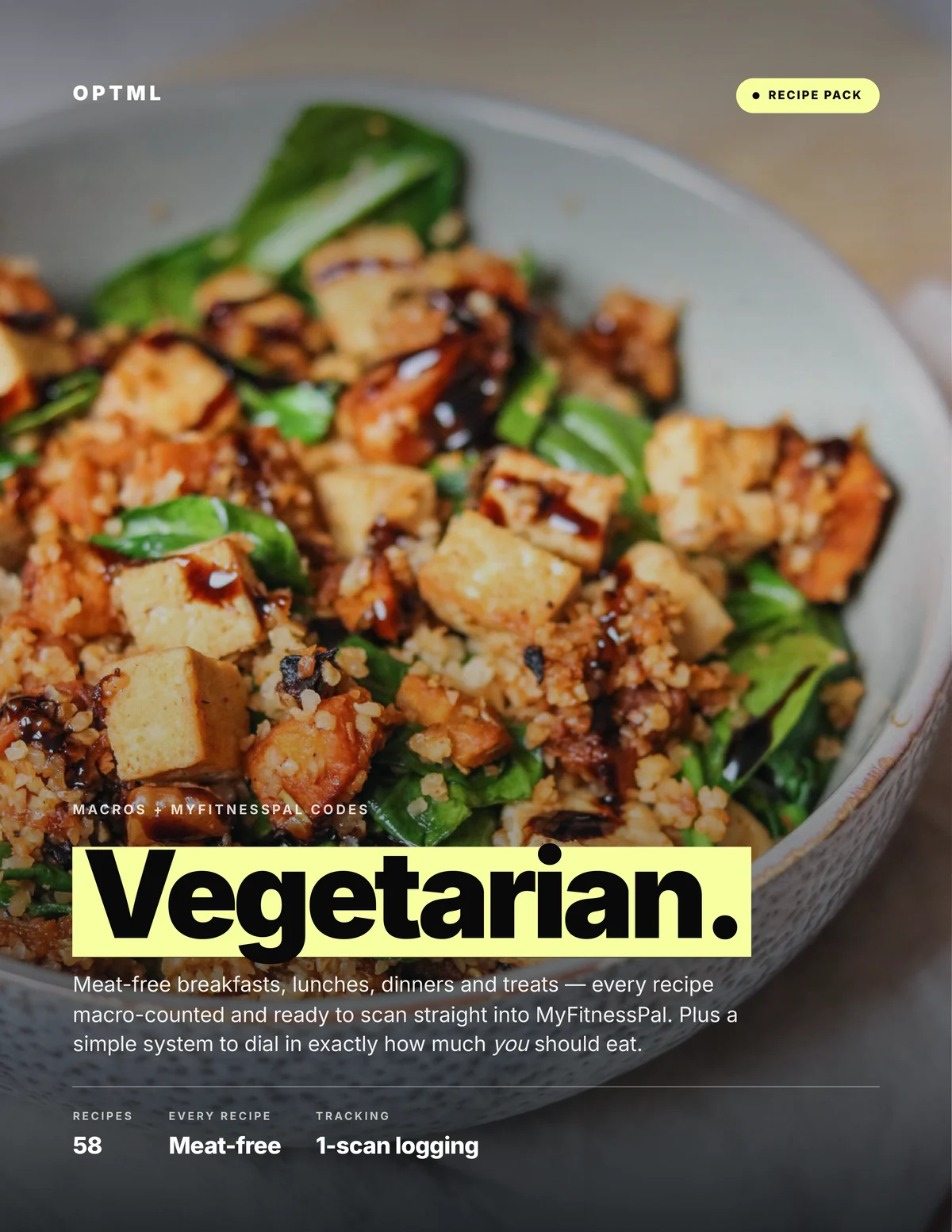
Vegetarian Recipes
$39See inside →
Nutrition
Vegetarian Recipes
$39See inside →
 Nutrition
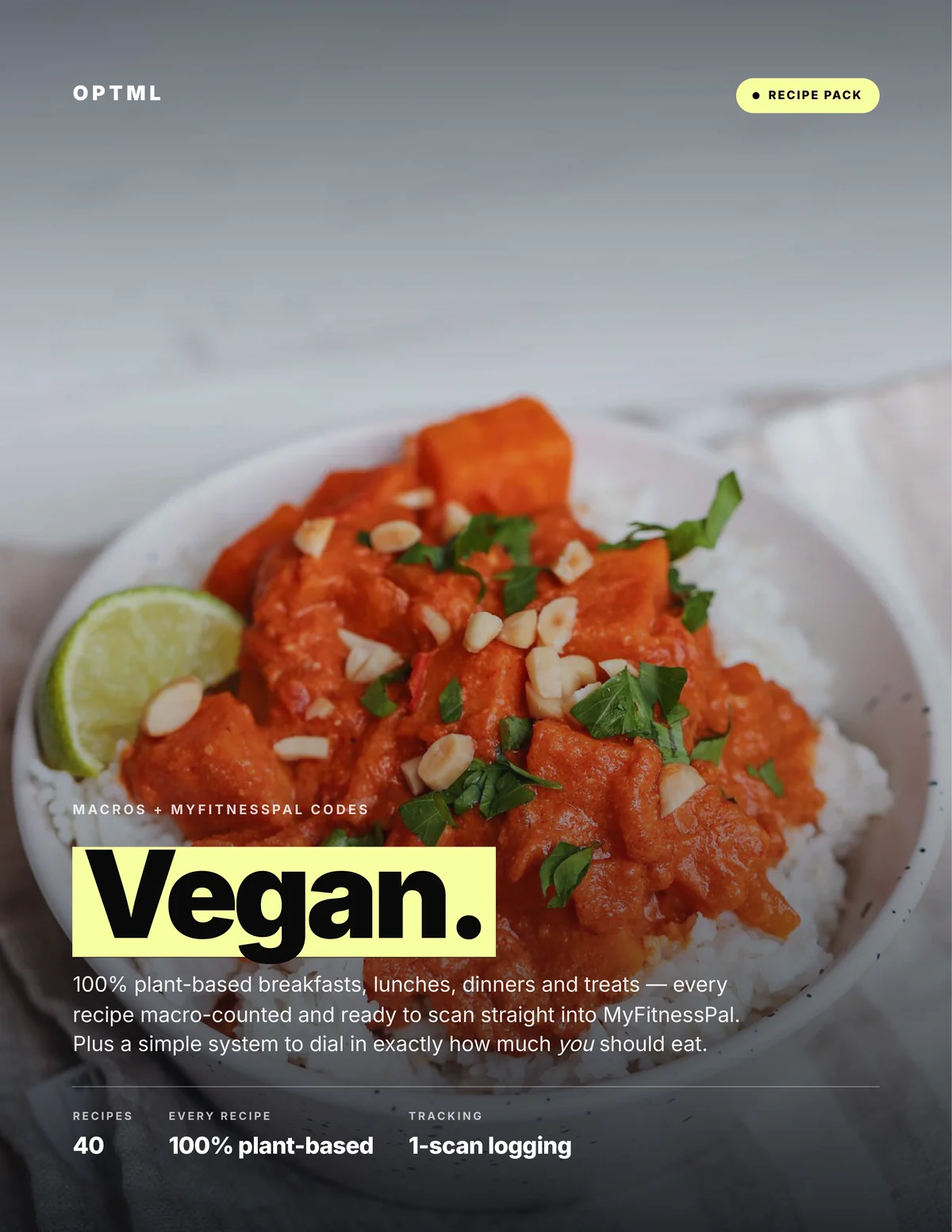
Vegan Recipes
$39See inside →
Nutrition
Vegan Recipes
$39See inside →
 Nutrition
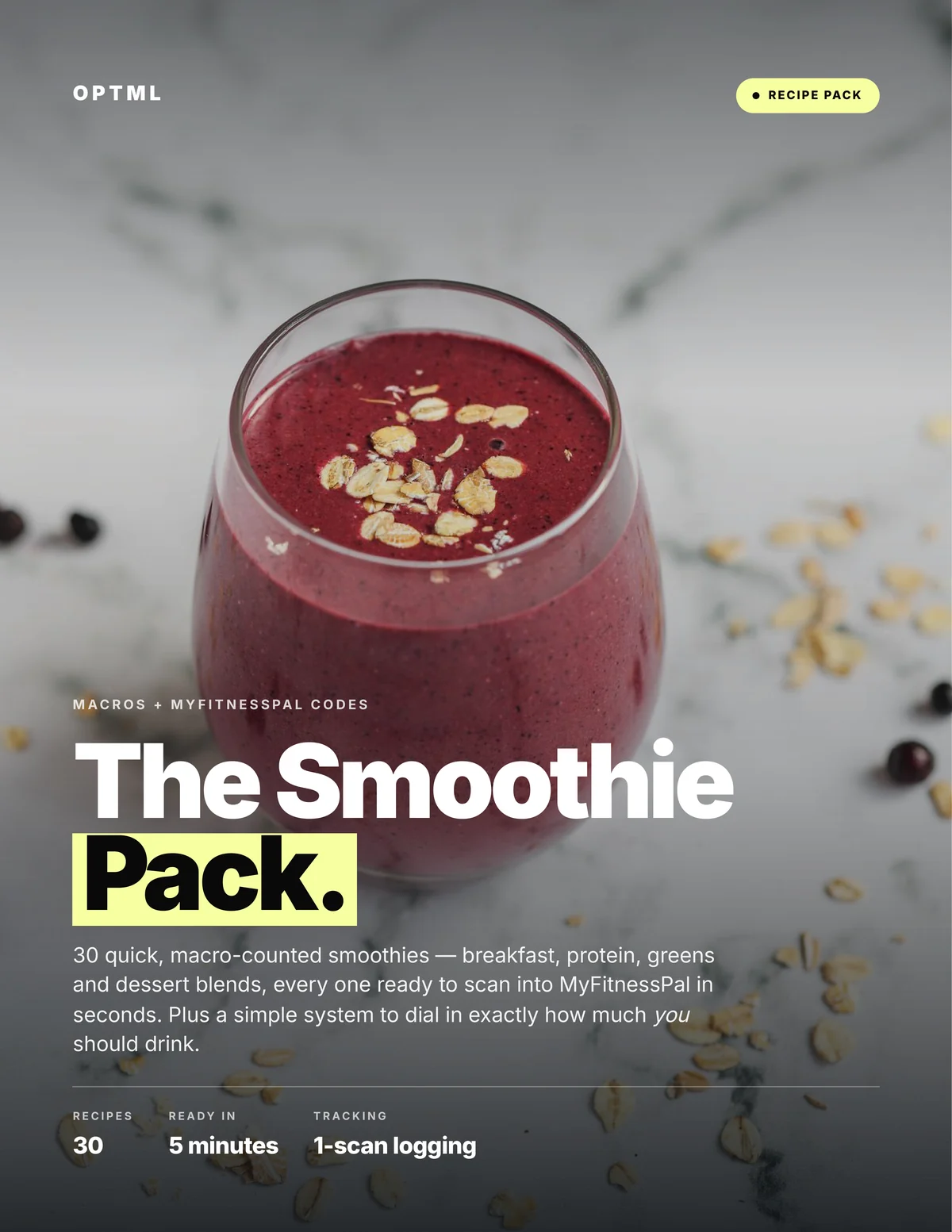
The Smoothie Pack
$29See inside →
Nutrition
The Smoothie Pack
$29See inside →
 Nutrition
Summer Table Recipes
$19See inside →
Nutrition
Summer Table Recipes
$19See inside →
 Nutrition
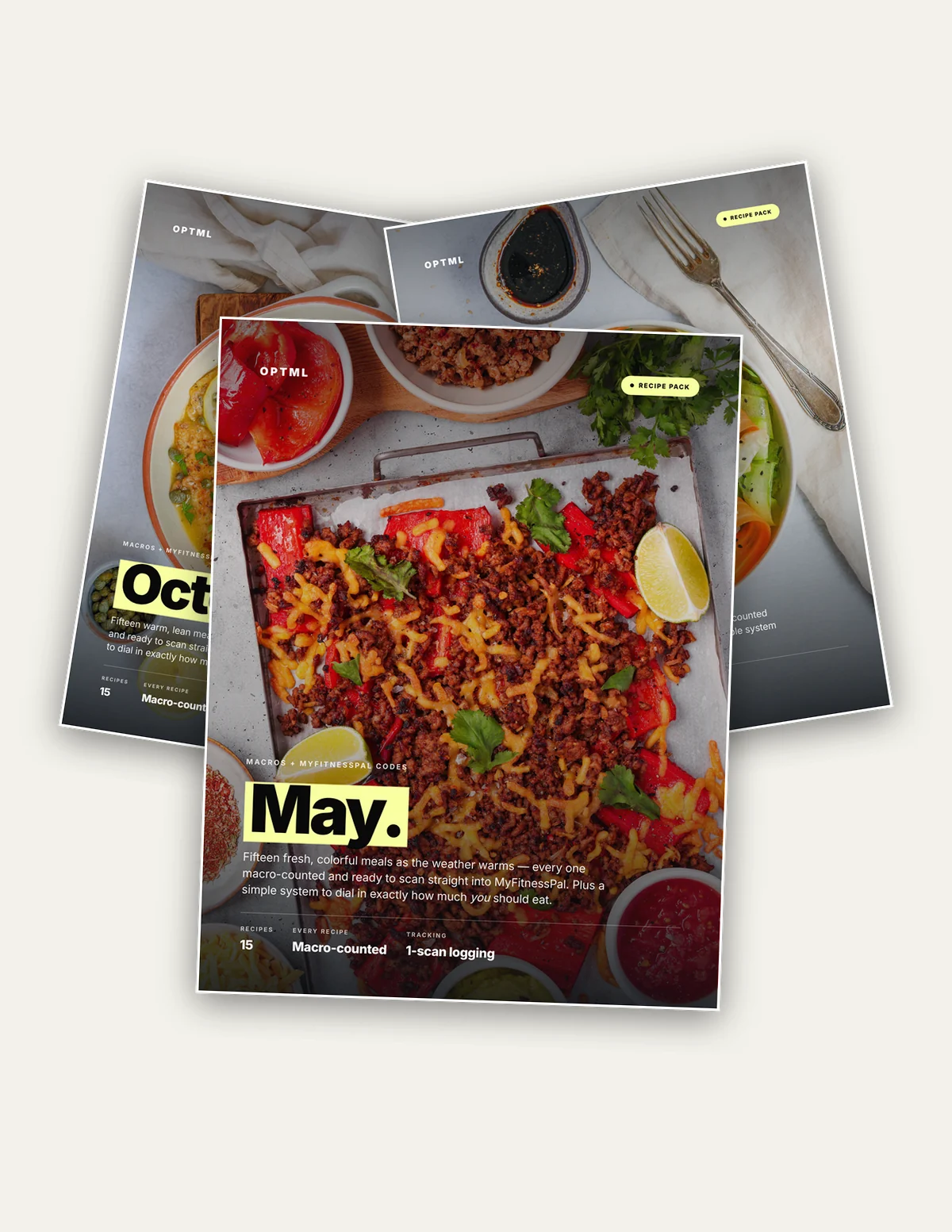
OPTML Monthly Recipe Collection
$49See inside →
Training
Full Body — 2 Day
$39See inside →
Training
Full Body — 3 Day
$39See inside →
Training
Full Body — 4 Day
$39See inside →
Training
Full Body — 5 Day
$39See inside →
Training
Upper / Lower — 4 Day
$39See inside →
Training
Push / Pull / Legs — 3 Day
$39See inside →
Training
Push / Pull / Legs — 6 Day
$39See inside →
Training
The 5×5 Method
$39See inside →
Training
Bodyweight Training
$39See inside →
Training
Dumbbell Only — 3 Day
$39See inside →
Training
Dumbbell Only — 4 Day
$39See inside →
Training
Dumbbell Only — 5 Day
$39See inside →
Training
Your First 12 Weeks
$39See inside →
Training
Strong For Life (40+)
$39See inside →
Training
Protect Your Muscle (GLP-1)
$39See inside →
Training
Hybrid — 6 Day
$39See inside →
Training
Hyrox Prep
$39See inside →
Training
Hyrox Strength Build
$39See inside →
Training
Hyrox Race Pace
$39See inside →
Training
The OPTML Woman — Foundations
$39See inside →
Training
The OPTML Woman — Optimization
$39See inside →
Training
The OPTML Woman — Advanced
$39See inside →
Training
Hourglass — 3 Day
$39See inside →
Training
Hourglass — Barbell (4 Day)
$39See inside →
Training
Hourglass — Dumbbell (4 Day)
$39See inside →
Nutrition
High-Protein Recipes
$39See inside →
Nutrition
The GLP-1 Protein Protocol
$39See inside →
Nutrition
High-Protein Breakfasts
$29See inside →
Nutrition
5-Ingredient Recipes
$39See inside →
Nutrition
Quick Kitchen Recipes
$19See inside →
Nutrition
Low-Carb Recipes
$39See inside →
Nutrition
Vegetarian Recipes
$39See inside →
Nutrition
Vegan Recipes
$39See inside →
Nutrition
The Smoothie Pack
$29See inside →
Nutrition
Summer Table Recipes
$19See inside →
Nutrition
OPTML Monthly Recipe Collection
$49See inside →
Nutrition
OPTML Monthly Recipe Collection
$49See inside →
Training
Full Body — 2 Day
$39See inside →
Training
Full Body — 3 Day
$39See inside →
Training
Full Body — 4 Day
$39See inside →
Training
Full Body — 5 Day
$39See inside →
Training
Upper / Lower — 4 Day
$39See inside →
Training
Push / Pull / Legs — 3 Day
$39See inside →
Training
Push / Pull / Legs — 6 Day
$39See inside →
Training
The 5×5 Method
$39See inside →
Training
Bodyweight Training
$39See inside →
Training
Dumbbell Only — 3 Day
$39See inside →
Training
Dumbbell Only — 4 Day
$39See inside →
Training
Dumbbell Only — 5 Day
$39See inside →
Training
Your First 12 Weeks
$39See inside →
Training
Strong For Life (40+)
$39See inside →
Training
Protect Your Muscle (GLP-1)
$39See inside →
Training
Hybrid — 6 Day
$39See inside →
Training
Hyrox Prep
$39See inside →
Training
Hyrox Strength Build
$39See inside →
Training
Hyrox Race Pace
$39See inside →
Training
The OPTML Woman — Foundations
$39See inside →
Training
The OPTML Woman — Optimization
$39See inside →
Training
The OPTML Woman — Advanced
$39See inside →
Training
Hourglass — 3 Day
$39See inside →
Training
Hourglass — Barbell (4 Day)
$39See inside →
Training
Hourglass — Dumbbell (4 Day)
$39See inside →
Nutrition
High-Protein Recipes
$39See inside →
Nutrition
The GLP-1 Protein Protocol
$39See inside →
Nutrition
High-Protein Breakfasts
$29See inside →
Nutrition
5-Ingredient Recipes
$39See inside →
Nutrition
Quick Kitchen Recipes
$19See inside →
Nutrition
Low-Carb Recipes
$39See inside →
Nutrition
Vegetarian Recipes
$39See inside →
Nutrition
Vegan Recipes
$39See inside →
Nutrition
The Smoothie Pack
$29See inside →
Nutrition
Summer Table Recipes
$19See inside →
Nutrition
OPTML Monthly Recipe Collection
$49See inside →
20+ years of coaching. 250,000+ transformations since 2014. Every training program and recipe guide in The Method library evolved from that work.
“My lifts improved a ton with the full body program, and the nutrition system made everything easy. I truly feel the fittest I’ve ever been in my whole life.”
— Juliet M.
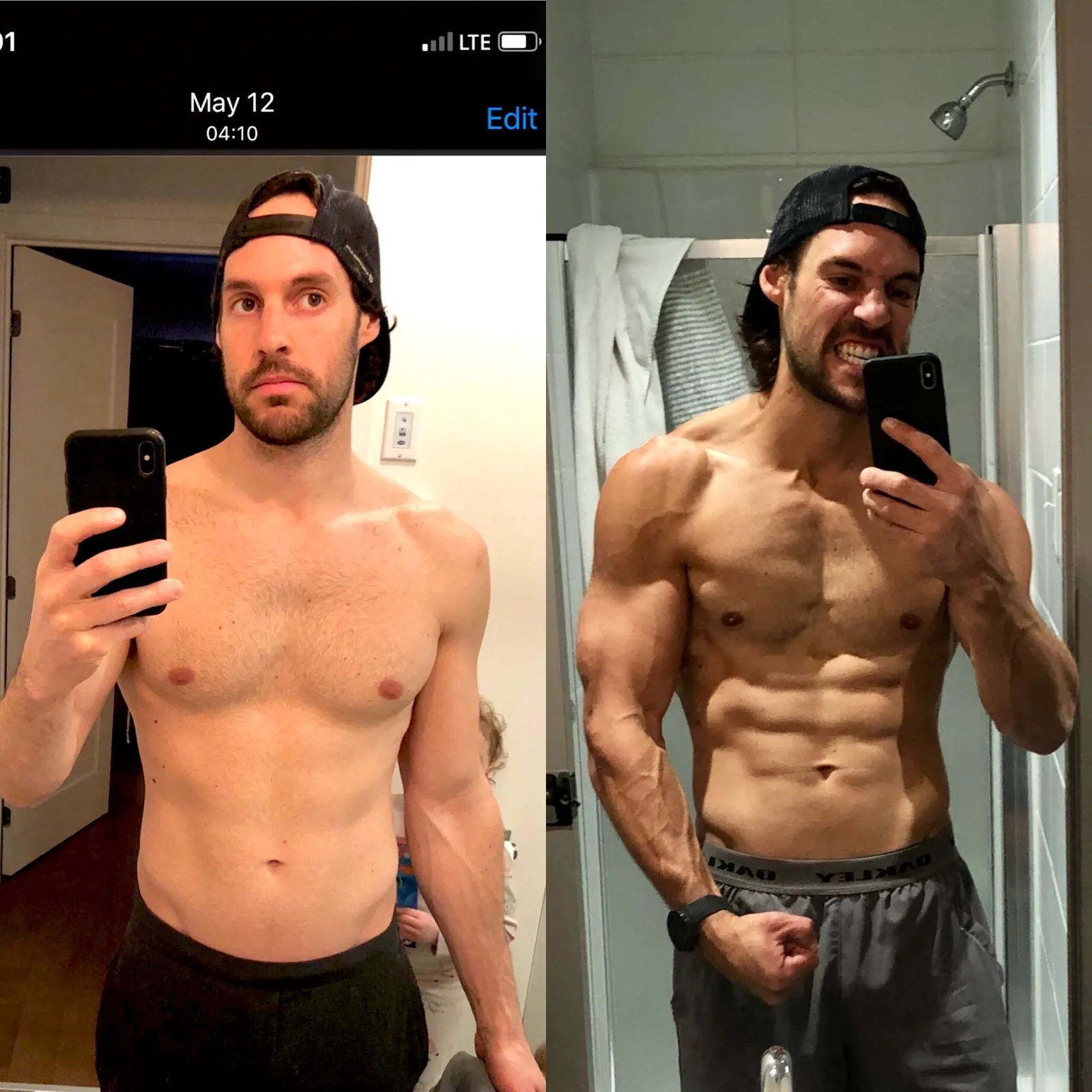
“I’d been training for years without real progress. Ryan’s full body program finally gave me a system that actually worked.”
— Alex P.
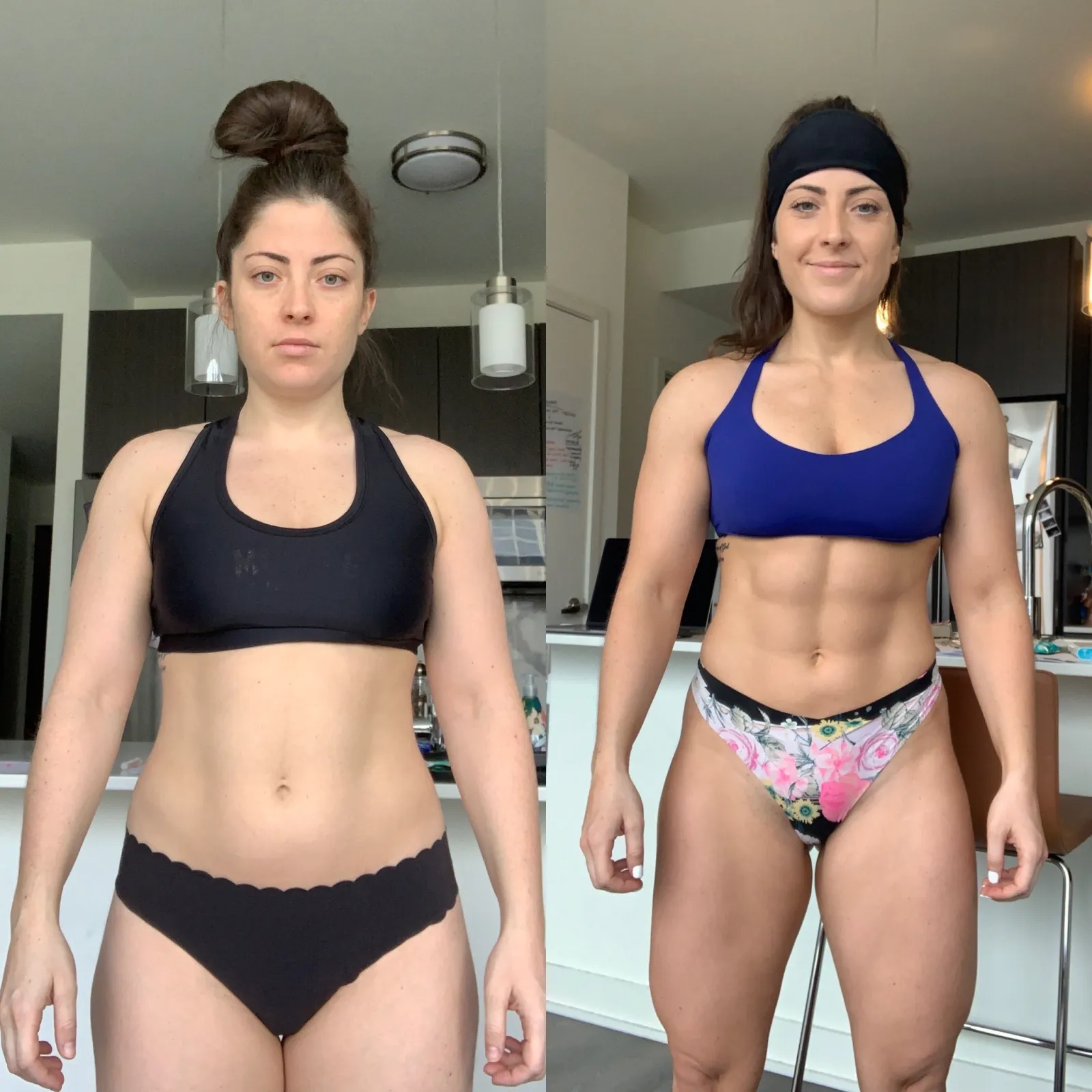
“I tried every workout app for years. This was the first program where I actually saw the change in the mirror.”
— Lauren K.
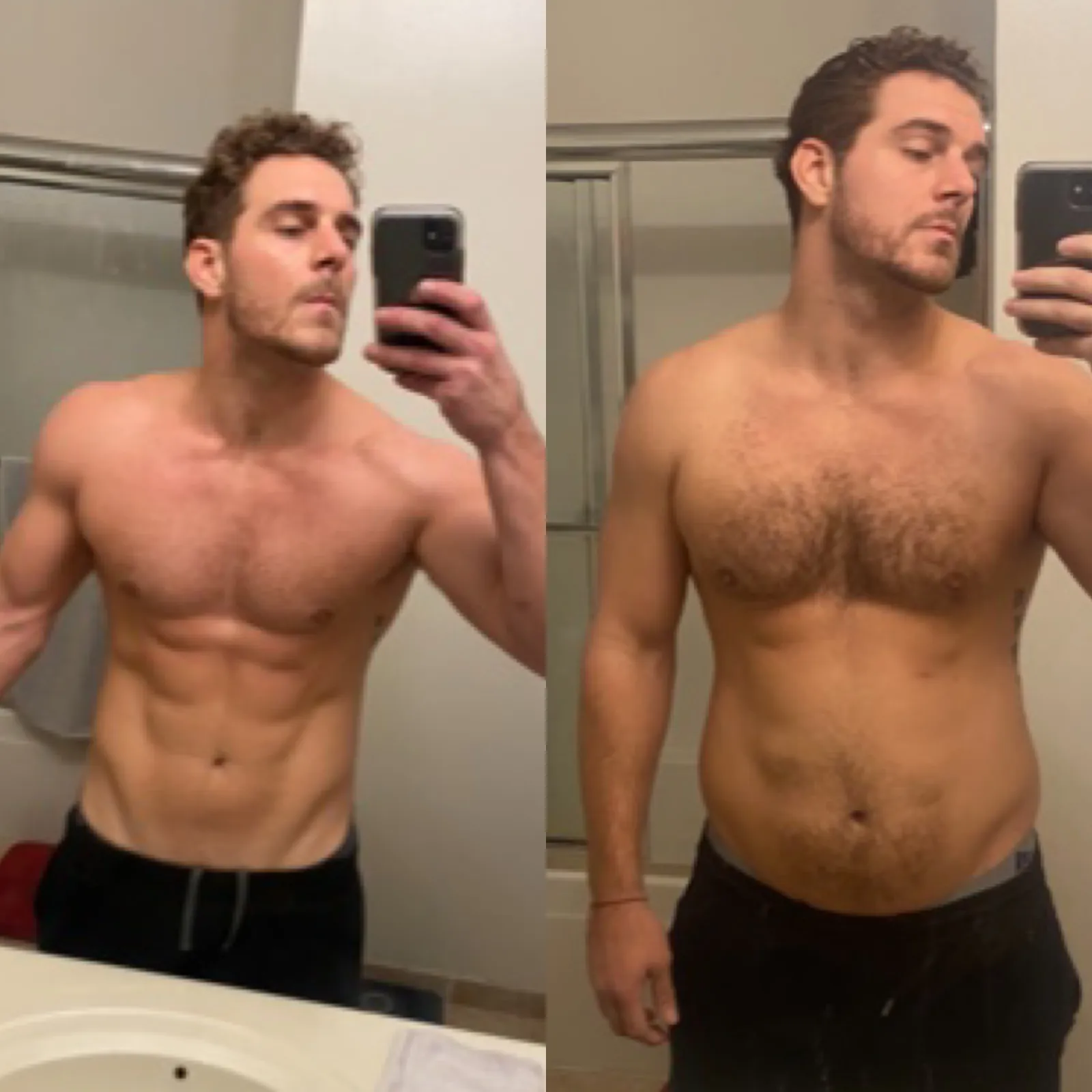
“I’d done every program on the internet. This was the first one where I stopped overthinking and just trusted the system.”
— Nick H.
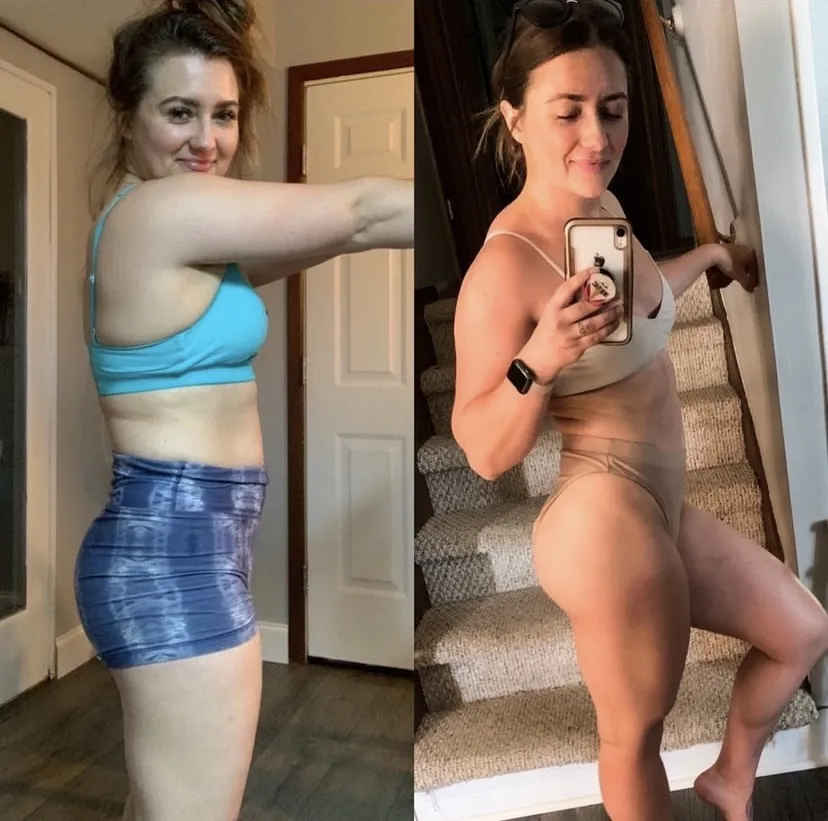
“Lost the weight, kept the curves, gained strength I didn’t know I had. The full body program changed everything.”
— Emily R.
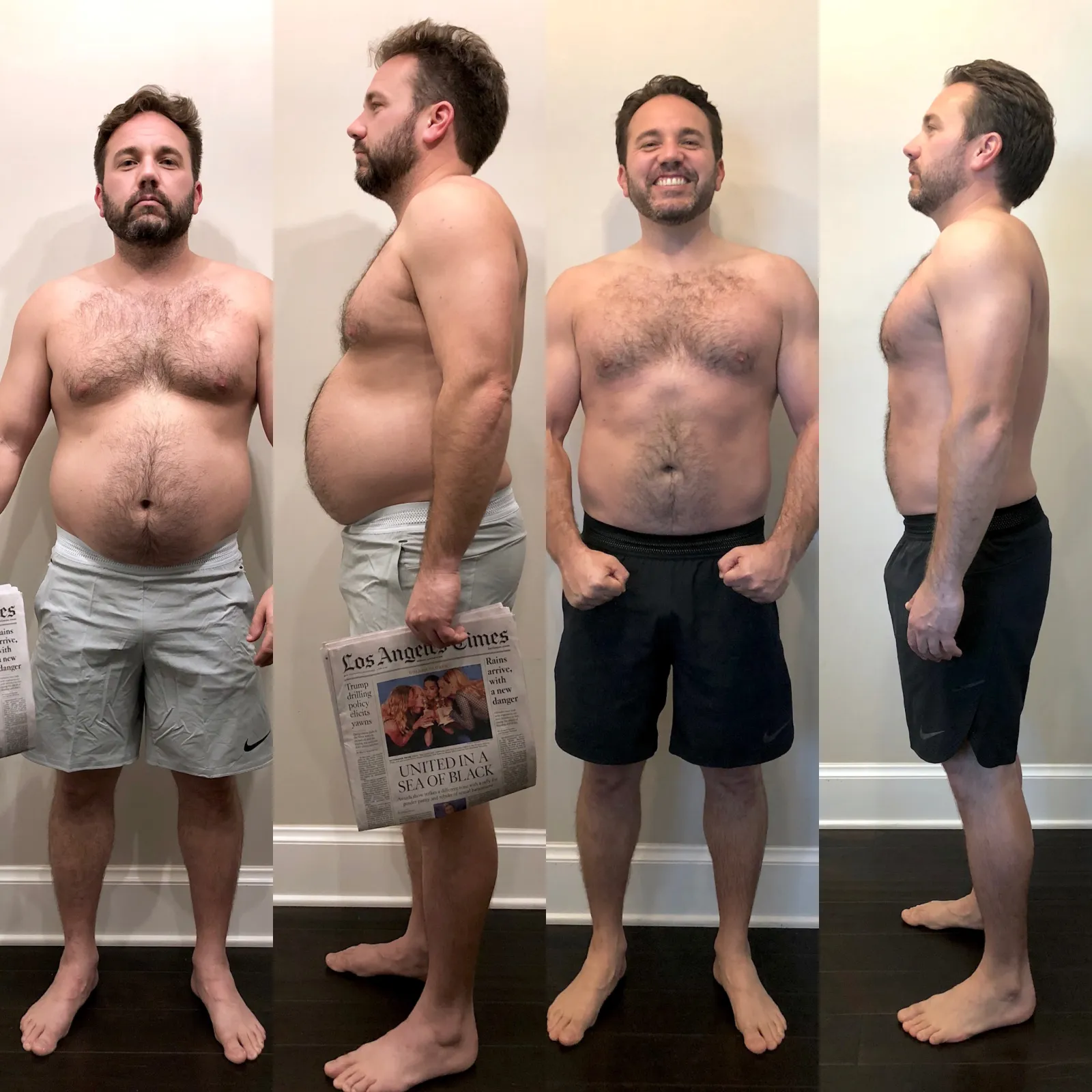
“Down 35 lbs and the strongest I’ve been since college. The recipe guide is what made the nutrition side click.”
— David R.
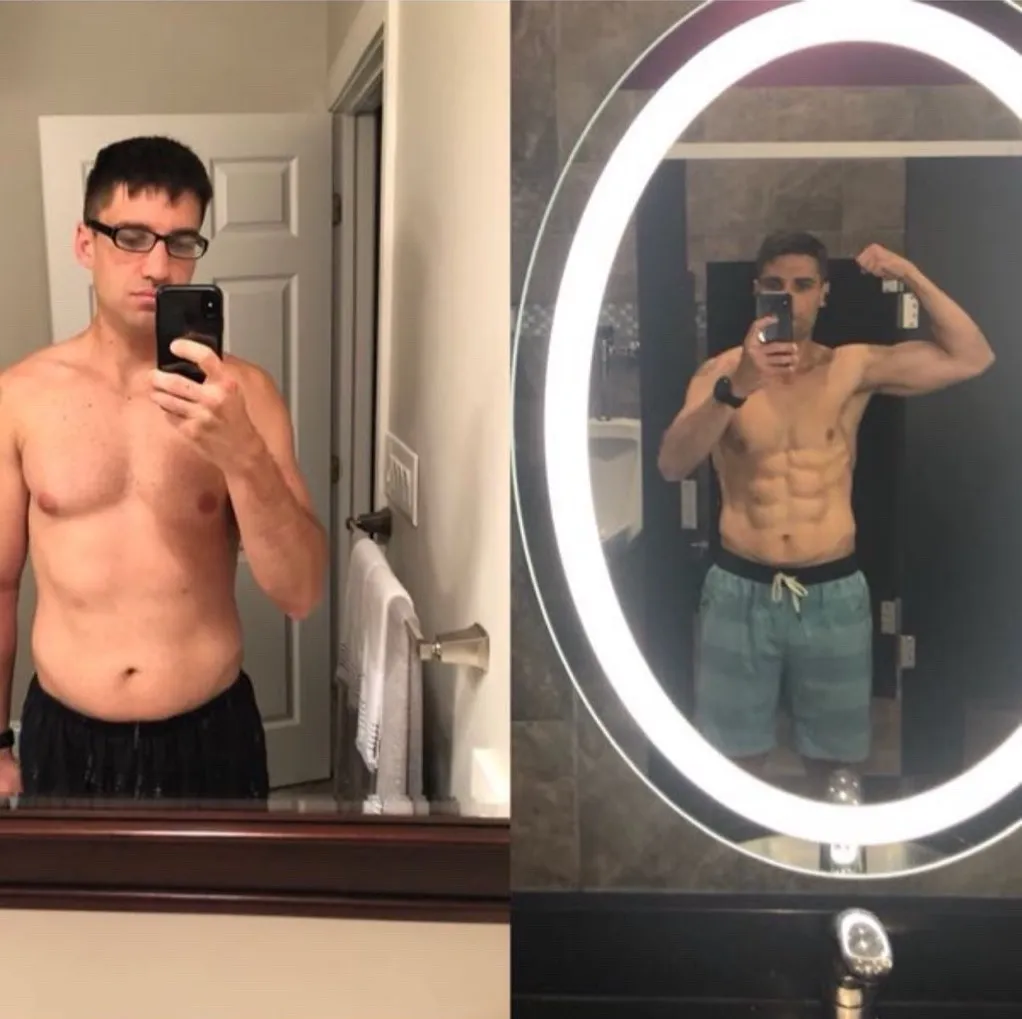
“Went from skinny-fat to actual definition. The training and nutrition guides do the thinking so I just had to show up.”
— Kevin S.
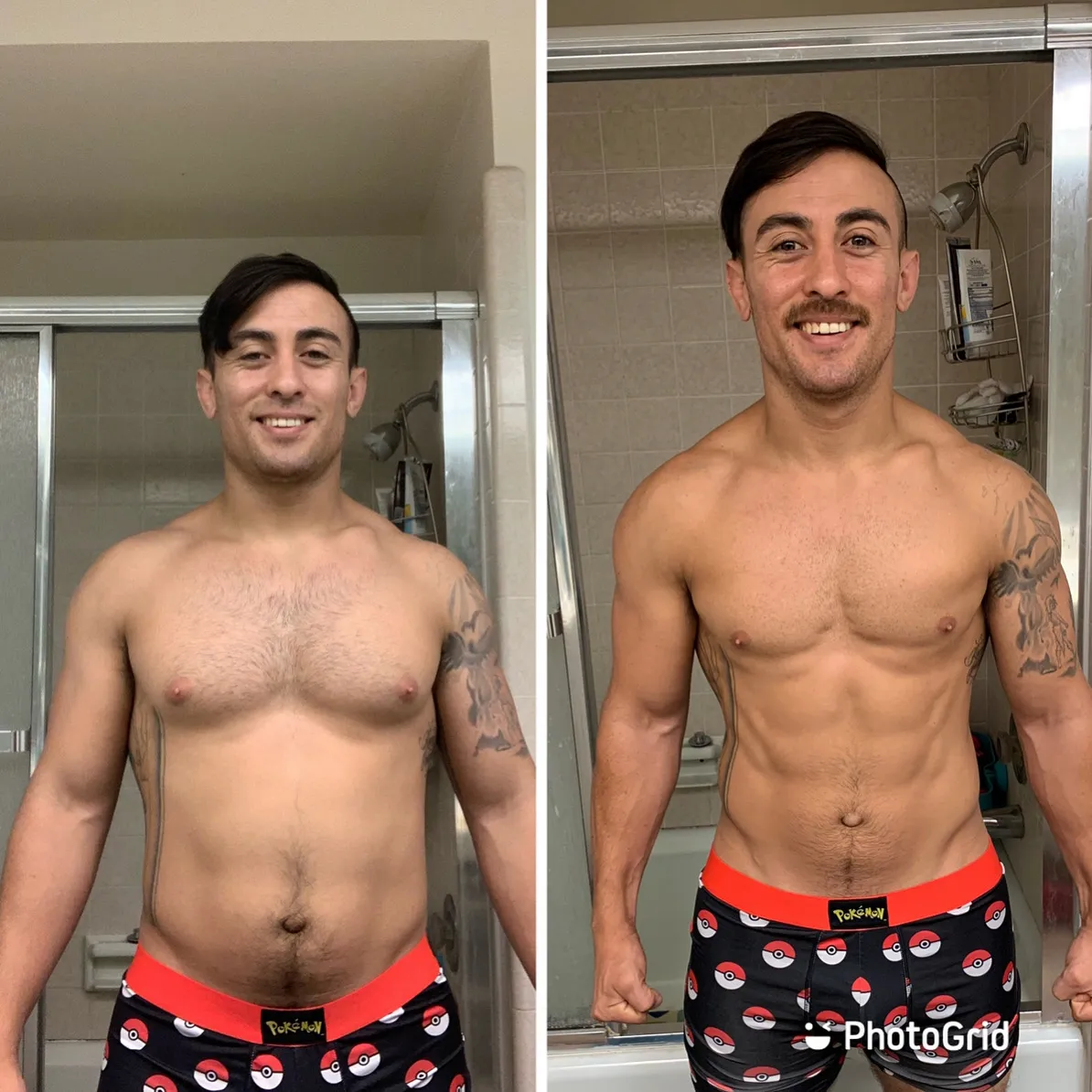
“The meal plan made cutting feel sustainable for the first time. Never thought ‘easy’ and ‘lean’ could go together.”
— Diego M.
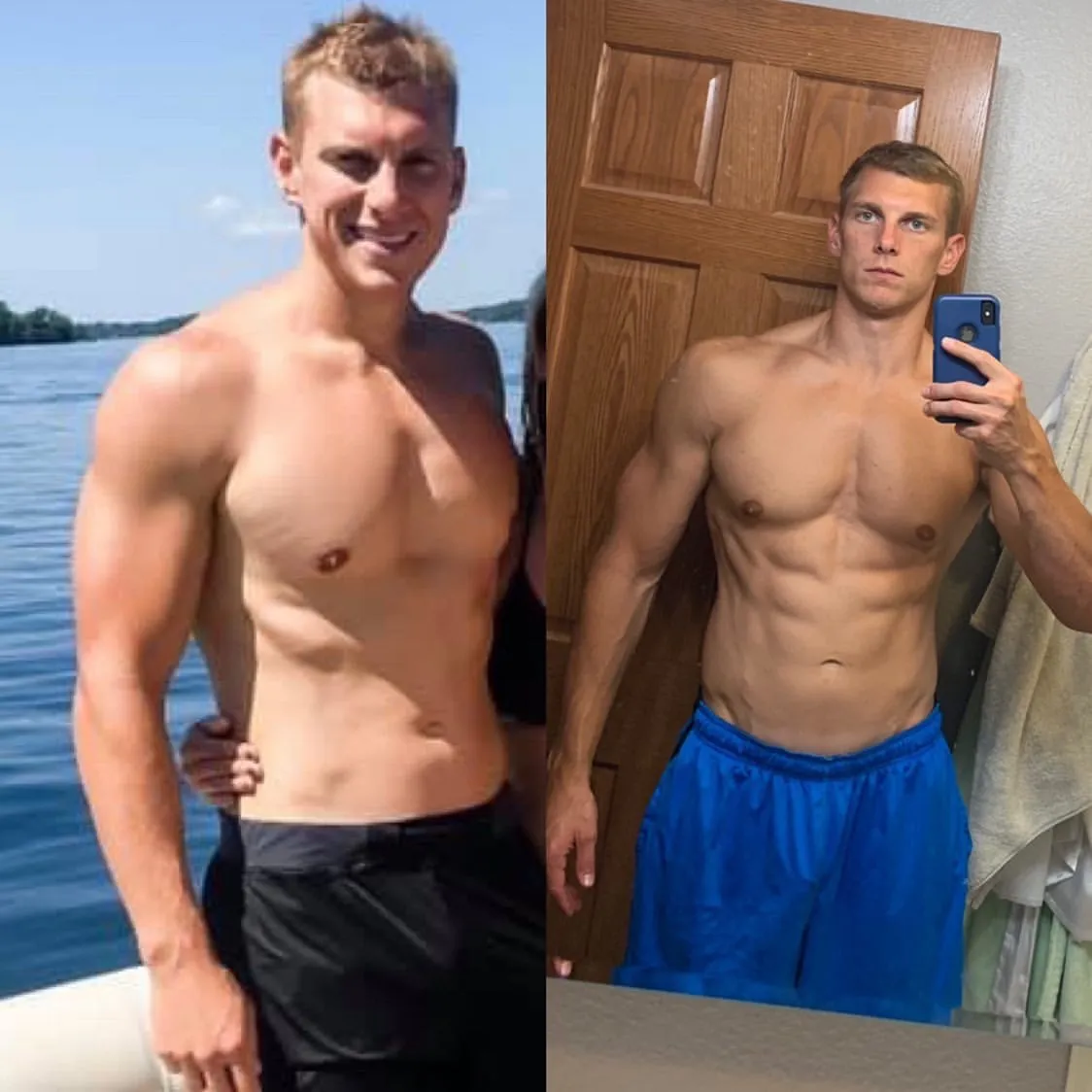
“I already lifted seriously, but Ryan’s program is what took me from ‘in shape’ to the best shape of my life.”
— Brandon K.
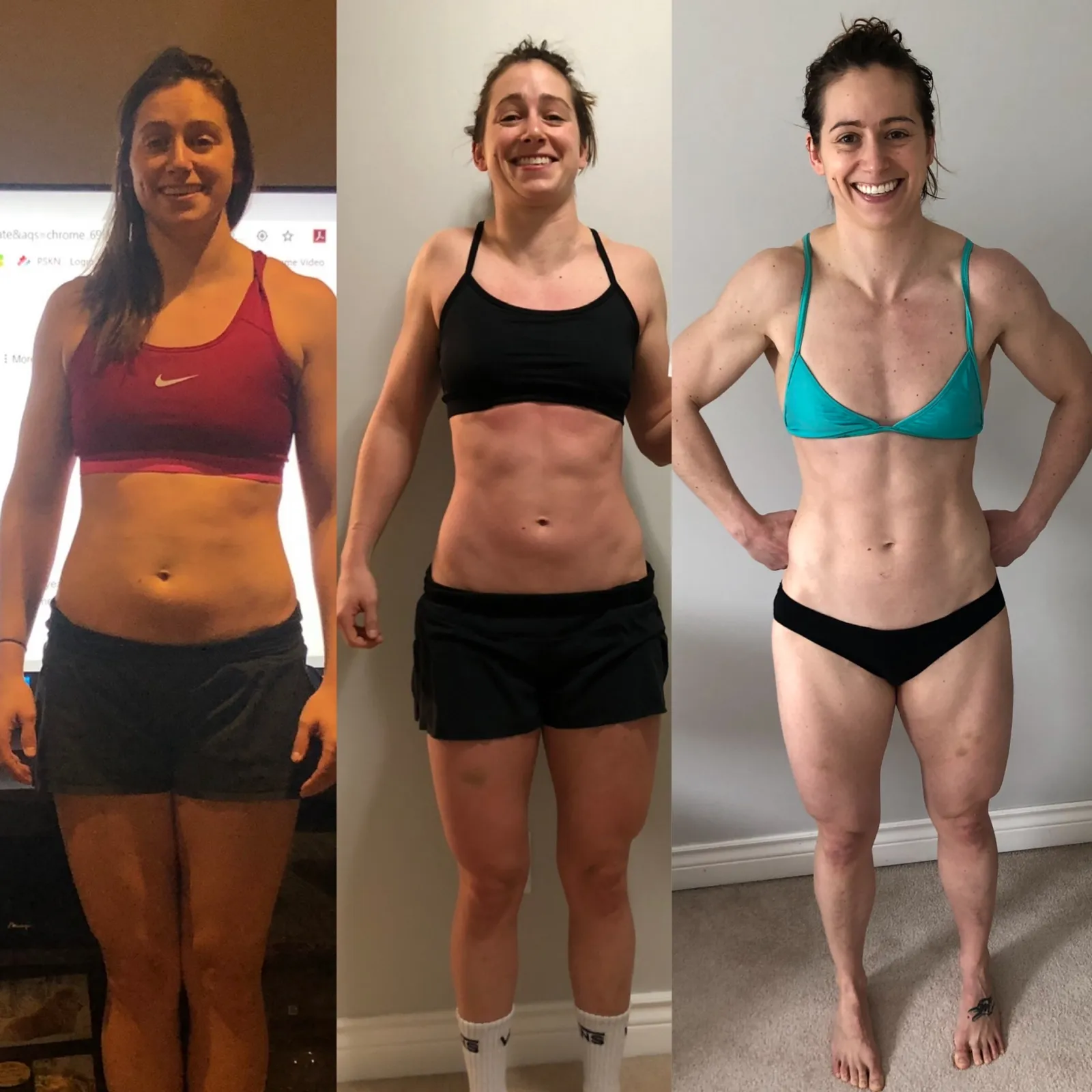
“Three rounds. Each one I got leaner, stronger, more confident. The program gives you a real ceiling to chase.”
— Claire W.
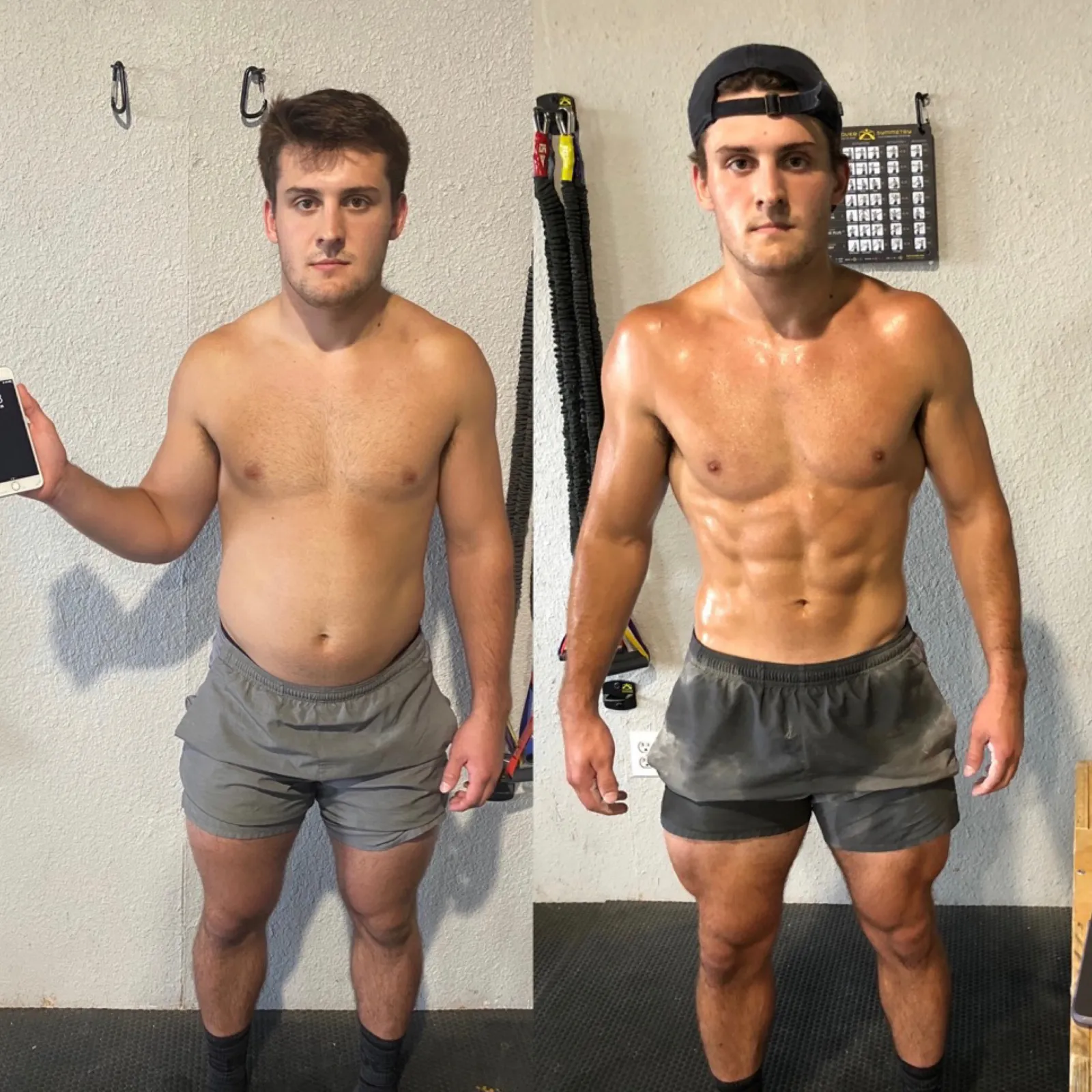
“First real transformation of my life. Followed the program, used the recipe guide, and the rest happened.”
— Tyler B.
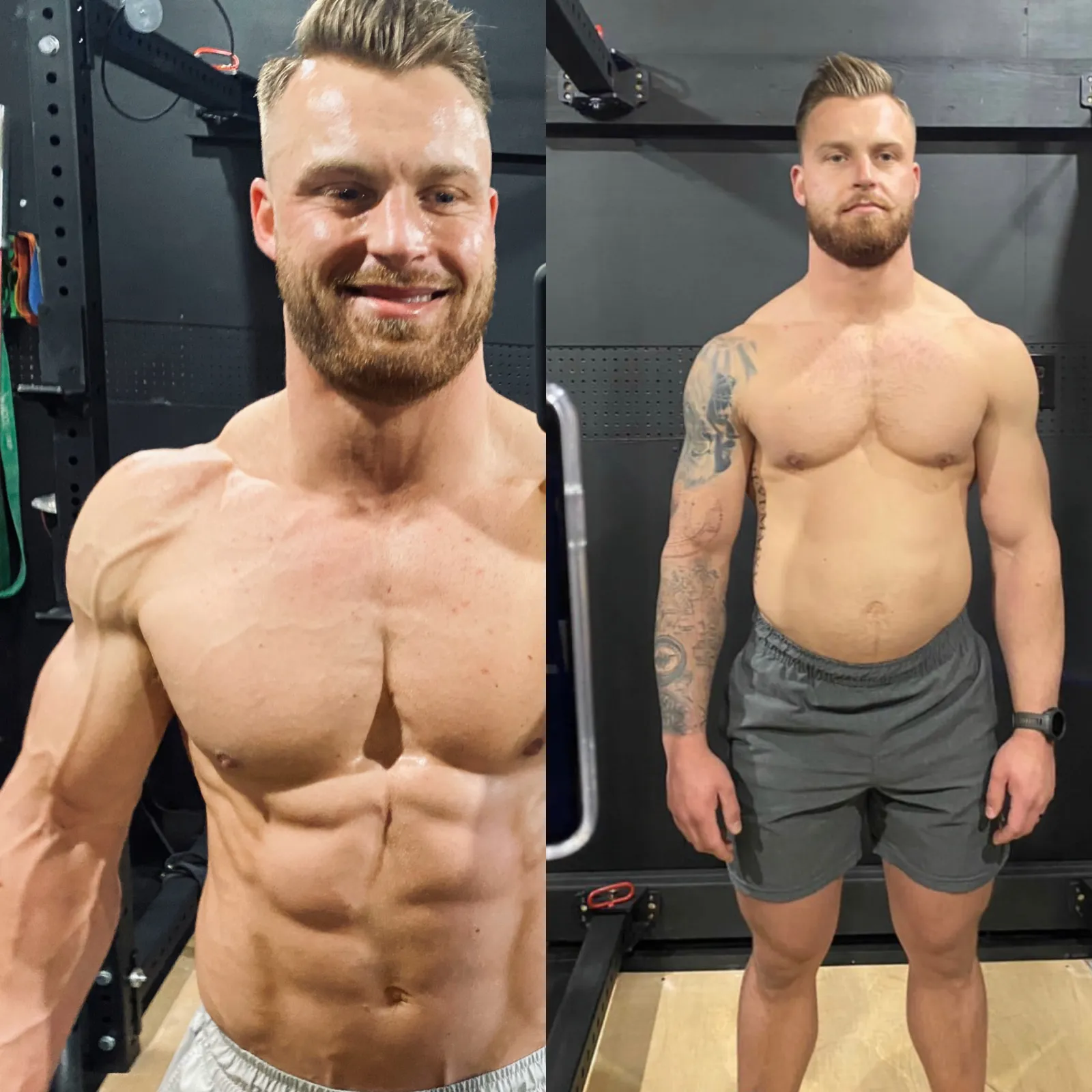
“I knew how to train. What I didn’t know was how to eat for it. The nutrition plan was the missing piece.”
— Jake C.
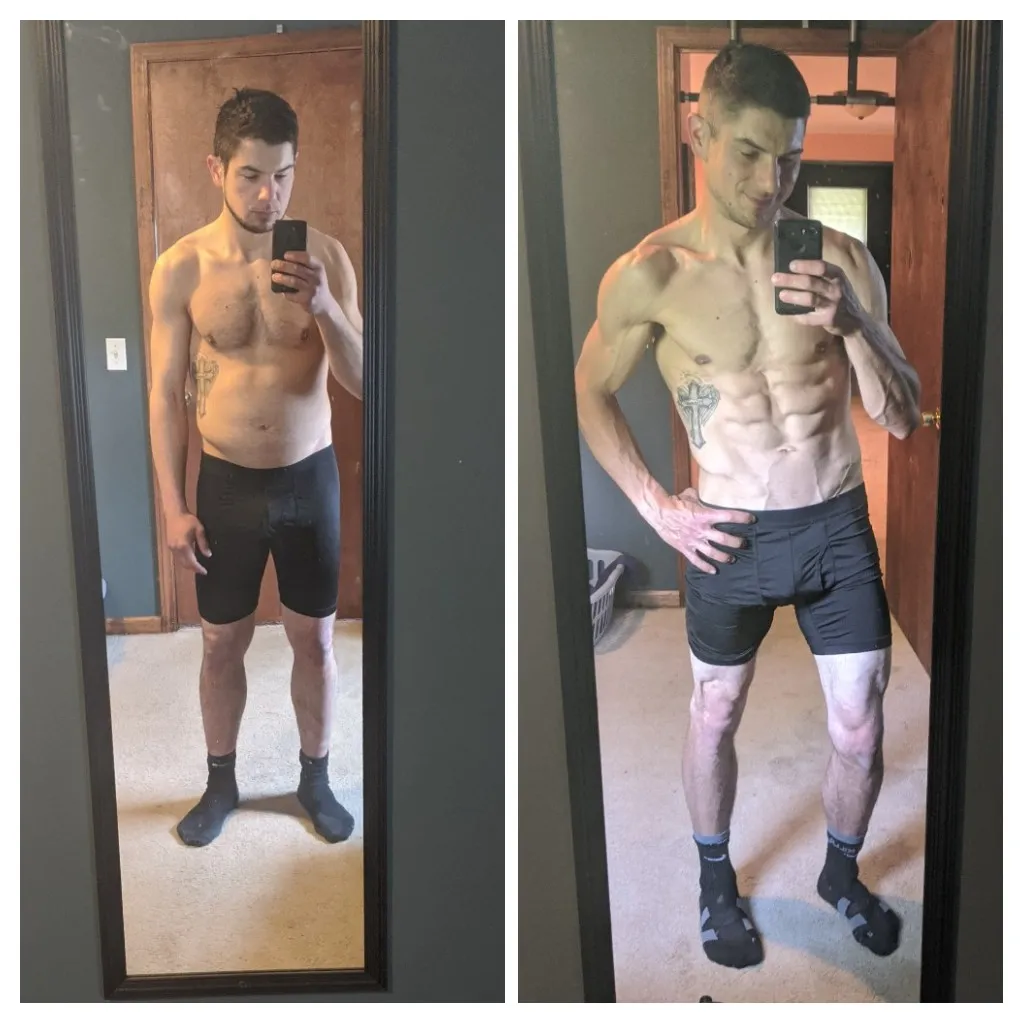
“Three months in, I stopped caring what the scale said. The program made me actually strong — and the body comp followed.”
— Mark T.
Results vary individual to individual. Testimonials from clients of Ryan Fischer. Educational use only — not medical advice.
GLP-1s work. They're one of the most powerful weight-loss tools modern medicine has produced. But the drug only knows how to drop weight — it doesn't differentiate between fat and muscle. With OPTML's protocol around it — daily protein targets, matched training, recovery overlays — the same drug produces a fundamentally better result. Run your own numbers below.
0–0%
of total weight lost on GLP-1s is lean mass — not fat.
Published GLP-1 clinical research and DEXA body-composition analyses
0–0 lbs
of muscle lost in a typical 12-month GLP-1 course without targeted intervention.
Modeled across published lean-mass deltas in a 200-lb starting baseline
0.0–0×
all-cause mortality risk in adults with the lowest skeletal muscle mass.
Srikanthan & Karlamangla, Am J Med 2014 · Wolfe, AJCN 2006
Educational use only. Not medical advice, not a prescription, not a diagnosis. Individual results vary based on adherence, biology, and clinical guidance.
Drag to model at your starting weight
Modeled on published GLP-1 clinical research; individual results vary and do not apply to compounded medication. The math scales with your starting weight.
Tap to switch protocols and watch the chart change
~30% from lean tissue.
Typical without targeted nutrition + training around the drug.
~6 lbs of muscle saved.
Same drug, same weight loss — but the composition shifts toward fat.
Modeled from published GLP-1 trial DEXA sub-analyses. The Method's protocol — daily protein at 0.7–1g per lb of lean mass, plus 3–5 weekly strength sessions matched to your equipment — is what shifts the ratio. Individual results vary.
Every OPTML GLP-1 protocol includes The OPTML 30 and the GLP-1 Muscle Loss Protocol at no extra cost — mindset, nutrition, and training built to protect muscle during medically supervised weight loss.
A prescription. A box. A login.
The molecule, the method, the whole system.
Every protocol comes with The OPTML 30 and your field guides, free — mindset, nutrition, training, and the playbook for your protocol. GLP-1 members also get the GLP-1 Muscle Loss Protocol. Want to go deeper? The full recipe library, training programs, and multi-domain protocols are available a la carte.
Programs matched to your equipment and experience. Bodyweight to commercial gym, beginner to advanced.
Recipe guides across high-protein, vegan, vegetarian, low-carb, smoothies, and quick-prep — and the full cookbook.
Patient playbooks for every protocol — GLP-1 side effects, TRT labs, Apex Panel decoder. Always free.
Multi-domain twelve-week protocols — The Bridge, TRT Onboarding, the Longevity Protocol — that tie everything together.
Compounded Tirzepatide + Sermorelin, one all-inclusive protocol. $498/mo · physician-managed end to end.
Your prescription includes the core system — mindset, nutrition, and training to start. Go as deep as you want from there.
Take the 60-second match quiz and a U.S.-licensed physician routes you to the right OPTML protocol — GLP-1, TRT, NAD+, Sermorelin, the Apex Panel, or one of the integrated stacks. Cancel anytime.
The moment your protocol is active, The OPTML 30 and your field guides are yours — plus the GLP-1 Muscle Loss Protocol if you're on a GLP-1. The rest of the library stays open to browse whenever you want to go deeper.
Take the in-library match quizzes and follow the training and nutrition guides matched to your equipment, goal, and dietary style. The protocol does the medical lift; the Method makes sure you get every result the protocol can produce.
If you've trained for years and the mirror hasn't moved, it's almost always one of these three. The Method is built around the actual answers.
"I'm doing 15 sets a week for chest."
The truthWarm-up sets don't count. Only sets at RPE 7+ — the ones that actually feel hard near the top — drive growth. Most lifters log six sets and assume volume, when only two were working sets. The Method counts what counts.
"Train each muscle once a week. Destroy it."
The truthProtein synthesis from a hard training session lasts roughly 48–72 hours. Hitting a muscle once a week leaves four-plus days of growth window unused. Two to three exposures per week — at moderate volume — builds more muscle than one obliterating session.
"I eat protein with every meal."
The truthFor body recomposition, the floor is 0.7–1g of protein per pound of lean mass — every day, distributed across the day. Most people eat 90g and feel proud. A 175lb lean lifter actually needs 130–160g. The math isn't optional.
Rebuilding muscle isn't symmetrical with losing it. Once you're past 30, anabolic resistance starts climbing — your body needs progressively more protein, more training, and more recovery to rebuild the same pound. Pick your age and see how long the rebuild actually takes.
Educational use only. Rebuild timelines are modeled from peer-reviewed anabolic-resistance and hypertrophy literature. Not medical advice. Individual results vary.
Tap an age below to see how long it takes you
The math: 8 lbs is the average lean-mass loss from a 12-month GLP-1 course in a 200-lb starting baseline. Rebuild rates are modeled from the published anabolic-resistance and hypertrophy literature, assuming optimal protein (0.8–1g per lb of lean mass) and a 3–4 day per week structured resistance program. Real-world rates vary individual to individual.
11months
Roughly a year of disciplined training and eating. Doable.
Worth knowing: Every additional decade past 30 roughly doubles the rebuild window. Anabolic signaling drops, recovery slows, and Type-II fibers resist re-recruitment.
Anabolic resistance climbs ~15% per decade past 30. Same protein, less response.
Type-II fiber atrophy accelerates after 50. Power fibers die first — and they're the hardest to rebuild.
Recovery windows expand. The 48-hour rebound at 30 becomes 72–96 hours at 60. You can't train through it.
Skeletal muscle isn't a cosmetic concern. It's the single largest endocrine organ in your body, the largest predictor of all-cause mortality after smoking, and the foundational variable for almost every measurable marker of healthspan. Treat it that way.
In adults over 55, the lowest quartile of skeletal muscle mass carries a 0.0–0× higher all-cause mortality risk than the highest quartile. The relationship holds after controlling for fat mass, age, sex, ethnicity, and comorbidities. Muscle isn't correlation — it's signal.
Srikanthan & Karlamangla — Am J Med, 2014
~0% of insulin-stimulated glucose disposal happens in skeletal muscle. Lose muscle, and you lose the metabolic reservoir that handles every carb you eat. This is why sarcopenia and type-2 diabetes ride together. More muscle equals better insulin sensitivity equals lower fasting glucose equals lower disease risk — through the entire downstream chain.
DeFronzo & Tripathy — Diabetes Care, 2009
Across 17 countries and 0 adults, every 5-kg decrease in grip strength was associated with a 0% increase in all-cause mortality. It outperformed systolic BP for predicting cardiovascular death. Grip is a proxy for total muscular health — and total muscular health is a proxy for how many years you have left.
Leong et al — The Lancet, 2015
Type-II fast-twitch fibers atrophy first — the fibers responsible for power, balance, and stair-recovery in your 70s. Resistance training is the only known intervention that reliably reverses this. Not cardio. Not stretching. Not Pilates. Heavy, progressive, structured load — repeated for years. The Method is built around this fact.
Mitchell et al — Front Physiol, 2012
Heart, hormones, metabolism, heavy metals, thyroid antibodies, autoimmune — one blood draw, every system. The clearest picture of where you actually stand.
The longevity industry sells supplements. We build muscle.
The Method isn't influencer opinion. Each principle on this page is backed by published peer-reviewed research. Browse the studies, click any to open the abstract on PubMed.
Srikanthan & Karlamangla · Am J Med · 2014
Muscle mass index as a predictor of longevity in older adults.
Lowest-quartile muscle mass = 1.5–2× higher all-cause mortality. Even after adjusting for fat mass and comorbidities.
PubMed · PMID 24569133 Grip strengthLeong et al · The Lancet · 2015
Prognostic value of grip strength: 142,861 adults across 17 countries.
Every 5-kg drop in grip strength = 17% higher all-cause mortality. Stronger predictor than systolic blood pressure.
PubMed · PMID 25982160 Muscle & metabolismWolfe · Am J Clin Nutr · 2006
The underappreciated role of muscle in health and disease.
Skeletal muscle is the largest reservoir of amino acids — and the largest endocrine organ. Loss of muscle = loss of metabolic regulation.
PubMed · PMID 16960159 Anabolic resistanceVolpi et al · Curr Opin Clin Nutr Metab Care · 2004
Muscle tissue changes with aging.
Anabolic response to amino acids and resistance training declines progressively after age 30 — the foundational paper for "anabolic resistance."
PubMed · PMID 15075920 Sarcopenia · Type-II fibersMitchell et al · Front Physiol · 2012
Sarcopenia, dynapenia, and the impact of advancing age on human muscle.
3–8% loss of muscle mass per decade after 30 — concentrated in type-II fibers. Resistance training is the only reliable intervention.
PubMed · PMID 22934016 Glucose disposalDeFronzo & Tripathy · Diabetes Care · 2009
Skeletal muscle insulin resistance: the primary defect in type 2 diabetes.
~80% of insulin-stimulated glucose disposal happens in muscle. Less muscle = worse glycemic control, full stop.
PubMed · PMID 19940062 Protein intakeMorton et al · Br J Sports Med · 2018
A systematic review on dietary protein supplementation and resistance training.
Optimal protein for resistance-trained adults: ~1.6 g/kg/day (~0.73 g/lb). The empirical floor for muscle protein synthesis.
PubMed · PMID 28698222 Training frequencySchoenfeld et al · Sports Med · 2016
Effects of resistance training frequency on measures of muscle hypertrophy.
Training a muscle group twice per week produces superior hypertrophy compared to once per week — when volume is equated.
PubMed · PMID 27433992Real questions we hear before someone joins. Real answers.
Maybe not — depends on what "I already train" means. If you have a written program with progressive overload built in, calibrated weekly volume per muscle group, structured deload weeks, and an actual tracking method? You're good. Keep doing that.
If you're stitching exercises together from YouTube reels and "feeling it out" week to week, you're almost certainly leaving 30–50% of your potential muscle gain on the floor. That's the gap a real program closes. The Method library is built for people in that gap.
You can google exercises. You can't easily google a program. The difference is everything.
A real program has four things most internet content doesn't: progressive overload built in (you know exactly when to add weight or reps), volume calibrated to your level (sets per muscle per week, scaled by experience), structured deload weeks (so you recover before you stall), and a tracking method (so you know whether anything is working). Free internet content gives you the exercise. The Method gives you the system around the exercise.
Four non-negotiable elements:
1. Progressive overload by formula. Each session lists a target rep range. Hit the top of the range, add weight next session. No guessing — the rule does the work.
2. Calibrated weekly volume. 10–20 working sets per muscle group per week, distributed across 2–3 sessions. Less is undertraining. More is junk volume.
3. Periodization + deload. Three to four weeks pushing, one week recovering. Without it, you stall — usually around week six — and assume the program stopped working. It didn't. You didn't recover.
4. Tracking that's actually used. If you can't compare this week's sets to last week's, you're not progressively overloading anything. Every Method program ships with a tracker.
No. The library is openly browsable. The OPTML 30 and your field guides come free with any active protocol — GLP-1, TRT, NAD+, sermorelin, the Apex Panel, and the rest — and GLP-1 members also get the GLP-1 Muscle Loss Protocol.
Beyond the free guides, individual items are available a la carte — recipe guides $39.99, training programs $49.99.
Start with Vol 0 — The Onramp. Two days a week, full body, six core movement patterns. It's built to teach you the pattern before you push any weight — so you don't spend the first three months reinforcing bad mechanics.
If you're not sure whether you're "new" or "intermediate," take the 30-second match quiz in the library. It routes you in 3 questions.
U.S.-licensed physicians. Cancel anytime. Every active OPTML protocol includes The OPTML 30 and your field guides free — with the full Method library open to go deeper.
Eight free calculators. Daily protein target. TDEE. Calorie deficit math. Hydration. Lean mass. Run yours in under a minute — no signup, no email.
Protein Calculator
Your daily protein target based on lean body mass and goal.
Run the calculatorTDEE Calculator
Total daily energy expenditure. Your real maintenance calories.
Run the calculatorBody Fat Calculator
Navy-method body fat percentage from waist, neck, hip measurements.
Run the calculatorCalorie Deficit Calculator
The exact deficit you can hold without losing muscle — by rate.
Run the calculatorWater Intake Calculator
Daily hydration target based on weight, climate, and training load.
Run the calculatorBiological Age Calculator
Nine biomarkers, one number. How old your body actually is.
Run the calculatorBMR Calculator
Resting metabolic rate. What you burn just being alive.
Run the calculatorIdeal Body Weight Calculator
Your lean-mass-aware target range. Not BMI nonsense.
Run the calculatorLong-form writing on muscle, training, protein, GLP-1 body composition, and longevity — the actual ten articles that go deeper on what's on this page.